Episodes

Week 1 - Industry Trends & Insights

Each first Wednesday of the month, we dive into the latest trends, market analysis, and predictions in the outdoor hospitality industry. Join industry analysts, market researchers, and outdoor hospitality industry leaders as they unpack topics like market growth, demographic changes, and guest preferences.

April 2, 2025

MC Fireside Chats – April 2nd, 2025

In the recent episode of MC Fireside Chats, Brian Searl warmly welcomed everyone to another episode, highlighting the theme of data insights and analysis, a core focus for their 2025 discussions. With a touch of humor, he acknowledged the self-explanatory nature of the show’s title, playfully teasing Scott Bahr about the redundancy. He then introduced the returning guest, Simon Neal from Camp Map, and special guests Emily Simmons, President of CONY, and Michael Moore, who wears numerous hats, including those at TACO and AGS, and is now also the President of CAMP. Before diving into the data, a lighthearted exchange ensued about Michael’s sports memorabilia, specifically a jersey, and whether it needed updating given the player’s current status, a conversation that briefly touched on the topic of inflation and its impact on investments. Michael Moore then provided a comprehensive introduction to his various roles, starting with the Texas Association of Campground Owners, affectionately known as TACO, the largest state campground association in the country, boasting nearly 450 member campgrounds. He outlined the association’s diverse range of activities, including lobbying, legislative work, legal support, marketing, and the provision of numerous discount and savings programs. Shifting gears, he spoke about AGS, a company that markets and produces guest guides for campgrounds across almost all 50 states, detailing their work in printing, collateral, and digital marketing. Finally, he touched on his recent election as President of CAMP, an organization that facilitates information sharing and collaboration among state and regional campground associations. Emily Simmons followed, introducing herself as the President of CONY, celebrating her upcoming two-year anniversary in the role. She echoed Michael’s description of association benefits, emphasizing advocacy, education, and cost savings programs, and highlighted the recent successful launch of their virtual conference, “Fire Up Forum,” which was designed to address member feedback and provide accessible, ongoing educational resources. She also noted their membership numbers, currently approaching 200, and their strategic focus on attracting Canadian visitors, given their proximity to the border. The conversation then transitioned to a detailed discussion of data trends, with Simon Neal sharing a presentation from PIN Camp, a major European marketplace for outdoor hospitality. He emphasized the increasing prevalence of online bookings across all age groups, even among those over 70, highlighting the importance of digital accessibility for campgrounds. He then delved into booking behavior, comparing trends from the previous year to the current one, revealing a growing price sensitivity among consumers, with a noticeable shift towards cheaper destinations and shorter stays. This led to a broader discussion about the impact of rising prices on consumer decisions, with contributions from Scott Bahr, Michael Moore, and Emily Simmons, who all shared insights into how these trends were playing out in the US and Canada. Scott Bahr provided additional context, noting that while online booking preferences were generally higher in the US, the trend of older age groups embracing online bookings was consistent across both regions. He also discussed the contrasting data on RV registrations, which were declining in the US but growing in Germany, as highlighted by Simon Neal. The speakers then explored the implications of these trends for campground operators, discussing the need to adapt pricing strategies, enhance value propositions, and focus on customer loyalty. They also touched on the broader economic and political uncertainties influencing consumer behavior, emphasizing the importance of scenario planning and data-driven decision-making. The conversation then shifted to a discussion of association activities, with Emily Simmons detailing CONY’s successful virtual conference, “Fire Up Forum,” and Michael Moore outlining TACO’s upcoming conference and legislative priorities. They both emphasized the importance of providing ongoing education and support to their members, recognizing the diverse needs and challenges faced by campground operators. Michael Moore also discussed his role as President of CAMP, highlighting the organization’s efforts to facilitate collaboration and information sharing among state and regional campground associations, and their upcoming meeting in Washington DC to address key industry issues, including tariffs. Finally, the speakers shared their key data insights and trends for 2025. Simon Neal emphasized the importance of digital bookability and showcasing value propositions, Emily Simmons stressed the significance of consumer sentiment, cost awareness, and clear communication of offerings, Michael Moore advised promoting to existing guests and leveraging data on consumer spending in local communities, and Scott Bahr pointed out the trend of campers staying closer to home, emphasizing the need for local marketing efforts. Brian Searl concluded the discussion by reiterating the importance of paying attention to shifting consumer behaviors and leveraging available data to inform strategic planning.
March 5, 2025

MC Fireside Chats – March 5th, 2025

The March 5, 2025, episode of MC Fireside Chats featured an insightful discussion on key industry trends and challenges, with host Brian Searl joined by recurring guests and new participants. The panel included Miguel Huerta from the Mexican Glamping Association, Simon Neal from Camp Map, Rafael Correa from Blue Water, Matt Whitermore an Outdoor Hospitality Professional, Shari Heilala from Sage Outdoor Hospitality, and Mark Koep, among others. The conversation revolved around the impact of major events, shifting travel patterns, and data-driven strategies for success in the outdoor hospitality industry. Miguel Huerta highlighted the significance of the 2026 FIFA World Cup, which will be hosted across Mexico, Canada, and the U.S., emphasizing the immense potential for campgrounds, glamping sites, and RV parks to capitalize on the surge in tourism. He noted the high demand for alternative accommodations as hotel prices skyrocket, advising operators to begin preparations now. Rafael Correa weighed in on pricing strategies, warning against excessive rate hikes that could deter future guests, and stressed the importance of maintaining value propositions. Simon Neal, offering a European perspective, pointed out that demand for World Cup accommodations will come in waves—early planners booking far in advance and last-minute travelers willing to pay a premium. He emphasized the need for campgrounds to be flexible and ready to accommodate a range of visitors. Rafael added that major events create displacement effects, meaning people who might otherwise visit certain areas could be looking for alternative travel experiences, further benefiting the outdoor hospitality sector. The conversation then shifted to the broader state of the industry. Rafael shared insights from Blue Water’s portfolio, noting a rise in long-term stays, a decline in transient RV bookings, and continued strong demand for vacation rentals and glamping. He attributed the shrinking booking window to guests becoming more accustomed to dynamic pricing and greater availability in the post-pandemic landscape. Shari Heilala supported these observations, highlighting the importance of data in making informed pricing and marketing decisions. A key discussion point was the growing role of long-term stays, not just among full-time RVers but also as a solution to housing affordability issues. Shari pointed out that many people are opting for RV living due to rising housing costs, particularly in regions like Phoenix, where renting a travel trailer is a cost-effective alternative. Brian challenged the assumption that RV owners struggle with housing affordability, but the panelists clarified that many individuals are choosing RV life as a primary living arrangement rather than a leisure activity. Simon Neal provided a European perspective, explaining that while long-term stays are not a major factor in Europe, seasonal migration from northern to southern regions remains strong. However, uncertainty in the market has made travelers more hesitant to book in advance. Mark Koep added that demand for long-term RV stays is particularly high in areas with significant industrial and economic development, such as Texas and Arizona, where workers need flexible, short-term housing solutions. Concerns over international travel trends were also raised, with Miguel revealing that searches for flights from Mexico to the U.S. had dropped by 10%. Similar declines were observed in Canadian cross-border travel, attributed to economic conditions and geopolitical tensions. However, Simon remained optimistic that people will still prioritize travel, even if their habits shift toward regional destinations. Shari emphasized the importance of data-driven decision-making, noting that while past data is helpful, predicting future trends remains challenging due to economic uncertainty and external factors such as inflation and potential national park closures. She recommended operators take a conservative approach while exploring new revenue streams to mitigate risks. The panel also discussed evolving guest expectations, particularly in the glamping sector. Shari revealed that the number of professionally managed glamping units had grown by 11% year over year, with continued rate increases. Matt highlighted the importance of creating unique, experience-driven offerings that differentiate properties from traditional hotels and short-term rentals. Rafael reinforced this idea, noting that the hospitality industry’s competitive advantage lies in fostering community and providing exceptional experiences that hotels and Airbnbs cannot replicate. Wrapping up, panelists shared insights into their respective companies. Rafael introduced Blue Water Hospitality’s management and development services, Matt talked about his new podcast Good Morning Outdoors, and Miguel invited listeners to explore the Mexican Glamping Association’s work. Shari announced the launch of Sage Outdoor Advisory’s glamping data reports, while Simon detailed Camp Map’s innovative digital mapping solutions, now integrated with KOA’s booking platform. The discussion underscored the industry’s need to adapt to changing travel behaviors, leverage data for strategic decision-making, and focus on guest experience to drive long-term success. The episode concluded with Brian teasing the next installment of Outwired, promising an in-depth discussion on humanoid robots, RVIA findings, and emerging trends in outdoor hospitality.
February 5, 2025

MC Fireside Chats – February 5th, 2025

In the February 5th episode of MC Fireside Chats, host Brian Searl welcomed recurring guests Mark Koep, Founder of Campground Views, and Scott Bahr, Principal of Cairn Consulting Group. The special guest for the episode was Angie Whitcomb, President and CEO of Hospitality Minnesota, marking the show’s first episode under its revamped format. Brian kicked off the discussion with lighthearted remarks about his studio setup before diving into key industry topics. Brian introduced Angie Whitcomb, clarifying her name after a humorous mix-up in his notes. Angie provided an overview of Hospitality Minnesota, a statewide association representing over 3,500 members across restaurants, hotels, resorts, and campgrounds. She shared that the organization was formed through a merger of three separate associations just before the COVID-19 pandemic, which shifted their focus from growth to crisis management. Angie emphasized the association’s advocacy efforts, supporting businesses of all sizes with resources and legislative representation. Mark Koep discussed the current state of the camping industry as it transitions into what he termed a “normal” year following the disruptions caused by COVID-19 and the U.S. election cycle. He noted that many park owners who entered the industry during the pandemic boom are now realizing that attracting guests requires consistent marketing efforts. The industry, he explained, is moving away from the automatic high demand seen during the pandemic and facing a more competitive environment. Scott Bahr provided insights from his ongoing research for the upcoming Outdoor Hospitality Report, scheduled for release later in the spring. He noted that while some traditional outdoor activities are waning, new trends are emerging. Scott compared the post-COVID landscape to a natural disaster recovery, where old structures are cleared, making room for new growth. He highlighted the rising popularity of car camping and the associated products, such as rooftop tents and vehicle-attached shelters, which are reshaping outdoor travel behaviors. The discussion shifted to economic conditions affecting the hospitality industry. Angie highlighted Minnesota’s unique challenges, including aggressive minimum wage laws, the absence of a tip credit, and a persistent labor shortage affecting hospitality businesses. Despite reports of increased revenues, many businesses are struggling with profitability due to rising operational costs. Angie stressed that inflation, wage mandates, and workforce shortages are creating financial pressures for both large and small hospitality businesses. Brian and Mark discussed how economic shifts are influencing consumer behavior. Angie pointed out that travelers are becoming more selective, seeking greater value and unique experiences for their money. This trend is evident across campgrounds, hotels, and restaurants, where guests are looking for personalized, memorable experiences rather than just standard amenities. She shared examples from Minnesota, where businesses that focus on exceptional customer service and meaningful guest interactions are outperforming competitors. The conversation explored how technology, particularly artificial intelligence (AI), is transforming the industry. Brian and Mark emphasized that AI can help campground owners analyze customer data, predict trends, and enhance marketing strategies. Mark suggested that campground operators should actively seek feedback from guests to understand why they choose specific destinations, as this information can inform marketing and service improvements. They discussed how AI tools can simplify this process, making advanced data analysis accessible to small business owners. Angie, Brian, and Mark delved into the broader implications of AI and technological advancements, not just for business operations but also for education and workforce development. Angie expressed concerns about the traditional education system’s ability to prepare students for the rapidly changing job market. Brian highlighted the importance of critical thinking and adaptability, suggesting that future success will depend on individuals’ ability to learn and pivot quickly in response to technological advancements. Toward the end of the episode, Brian posed a thought-provoking question: if business owners could make one change to stand out in 2025, what should it be? Angie responded that the key is not a specific amenity but the intangible element of genuine hospitality. She emphasized that personalized service, emotional connections, and memorable guest experiences are what truly set businesses apart. Mark agreed, adding that understanding guest motivations and adapting to their evolving needs is essential for long-term success. The episode wrapped up with reflections on how the outdoor hospitality industry must adapt to shifting economic conditions, technological changes, and evolving consumer preferences. The conversation underscored the importance of data-driven decision-making, personalized guest experiences, and continuous learning to stay competitive in a rapidly transforming landscape. This episode offers valuable insights for campground owners, hospitality professionals, and industry stakeholders navigating the future of outdoor recreation and hospitality.
December 4, 2024

MC Fireside Chats – December 4th, 2024

The December 4, 2024, episode of MC Fireside Chats explored the challenges and opportunities facing the outdoor hospitality industry as it prepares for 2025. Hosted by Brian Searl, the episode featured insights from Scott Bahr, Sandy Ellingson, and Mike Harrison, who collectively emphasized the importance of adapting to shifting consumer behaviors and market conditions. The conversation highlighted key trends, including the decline of traditional camping formats and the growing popularity of alternatives such as glamping and car camping. These shifts underscore the need for campground operators to rethink their strategies and embrace innovation. Scott Bahr opened the discussion with a deep dive into the data, revealing a consistent decline in traditional RVing and camping interest over the past two years. While some markets remain stable, the overall outlook for 2025 suggests a continued downturn. Bahr highlighted how economic factors such as inflation and interest rates, combined with an oversupply of parks, have amplified the challenges. He urged park owners to analyze consumer trends closely and adapt their offerings to align with changing preferences. Mike Harrison provided additional insights into the economic pressures facing the industry. He pointed out that developers and operators who overpaid for properties during the pandemic-driven boom are now grappling with underperformance. Harrison stressed the importance of realism and adaptability, particularly for operators looking to succeed in a more competitive and cost-conscious environment. He advocated for a focus on long-term stays and building partnerships with niche markets, such as traveling professionals and seasonal workers, to ensure stable revenue streams. The conversation also explored how marketing practices must evolve. Harrison and Searl both emphasized the need to leverage technology, including AI, SEO, and social media, to reach broader audiences. However, they noted that traditional strategies, such as Google Ads, are losing relevance as consumer behavior shifts toward more sophisticated, AI-driven search tools. Searl warned that operators must prepare for a rapidly changing digital landscape where visibility will depend on enhanced online presence and targeted messaging. Sandy Ellingson highlighted the need for inclusivity and accessibility in the industry. She stressed that attracting younger generations and first-time campers requires rethinking the entry points into outdoor hospitality. Ellingson pointed out that many parks have eliminated tent camping in favor of higher-revenue RV sites, which may exclude potential new campers. She encouraged operators to embrace emerging trends like car camping and package experiences to draw in diverse demographics, particularly Gen Z, who seek authentic and community-oriented experiences. Another key theme was the role of technology in driving efficiency and enhancing guest experiences. Ellingson noted that while larger resorts are already utilizing advanced tools, smaller mom-and-pop parks lag behind. She urged operators to invest in solutions that streamline operations, improve booking processes, and create memorable guest experiences. These innovations, she argued, are crucial for staying competitive in an increasingly sophisticated market. The group also addressed the need for campground operators to focus on experiential offerings. As consumers prioritize experiences over traditional camping, operators must create multifaceted revenue streams. Examples included food and beverage services, guided outdoor activities, and immersive amenities that add value to a guest’s stay. This shift could also help parks generate loyalty, as guests are more likely to return when they feel they are receiving a comprehensive experience. Bahr and Harrison acknowledged the resistance to change among some operators, particularly smaller park owners. This reluctance to adopt modern practices, such as embracing alternative camping styles or implementing dynamic pricing, could hinder long-term success. They all agreed that education and collaboration across the industry are necessary to bridge this gap and help operators understand the benefits of innovation. The episode concluded with a forward-looking discussion on the transformative potential of AI in the industry. Searl predicted that AI would redefine how guests discover and book outdoor experiences, enabling smarter decision-making and more efficient operations. However, he also cautioned that operators who fail to adapt quickly risk falling behind in a fast-moving market. Ultimately, the episode served as a call to action for the outdoor hospitality industry. They encouraged operators to approach 2025 with a mindset of flexibility and innovation, leveraging data and technology to meet evolving consumer needs. By doing so, they can position themselves not just to survive but to thrive in a rapidly changing market.
November 6, 2024

MC Fireside Chats – November 6th, 2024

In this episode of MC Fireside Chats, host Brian Searl led a live discussion from the Outdoor Hospitality Conference and Expo (OHCE) with several prominent voices in the industry, including Scott Knepp, Greg Emmert, Melissa Cummings, Ashley Migliaccio, David Basler, Steven Marks, and Hugh Mickel. The session provided a space for these industry experts to share insights on networking, business strategies, and innovations in outdoor hospitality. Brian began the discussion by emphasizing the expo’s value as a platform for campground owners to connect with vendors and gain insights. Scott Knepp, Director of Growth and Development at CRR Hospitality, noted the familiar faces he saw each year, describing OHCE as a “homecoming” that deepened industry connections. For him, the conference was an opportunity to discuss strategies and challenges with a supportive community. Greg Emmert, co-founder of Camp Strategy, observed that this year’s focus on experiential offerings marked a shift in the industry. More owners and operators were looking to create unique guest experiences rather than simply providing basic amenities. He saw this as a powerful way to differentiate parks and noted that the trend was gaining momentum among attendees. David Basler, Chief Strategy Officer at OHI, shared strategic changes to OHCE, including adjustments to the expo layout. The new structure allowed attendees to transition between educational sessions and the expo floor, reducing the pressure to rush and facilitating more in-depth conversations. He also highlighted the Hosted Buyer Program, which provided campground owners with focused one-on-one time to explore relevant products and services. Ashley Migliaccio, a third-generation campground owner from Connecticut, spoke about the friendships and professional connections she built at OHCE, which she credited with improving her business practices. This year, she focused on finding fiber optic internet solutions for her campground to accommodate guests working remotely. Ashley found the expo to be invaluable for learning about new solutions tailored to her specific needs. Melissa Cummings, representing Camp Riverview and Silverthread Base Camp, discussed the educational sessions she attended, which provided practical tips for profitability and cost-saving measures. While she usually approached the expo with a set agenda, this year she explored without a fixed plan, discovering new solutions like Steven Marks’ menu design advice that she felt would benefit her campgrounds directly. Steven Marks from Ideal One, a point-of-sale software company, highlighted the expo’s open layout, which encouraged spontaneous networking and genuine connections. He explained that while his company traditionally focused on family entertainment, they saw exciting possibilities in campgrounds and valued OHCE for helping them understand campground operators’ unique needs. Hugh Mickel, a civil engineer specializing in wastewater treatment, provided insight into the challenges campground owners face in managing waste. Representing Infiltrator, he shared how his company’s solutions could help campgrounds meet these needs sustainably. Hugh saw OHCE as an opportunity to educate owners about sustainable waste management options, especially as many parks expand their operations. David elaborated on OHI’s approach to planning OHCE, noting that planning for future events began almost immediately after the current expo wrapped up. He shared that OHI aimed to create a balanced experience that included learning, networking, and social activities, all of which contributed to a welcoming atmosphere where attendees felt comfortable sharing ideas. Brian then asked the panel what they would take back to their businesses. Ashley shared that she planned to implement ideas from her own session on creating sensory-friendly spaces, inspired by the enthusiastic response. Her session focused on making campgrounds more inclusive by accommodating guests with sensory sensitivities. Melissa expressed her commitment to follow up with the new connections she made at the expo, emphasizing the importance of consistent communication with vendors. She planned to share her insights with her team and incorporate improvements immediately. Steven echoed this sentiment, underscoring his goal to promptly fulfill commitments he made to campground owners during the expo. Scott highlighted that CRR Hospitality would work on applying broader industry insights gained at OHCE to expand their service offerings. He felt inspired to increase CRR’s engagement with industry associations, not only to benefit his business but to contribute to the outdoor hospitality community. Greg emphasized the importance of maintaining the post-conference momentum and staying connected with new contacts. He acknowledged that events like OHCE could be exhausting, but he saw value in following through with clients and connections to build long-term relationships. In closing, Brian asked David for his perspective on advancing the outdoor hospitality industry. David emphasized community and collaboration as critical to industry growth. He encouraged attendees to share their OHCE experiences with others, broadening awareness of OHI’s resources and fostering a stronger network among campground owners. The episode ended with an invitation to join OHCE 2025 in Louisville, Kentucky, and a reminder that fostering connections is essential for the continued success of the outdoor hospitality industry.
October 2, 2024

MC Fireside Chats – October 2nd, 2024

In the October 2, 2024 episode of MC Fireside Chats, host Brian Searl, founder and CEO of Insider Perks, led a dynamic discussion live from the Glamping Show Americas in Denver. The show featured a stellar lineup of industry leaders and experts from various parts of the world, all sharing their perspectives on the growing glamping industry and its international reach. The panel included recurring guests Mike Harrison from CRR Hospitality, Miguel Ángel Huerta Vallejo from the Mexican Glamping Association, Chris Jeub from Monument Glamping, and Greg Emmert from Camp Strategy. Special guests included Tomás Rodas Calderó from Ecuador’s Starwild Glamping, Jason Thawley of Tree Tent International, Joanna Reimann from FDomes in Poland, and a special appearance by William Clark from Fiji. The show began with each guest briefly introducing themselves. Mike Harrison from CRR Hospitality, which manages upscale luxury glamping and RV resorts, expressed his excitement about being part of the American Glamping Show again. He described the show as a “Christmas” for the glamping community, echoing sentiments from several panelists. Miguel Ángel Huerta Vallejo, representing the Mexican Glamping Association, also described the event as a significant annual gathering, akin to a holiday, filled with excitement and innovation for the glamping world. Greg Emmert, a consultant with Camp Strategy, shared his enthusiasm for the diverse range of attendees and vendors from across the globe. Newcomer Jason Thawley, the founder of Tree Tent International, introduced his company’s unique suspended tree structures, which were being shown for the first time at the U.S. glamping show. Thawley expressed gratitude for the warm welcome his company received in the American market, noting that the U.S. glamping industry is highly organized, with business owners who have done their research and understand the market. He compared the U.S. show favorably to the UK glamping show, which he said doesn’t quite capture the same energy and diversity. Joanna Reimann from FDomes in Poland discussed the growth of her company and how their innovative geodesic domes have become popular worldwide, especially in the U.S. market. She shared that this was the third year in a row her company was exhibiting at the glamping show, and they were once again premiering new products, including a new camping tent and outdoor furniture line. Joanna spoke about FDomes’ dedication to supporting their clients throughout the entire process of setting up a glamping operation, emphasizing the importance of educating people about what glamping is, especially in countries like Poland, where the concept is still relatively new. Chris Jeub, the self-proclaimed “Glamping Guy,” shared his experiences operating a glamping site in Colorado. He reflected on the rapid growth of the industry, noting how five years ago, glamping was a term he had to explain to everyone. Today, glamping has exploded into a creative, dynamic industry with a wide variety of accommodation types, from domes to treehouses, container homes, and even buses. Chris emphasized the importance of creativity and flexibility in the glamping industry, as operators continue to innovate and create unique guest experiences. He also teased his upcoming educational course, “Easy Entry to Glamping Business,” which he plans to offer internationally to help aspiring glamping operators get started. The conversation then turned to Tomás Rodas Calderó from Ecuador’s Starwild Glamping, who shared insights about the emerging glamping market in Ecuador and other parts of Latin America. He explained that while the glamping industry in Ecuador is still in its infancy, there has been significant growth in recent years. Tomás described how his company has seen domes being used for a wide range of purposes, not just for glamping but also for schools, designer stores, and even churches. He noted that Ecuador’s more relaxed zoning laws for rural areas make it easier to establish glamping operations, offering significant potential for growth. However, he also pointed out that there is still a need for better business planning and operational expertise in the region, which presents an opportunity for development. Miguel Ángel Huerta Vallejo highlighted the diversity of the attendees at the show, particularly the growing number of Latino and Latin American participants. He praised the inclusive atmosphere of the event and shared his thoughts on the evolution of the glamping industry in Mexico. He discussed how recent regulations in Mexico, such as limits on Airbnb rentals, are driving developers to invest in glamping sites instead. This shift, he said, will further boost the popularity of glamping in Mexico, especially in areas like the Firefly Sanctuary near Mexico City, where local guides and workers are now able to remain employed year-round thanks to glamping operations. A significant part of the discussion focused on the international expansion of glamping. The panelists explored how glamping has evolved in different countries, including challenges like regulatory hurdles, land use, and zoning laws. Chris Jeub and Greg Emmert discussed how U.S. states are beginning to embrace more flexible land-use laws, particularly with regards to accessory dwelling units (ADUs), which could help further the expansion of glamping operations. Greg Emmert pointed out that the glamping show has provided a platform for innovation, noting that some of the prices for glamping units have adjusted to more reasonable levels, making it easier for operators to build financially sustainable businesses. The conversation then touched on the global growth of glamping associations. Miguel Ángel Huerta shared his excitement about the Mexican Glamping Association’s progress and how other countries have expressed interest in creating their own associations. He joked about the possibility of a “Confederation of Glamping Associations” in the future but emphasized that the growing number of organizations dedicated to glamping reflects the industry’s increasing international appeal. At this point, William Clark from Fiji posed an important question about the possibility of forming an international glamping association. He highlighted how an international organization could help link the various national associations and provide a platform for sharing information, resources, and best practices. The panelists agreed that while forming a global association would be challenging due to the vast differences in regulations and market conditions across countries, there is immense value in fostering better communication and collaboration between existing national organizations. The discussion also touched on labor and staffing challenges in rural and remote areas. Mike Harrison pointed out that while staffing has been a challenge for many hospitality operators, the glamping industry provides a unique opportunity to foster a sense of community and connection. He emphasized that passion, drive, and a love for hospitality are more important than formal education in succeeding in this industry. Miguel Ángel Huerta noted that in Latin America, labor costs are lower, and workers often live near the glamping sites, which can add a personal touch to the guest experience. To wrap up the episode, Brian Searl asked the panelists to share their thoughts on how to inspire passion for hospitality in staff and employees. Mike Harrison responded that while passion cannot be taught, it can be inspired through leadership and fostering a culture of enthusiasm for hospitality. He emphasized the importance of education and creating opportunities for learning, whether through in-person events like the glamping show or online resources like the American Glamping University, which offers comprehensive courses on setting up and running glamping operations. The episode concluded with a sense of excitement about the future of the glamping industry, both in the U.S. and internationally. The panelists expressed optimism about the continued growth of glamping as a global phenomenon, driven by innovation, creativity, and a shared passion for providing unique, memorable outdoor experiences. The glamping show, with its diverse array of products and ideas, was described as a hub of inspiration and networking, bringing together people from all corners of the world to share their knowledge and passion for this rapidly evolving industry.
September 4, 2024

MC Fireside Chats – September 4th, 2024 

In the September 4th, 2024 edition of MC Fireside Chats, guest host Mark Koep filled in for Brian Searl and welcomed a panel of outdoor hospitality experts, including Jeff Hoffman, Sandy Ellingson, Scott Bahr, Mike Harrison, and special guest Luisana Méndez from Huellas Latinas. The episode explored key topics in the outdoor hospitality industry and community engagement. Luisana Méndez, the leader of Huellas Latinas, a Minnesota-based nonprofit, shared how her organization promotes outdoor activities within the Latino community. Huellas Latinas helps immigrants and refugees overcome language barriers, transportation issues, and lack of information to experience outdoor recreation. Luisana noted that many newcomers to the U.S. prioritize work and education initially, with recreation often falling to the background. As they settle in, Huellas Latinas helps them find confidence in outdoor activities by offering guidance on navigating parks, safety, and proper gear, especially for Minnesota’s cold winters. Luisana emphasized that Huellas Latinas primarily serves the first generation of immigrants from various Latin American countries. While they all share a common language, cultural differences add complexity to the group’s dynamic. Mark Koep inquired about funding, and Luisana shared that Huellas Latinas is supported by contracts with parks and agencies, along with grants like the one received from Together Outdoors. She also highlighted the importance of the organization in creating a sense of belonging for the Latino community through outdoor experiences. The conversation transitioned to industry trends, where Sandy Ellingson discussed concerns over a projected 55% drop in RV travel during Labor Day weekend, based on RV Industry Association data. Although some parks had successful weekends, there was a significant decline in bookings for the fall season, especially with snowbirds delaying their travel due to election-related anxieties. Mike Harrison echoed this, saying that while their luxury RV and glamping properties performed well, the overall industry is facing slower growth compared to previous years. Scott Bahr highlighted a growing disconnect between outdoor recreation enthusiasts and campground stays. He noted an increase in trail usage, yet campgrounds aren’t seeing proportional growth. This gap, according to Scott, represents a key opportunity for the outdoor hospitality industry to better engage with this group, perhaps through more strategic marketing. Mike and Jeff Hoffman discussed broader market conditions, with Mike pointing out a potential oversupply of parks built during the pandemic. He stressed the importance of maintaining good operations, as only the well-run parks will thrive as the market slows. Jeff predicted a shakeout in the industry, where those relying on overinflated demand may struggle. The group also touched on the growing glamping trend ahead of the glamping show. Scott and Mike expressed enthusiasm for the event, where they’ll present industry insights. Sandy, while a fan of glamping, warned that it’s becoming a competitor to traditional campgrounds, as travelers are often choosing the convenience of glamping over RV or tent camping. The session concluded with a forward-looking discussion, with panelists predicting challenges and opportunities in the coming months, including industry shifts and trends in winter camping. Overall, the episode highlighted both concerns, such as slowing RV travel, and opportunities for growth, especially in reaching new and diverse communities through innovative outreach.
August 7, 2024

MC Fireside Chats – August 7th, 2024 

In the MC Fireside Chats episode on August 7th, 2024, hosted by Brian Searl, the discussion primarily focused on adapting business strategies in the outdoor hospitality industry amid changing consumer behaviors and economic conditions. Initially, the episode saw a humorous start with Brian joking about how he and Scott Bahr could have monopolized the conversation due to other scheduled guests like Mark Koep, Jeff Hoffman, and Sandy Ellingson having conflicts, though Jeff eventually joined the discussion. As the chat progressed, Scott elaborated on the significance of data in understanding and responding to how weather impacts customer decisions, especially highlighting the differences between RVers and tent campers in their likelihood to change plans due to weather conditions. This led into a deeper exploration of how campgrounds can leverage this information to enhance their services, such as offering weather-specific accommodations or flexible booking policies to accommodate last-minute changes. Jeff Hoffman later contributed to the conversation by emphasizing the importance of adapting to customer needs during unpredictable weather, suggesting that campgrounds could introduce options like weather insurance to retain customers who might otherwise cancel their plans. He also shared insights on how campgrounds can maintain engagement with guests through indoor activities or alternative lodging options like cabins or glamping setups when bad weather deters traditional camping. Sandy Ellingson added her perspective on the industry trends, particularly pointing out the strategic necessity for campground owners to be more accommodating and proactive in their marketing efforts. She discussed how understanding and reacting to shorter booking windows and regional travel preferences can help businesses remain competitive and attractive to a customer base that is increasingly looking for flexibility and convenience in their travel plans. The episode encapsulated a wide range of strategies for campground owners to consider, from immediate responses to weather changes to longer-term adjustments in marketing and customer engagement practices. Each speaker brought a unique viewpoint, collectively underscoring the need for agility and forward-thinking in the evolving landscape of outdoor hospitality.
July 3, 2024

MC Fireside Chats – July 3rd, 2024

Hosted by Brian Searl, this edition of MC Fireside Chats delved into the nuances of outdoor hospitality with a focus on point-of-sale (POS) systems and group camping dynamics. Guests included Scott Bahr, Casey Cochran, Jeff Hoffman, Sandy Ellingson, Mike Harrison, and Amir Harpaz, each bringing their expertise from various corners of the RV and camping industry. The episode kicked off with introductions from the recurring guests who outlined their roles and current projects. Sandy Ellingson highlighted a new app launch, aimed at enhancing RV and campground interactions. The guests briefly touched on their experiences with booking and managing group camping, an ongoing challenge in the industry that demands innovative solutions. Amir Harpaz initiated the conversation on POS systems, emphasizing the need for integration with property management systems (PMS) to streamline operations within campgrounds. This led to a broader discussion on the best practices for implementing POS systems that cater to both small snack bars and full-scale restaurant operations within campgrounds. Scott Bahr shared insights from recent research focusing on the dynamics of group camping. He noted that group campers are particularly loyal and enjoy the social aspect of camping with friends or family. The discussion then shifted to the logistical challenges of accommodating groups, including booking processes and site management. Casey Cochran from Campspot shared how their software aids in managing group bookings more efficiently. Mike Harrison discussed the luxury RV resort perspective, emphasizing the importance of upscale amenities and seamless service integration. He also touched on how technology, like NFC wristbands, although not universally popular, can enhance the guest experience by facilitating easy access and payments. Guests discussed operational challenges associated with POS systems, like integration complexities and the balance between tech-enhanced guest service and traditional camping experiences. Jeff Hoffman and Sandy Ellingson highlighted the need for campground owners to stay abreast of technological advancements to remain competitive and meet guest expectations. The conversation concluded with a look at future trends in the industry, including the growing demand for integrated technology solutions and enhanced group facilities. The experts agreed that the ability to adapt to guest needs and technological advancements will be crucial for the continued success of campground operations. Brian Searl wrapped up the episode by encouraging listeners to stay connected with MC Fireside Chats for more insights and discussions on evolving trends in the outdoor hospitality industry. The episode underscored the importance of community, technology, and innovation in shaping the future of camping and RV experiences.

Recurring Guests

Scott Bahr

Scott Bahr

Cairn Consulting Group
Simon Neal

Simon Neal

CampMap
Miguel Huerta

Miguel Huerta

Mexican Glamping Association
Rafael Correa

Rafael Correa

Blue Water Development
Eleonore Hamm

Eleonore Hamm

RVDA Canada
Phil Ingrassia

Phil Ingrassia

RVDA
Michael Moore

Michael Moore

Texas Association of Campground Owners (TACO)

Week 2 - Building Park Value

The second Wednesday of the month focuses on how to build and evaluate park equity physically, operationally, and financially. With insights from designers, operational experts, active park owners, and valuation specialists, this episode covers physical master planning, strategic amenity investments, revenue generation, market valuation, and how to maximize the price your property commands when it’s time to sell.

December 10, 2025

MC Fireside Chats – December 10th, 2025

The panel discussed the evolving landscape of guest experiences, focusing on the opportunities in winter camping and the delicate balance between providing a rustic escape and modern connectivity. They emphasized that since most guests travel locally, parks should prioritize direct bookings and customer relationship management to build loyalty and reduce costs.
November 12, 2025

MC Fireside Chats – November 12th, 2025

The November 12 episode of MC Fireside Chats, broadcast live from the OHI booth at the 2025 OHCE Conference in Louisville, Kentucky, brought together industry leaders to discuss the state of outdoor hospitality, the role of AI, and pricing strategies amid changing market dynamics. Panelists shared personal insights, highlighted the value of networking and innovation, and looked ahead to continued industry growth with OHI announcing its next conference in Fort Worth, Texas.
October 8, 2025

MC Fireside Chats – October 8th, 2025

The episode featured MC Fireside Chats host Brian Searl and recurring guest Scott Foos (Horizon Outdoor Hospitality), joined by special guest Stephanie Kichler (Basecamp 37) for a deep dive into the glamping industry, focusing on the importance of personalized guest experience at independent, off-grid properties, while also discussing the market impact of the Glamping Show and Marriott’s new Outdoor Collection.
September 10, 2025

MC Fireside Chats – September 10th, 2025

On September 10, 2025, Zach Stoltenberg guest-hosted the MC Fireside Chats, featuring a panel of glamping and outdoor hospitality experts, including Dawn Farnworth, owner of By the Wye in Wales, and Chang Liang, managing partner at Collective Acre in Texas. The episode focused on glamping business models, the importance of guest experience, and the strategic use of technology to enhance operations and guest retention.
August 13, 2025

MC Fireside Chats – August 13th, 2025

The latest MC Fireside Chats episode featured a lively discussion with glamping entrepreneurs Brian and Ann Konradi of The Yurtopian, industry experts, and technology partners, centering on the importance of unique guest experiences, targeted marketing, and building customer loyalty. The conversation also touched on trends in outdoor hospitality, the balance between technology and personal touch, and the Konradis’ unique decision to raffle off one of their properties.
July 9, 2025

MC Fireside Chats – July 9th, 2025

In the July 9th, 2025 episode of MC Fireside Chats, hosted by Brian Searl and sponsored by Horizon Outdoor Hospitality, a diverse panel of guests discussed key trends and challenges in the outdoor hospitality industry. The recurring guests included Zach Stoltenberg from LJA and Casey Cochran from Campspot, joined by special guests Natalie Binder from Camp V and Josh Hansen and Rebecca Lindblom from Big Rock Creek. The discussion opened with introductions, where Casey Cochran highlighted Campspot’s role as an online reservation and property management system, emphasizing their marketplace for campers. Zach Stoltenberg, an architect, explained LJA Engineering’s work in designing and funding glamping and outdoor hospitality projects, noting he was joining from his cabin in Colorado with a view of Pikes Peak. Natalie Binder then introduced Camp V, a boutique glamping hotel in a restored historic mining town in Colorado, offering a mix of accommodations and an arts nonprofit for events. Josh Hansen described Big Rock Creek, a large glampground and event venue in Wisconsin, detailing their diverse glamping and camping options, alongside a barn for weddings and large events. Rebecca Lindblom, Josh’s sister, also from Big Rock Creek, later joined the conversation, elaborating on their successful Christmas Light Festival. A significant portion of the chat focused on the holiday weekend performance and revenue management. Casey Cochran reported that many campgrounds achieved 100% occupancy over the Fourth of July, highlighting Campspot’s efforts to automate revenue management by analyzing market and historical data. Brian Searl added that even with fewer camper nights, effective Average Daily Rate (ADR) management could still lead to increased revenue, potentially reducing guest issues. The conversation then shifted to disaster preparedness and emergency response, prompted by Zach Stoltenberg’s discussion of recent flooding in Texas that impacted summer camps and RV parks. He underscored the critical importance of having and practicing a disaster plan, citing a camp that avoided casualties due to robust planning. Natalie Binder shared her own harrowing experience with an electrical fire at Camp V, emphasizing that while they had plans, the actual employee reaction during an emergency is unpredictable and highlighted the need for more psychological and trauma-informed training. She also mentioned their strategy of bringing in trusted “outside contractors” for emergency coverage. Zach Stoltenberg suggested drawing lessons from amusement parks and cruise ships that conduct regular, unannounced drills. Josh Hansen acknowledged the difficulty of consistent training due to seasonal staff turnover. When asked about technological solutions, Casey Cochran noted Campspot’s dashboards could identify occupied sites, and while text messaging is useful, legal opt-in requirements limit its immediate impact in emergencies. Zach Stoltenberg also mentioned integrated hardware systems like Point Central that can automate alerts and controls within units. Ultimately, the consensus was that operators should at least start with a basic plan and rehearse it with their staff. The discussion transitioned to diversifying revenue and event-based marketing. Josh Hansen shared Big Rock Creek’s pivot to camping and glamping during COVID-19, accelerating their event business. Rebecca Lindblom highlighted their hugely successful Miracle at Big Rock Christmas Light Festival, which draws tens of thousands of visitors and effectively generates winter revenue while promoting summer offerings. She advised other operators to focus on efficient resourcing and creating social media-shareable photo opportunities. Natalie Binder revealed that Camp V’s Planet V Fest music festival also grew organically from guest enthusiasm and serves as a powerful marketing tool. She also shared how a $2 million state grant helped them build a new event pavilion. Natalie emphasized that for remote destinations like Camp V, relationship marketing and outbound efforts to attract specific groups are crucial, leveraging the property’s unique assets like dark skies. Both Josh Hansen and Natalie Binder agreed on the unpredictable but valuable nature of influencer marketing. Zach Stoltenberg observed that both Big Rock Creek and Camp V exemplify a business model where experiences and events are primary, with accommodations serving as a secondary component. This approach, he noted, naturally leads to higher revenues and creates lifelong customers. Rebecca Lindblom enthusiastically agreed, stating that event attendees often become repeat guests for all their offerings. Brian Searl concluded that prioritizing the experience generally works more in an operator’s favor. Zach Stoltenberg further distinguished the marketing channels for events (targeting HR directors, wedding planners) versus individual accommodation bookings. Natalie Binder reiterated that their success largely comes from grassroots, word-of-mouth, and direct relationship-building. In closing, Brian Searl thanked the guests. Natalie Binder encouraged visits to campv.com. Josh Hansen directed listeners to bigrockcreekwi.com and miracleatbigrock.com, adding a final thought that early-week glamping or camping can be just as enjoyable as weekends. Rebecca Lindblom also expressed appreciation for the discussion. Zach Stoltenberg highlighted the importance of relationships as a wise business strategy, where trust and connection naturally lead to strong business. Brian Searl then promoted his upcoming podcast, “The Campground of the Future,” before concluding the episode.
June 11, 2025

MC Fireside Chats – June 11th, 2025

On the June 11th, 2025, episode of MC Fireside Chats, host Brian Searl of Insider Perks and Modern Campground led a vibrant discussion with a panel of industry experts on the evolving landscape of outdoor hospitality. The conversation delved into crucial topics ranging from the practicalities of developing off-grid glamping sites to the profound importance of curating a transformative guest experience. The episode brought together recurring panelists and special guests, each offering unique perspectives from their respective corners of the industry, creating a comprehensive overview of current trends, challenges, and opportunities. The show welcomed back its knowledgeable recurring guests, who consistently provide valuable insights. Scott Foos, representing Horizon Outdoor Hospitality, a third-party management and consulting firm, offered his analysis on market trends and operational strategies. Zach Stoltenberg of LJA, a multidisciplinary design firm, shared his expertise on the planning and design of outdoor resorts. Joe Duemig, the owner of App My Community, brought his perspective on technology and guest communication within campgrounds and resorts. Joining the panel were two special guests, both operators of distinctive Canadian glamping properties. Elizabeth McIntosh, the co-founder of Back Forty Glamping in Ontario, provided a look into the world of creating a luxury, four-season dome resort from the ground up. Also featured was Sarah Cruse, the General Manager of the remote and exclusive Clayoquot Wilderness Lodge on Vancouver Island, who shared her passion for creating deeply restorative and nature-based experiences for guests. The conversation kicked off with Zach Stoltenberg identifying a significant industry trend: the increasing client demand for off-grid and remote resort sites. He explained this push is driven by both the economic desire to avoid costly infrastructure development and the experiential appeal of secluded locations. Zach highlighted innovative solutions like those from Electric Outdoors, a company producing self-contained units with their own power and water systems, which could revolutionize how operators utilize undeveloped land and create unique, low-impact accommodations. Responding to the off-grid theme, Sarah Cruse detailed the operations of Clayoquot Wilderness Lodge, a property that has successfully operated off-grid for 25 years. She explained how the resort, accessible only by floatplane or boat, is a self-contained village that recently invested in British Columbia’s largest solar panel installation to harness the power of nature. Sarah’s story underscored the immense appeal and viability of such ventures but also served as a caution, noting that the “wild west” era of development has passed and that securing permits for such a project today would be incredibly challenging. Elizabeth McIntosh of Back Forty Glamping echoed the sentiment regarding regulatory hurdles, sharing her own complex journey with permitting in Ontario. She explained how the process of trying to fit their unique dome structures into existing, conventional building codes ultimately shaped their business model, forcing them to pivot to a higher-end, luxury offering to justify the extensive investment in infrastructure like a massive septic system. Her experience illustrated a common struggle for innovators in the glamping space and highlighted how external constraints can define a brand’s niche. A significant portion of the discussion was dedicated to the art and importance of the guest experience, a topic Sarah Cruse spoke about with palpable passion. She described her role as stewarding a “heart property” where the goal is to facilitate a “transformational state” in guests by disconnecting them from devices and reconnecting them with nature and each other. She emphasized that true hospitality is “heart-forward,” starting with a happy, engaged staff who genuinely care, which in turn creates an authentic and emotionally resonant experience for the guest. Scott Foos provided a broader market context to the importance of guest experience, sharing observations from a recent tour of over 50 properties across four states. He noted a softening in transient demand and a subsequent pivot by many operators toward chasing extended-stay business. His key finding was that properties demonstrating “intentionality”—those with thoughtful theming, clean aesthetics, visible staff, and a focus on creating a special atmosphere—were significantly outperforming their more generic neighbors, even those located right next door. Offering an international perspective, Joe Duemig recounted his recent trip to Australia for caravan industry shows. He observed a different business landscape, with a prevalence of marketing groups that parks belong to, as opposed to the more common franchise models in North America. He noted differences in pricing and amenity focus, providing a valuable comparison of how the industry operates in another part of the world and highlighting the global nature of outdoor travel. In his final thoughts, Scott Foos shared critical data on the American traveler, noting that while the desire for travel remains high, budget constraints are significant, with the average family having around $5,500 for the entire year. He argued that this economic reality uniquely positions the outdoor hospitality industry to provide value. However, he stressed that now is the time to double down on providing exceptional experiences to retain the core camping audience and continually remind them of the unique value and joy that camping provides. Ultimately, the episode underscored that success in the modern outdoor hospitality industry is a holistic endeavor. It requires navigating practical challenges like permitting and infrastructure, embracing innovation in accommodations, and, most importantly, cultivating an authentic and emotionally intelligent guest experience. The insights from Brian Searl, Scott Foos, Zach Stoltenberg, Joe Duemig, Elizabeth McIntosh, and Sarah Cruse painted a clear picture of an industry where those who focus on the details and lead with heart are best positioned to thrive.
May 14, 2025

MC Fireside Chats – May 14th, 2025

In a recent episode of MC Fireside Chats, host Brian Searl of Insider Perks kicked off the conversation by lightheartedly addressing his scratchy voice and acknowledging the absence of several regular panelists, including Joe Duemig, who was attending a conference in Australia, Scott Foos, who had a meeting, and Kevin Thueson, who was traveling. Despite these absences, Searl enthusiastically introduced the two featured guests: John Handy, co-owner of Treebones Resort, and Devon Towle, Founder and CEO of Global Glamping, also known as Sir Glamps-a-lot. John Handy shared the 20-year journey of establishing Treebones Resort in Big Sur with his wife Corinne. He recounted the serendipitous rezoning of their oceanfront property to commercial use and their subsequent decade-long exploration of creating a unique lodging experience. Handy explained that the concept of “glamping” didn’t even exist when they began, but their vision was to offer an experience that combined the closeness to nature of camping with the comforts of a hotel, leading them to discover yurts. He highlighted the significant financial risks they undertook with business and construction loans, contrasting their approach with the revenue-sharing models discussed later. Handy emphasized that the success of Treebones lies in its unique location, the dedicated on-site staff, and the array of amenities, including fine dining with a sushi bar and lodge restaurant, massage, yoga, a pool, spa, and jacuzzi, all while maintaining a low carbon footprint. Devon Towle, or Sir Glamps-a-lot, detailed his entrepreneurial journey, starting from a background in architecture and housing consultation to founding Global Glamping. He shared how his initial foray into glamping began with a single yurt on raw land in Montana, which surprisingly led to recognition as one of the best Hipcamps in the state. This experience highlighted the potential of the industry and the need for guidance, prompting him to establish Global Glamping. Towle proudly mentioned the company’s growth to 15 resorts with over a hundred short-term rentals and their specialization in eco-tourism development. He was particularly excited to be calling in from their Guardian Ranch location in San Diego, showcasing 3D-printed tiny houses from Azure Printed Homes, emphasizing the rapid construction and eco-friendly nature of these units made from recycled materials. The conversation then shifted to the topic of bootstrapping versus seeking investment capital. Towle shared his experience of creatively financing his ventures, including a “Glamping Rev Share” model that allowed him to partner with landowners and structure providers. He emphasized that the barrier to entry in glamping can be significantly lower than traditional real estate investments, allowing entrepreneurs to start with modest means and grow creatively. Searl resonated with this, sharing his own experiences of building his business without significant initial investment and highlighting the flexibility and potential rewards of a bootstrapped approach. Both Handy and Towle agreed on the importance of agility and the ability to pivot in business. Handy used a compelling ship analogy, stating that a ship in a harbor is safe but not fulfilling its purpose, and that forward motion is necessary for steering. He shared examples of unforeseen challenges like road closures and economic shifts that require constant adaptation. Towle echoed this, emphasizing that nothing ever goes exactly to plan and that perseverance and the willingness to pivot are crucial for entrepreneurs in the often unpredictable world of eco-tourism and glamping. The discussion touched upon the role of technology in their businesses. Handy highlighted how Starlink internet and advancements in battery storage systems have been game-changers for Treebones, especially given their off-grid location. He also spoke about their adoption of Azure 3D-printed homes as an eco-conscious lodging option. Towle also emphasized the speed to market and cost-effectiveness of the 3D-printed homes. Both expressed excitement about future technological advancements, including the potential of AI in design and 3D printing. Searl raised the topic of disconnecting in a hyper-connected world, sharing his own recent experience of the benefits of unplugging. Handy recounted a story about the Wall Street Journal inquiring about their “prepare to unplug” message from their early days, noting the initial resistance from some guests but also the eventual appreciation for the opportunity to disconnect. He mentioned that while technology has advanced at Treebones, they still maintain areas where guests can intentionally unplug. Looking towards the future, Handy expressed that Treebones Resort would remain family-owned and operated, with the next generation taking on leadership roles. He emphasized their commitment to maintaining the essence of Treebones – perching lightly on the land, living simply, and connecting with nature – even as they evolve. Towle shared his vision for Global Glamping, aiming to create affordable, eco-friendly living communities and develop a gamified app to enhance the ecotourism experience. He expressed a long-term goal of securing larger-scale funding to expand these communities for midterm and long-term living, promoting a lifestyle connected to nature and entrepreneurship. In closing, Searl expressed his admiration for the work of both Handy and Towle, predicting a bright future for their ventures and the eco-tourism industry as a whole. He underscored the power of inspiring others through their innovative approaches to hospitality and sustainable living.
April 9, 2025

MC Fireside Chats – April 9th, 2025

This MC Fireside Chats episode on April 9th, 2025, hosted by Brian Searl from Insider Perks, brought together a panel of experts to discuss the current state and future trends of the outdoor hospitality industry. The recurring guests, Joe Duemig, the owner and founder of App My Community, a company specializing in mobile apps for campground guest engagement and communication, and Kevin Thueson, a partner at KCN Campgrounds, a real estate investment firm operating a portfolio of nine KOA franchise parks, were joined by special guests Lucy Comer, the co-owner and founder of Hadspen Glamping, an off-grid glamping site in Southwest England, and Jen Rice, the general manager at Empire Recreation Management and WhoaZone, which develops water-based family entertainment centers. The central theme of the discussion revolved around the anticipated impact of the prevailing economic uncertainty and the rapidly evolving sociopolitical landscape on camper behavior in the 2025 season. Brian Searl initiated the conversation by referencing early data that suggested an uptick in reservations for early 2025 compared to the previous year. However, this optimistic outlook was immediately challenged by Kevin Thueson, who reported seeing a contrary trend within KCN Campgrounds, with reservations currently lagging behind the same period last year. He attributed this hesitancy among travelers to the continued uncertainty stemming from various factors, including the recent election and ongoing rapid changes. Joe Duemig offered a more nuanced perspective, suggesting that the impact of these uncertainties would likely vary significantly depending on the specific characteristics of individual campgrounds. He posited that factors such as the type of park (e.g., destination-focused versus en-route stops) and its geographical location would play a crucial role in determining its resilience. He voiced particular concern for campgrounds that heavily cater to snowbirds and those with a significant portion of their clientele coming from Canada, given the existing political tensions and reported decrease in border crossings. While acknowledging the historical trend of campgrounds performing well during economic downturns as a more affordable travel option, Joe Duemig cautioned that the recent increase in campground rates might alter this dynamic. He advised campground owners to proactively develop backup plans to mitigate potential negative impacts. Kevin Thueson further elaborated on the booking trends, suggesting that the current situation might not necessarily indicate a crisis but rather a reversion to pre-pandemic travel patterns. He recalled that before the surge in early and extended bookings during COVID-19, the majority of reservations were typically made much closer to the stay date. He also pointed out the significant decline in international travel since the onset of the pandemic and the slow pace of its recovery, which could influence the impact of current international travel advisories. He emphasized the importance of differentiating between overnight or journey-style parks, which traditionally experience slower reservation pick-up, and destination parks that often see bookings well in advance. Shifting the focus to the UK market, Lucy Comer provided an insightful perspective from Hadspen Glamping. She reported a substantial cost of living crisis in the UK, which has influenced travel patterns. Interestingly, despite this economic pressure, their bookings for April were double compared to the same month in the previous year. However, she also noted a clear trend of people opting for more local vacations and a significant decrease in international travel to their site. Lucy Comer highlighted that Hadspen Glamping’s success lies in offering a unique experience centered around sustainability, its off-grid nature, and its deep connection with the local environment and suppliers. She emphasized that they are selling an escape and an experience rather than simply accommodation. The conversation then transitioned to strategies for enhancing the guest experience. Kevin Thueson underscored the critical role of exceptional hospitality and actively engaging with guests as a key differentiator, particularly for campgrounds that might not have the newest facilities. He suggested practical ways to elevate the guest experience, such as organizing tournaments and events around existing amenities like mini-golf or newly added pickleball courts. Joe Duemig, drawing from his extensive travel experiences with his large family, echoed the sentiment about the importance of friendly and attentive customer service. He shared positive anecdotes from campgrounds that went the extra mile, such as offering free water sports equipment, proactively providing assistance, and offering small but impactful gestures like welcome drinks for adults and children. Jen Rice introduced WhoaZone, explaining its mission to revitalize existing bodies of water in various settings by installing inflatable water-based attractions for family entertainment. She emphasized the goal of encouraging outdoor recreation and providing an immersive and thrilling experience for guests, whether they are staying at a partnering campground or visiting for the day. Jen Rice highlighted that WhoaZone’s unique selling proposition is their deep operational experience, as they not only provide the equipment but also manage and operate the attractions, bringing a practical, on-the-ground perspective to their clients. Finally, the discussion touched upon the future of the industry, particularly concerning sustainability and the adoption of new technologies like electric vehicle (EV) charging stations. Lucy Comer discussed the challenges of implementing EV charging at an off-grid glamping site and the importance of ensuring that any technological additions are both effective and user-friendly for guests. Kevin Thueson provided a pragmatic view on investing in EV infrastructure, emphasizing the need to balance the potential demand with the financial implications for investors and the rapidly evolving nature of the technology. He suggested a cautious approach, monitoring the actual demand and the technological advancements before making significant capital investments, as overspending based on speculation could be risky. In conclusion, Brian Searl thanked the insightful panel for their contributions, providing listeners with contact information for Hadspen Glamping (hadspenglamping.co.uk), App My Community (appmycommunity.com), and WhoaZone (gowhoazone.com). He announced the upcoming Outwired podcast episode, promising further data-driven discussions on consumer behavior in the outdoor hospitality sector.

Recurring Guests

Tom Mason, IVEE Group

Tom Mason

IVEE Group
Zach Stoltenberg, Clockwork

Zach Stoltenberg

Clockwork

Landan Dory

North Star Brokerage & Advisory

Jayne Cohen, Campground Consulting Group

Jayne Cohen

Campground Consulting Group

Scott Foos, Horizon Outdoor Hospitality

Scott Foos

Horizon Outdoor Hospitality
Jeremy Johnson, Kona Hills Campground

Jeremy Johnson

Kona Hills Campground
Kaleigh Day, Surf Junction Campground

Kaleigh Day

Surf Junction Campground

Week 3 - Business Operations and Management

On the third Wednesday, we tackle the operational side of running a successful campground. This episode features operations consultants and experts discussing strategies for staff management, technology integration, and maintaining profitability while navigating challenges.

September 16, 2026

MC Fireside Chats – September 16th, 2026

During the September 19, 2026, episode of MC Fireside Chats, insurance and outdoor hospitality experts emphasized that combating rising premiums and frivolous lawsuits requires operators to strictly enforce liability waivers, maintain pristine safety records, and secure specialized policies to protect their long-term profitability.
August 19, 2026

MC Fireside Chats – August 19th, 2026

During this episode of MC Fireside Chats, industry experts emphasized that to survive rising interest rates and a post-COVID refinancing squeeze, campground owners must move away from generic operations and rigorously target a specific ideal customer profile to maintain profitability and secure strong property valuations.
July 15, 2026

MC Fireside Chats – July 15th, 2026

During the July 15, 2026, episode of MC Fireside Chats, industry experts emphasized the critical need for versatility in outdoor hospitality by exploring long-term tax strategies, the debate between market oversupply and camper affordability, and the strategic value of incorporating tent sites and glamping to drive future growth.
June 17, 2026

MC Fireside Chats – June 17th, 2026

In the June 17, 2026, episode of MC Fireside Chats, industry experts discussed the launch of a new outdoor hospitality data dashboard, the operational benefits of solid-wall yurt cabins, and the need for campgrounds to prepare for upcoming electrical code changes affecting RV pedestals.
May 20, 2026

MC Fireside Chats – May 20th, 2026

In this episode of MC Fireside Chats, host Brian Searl interviews newcomer campground owner Jon Thatcher, exploring how modern operators can revitalize the outdoor hospitality industry by lowering barriers for younger generations, embracing premium glamping experiences, and utilizing innovative technology.
April 15, 2026

MC Fireside Chats – April 15th, 2026

In this episode of MC Fireside Chats, host Brian Searl, Robert Preston, Angele Miller, and Cody Fall discuss the rapid professionalization of the campground industry, ranging from the operational hurdles of managing dozens of properties to the successful integration of high-end wellness amenities. The group emphasizes that while scaling and technology are essential for growth, the core of their success lies in understanding shifting traveler demographics and revitalizing aging infrastructure to preserve the outdoor experience for future generations.
March 18, 2026

MC Fireside Chats – March 18th, 2026

In this MC Fireside Chats episode, industry experts discuss how campground operators can navigate economic shifts by focusing on data-driven management and resolving operational bottlenecks like poor customer service. They also debate the delicate balance between adopting new technologies, such as digital check-ins, and maintaining the essential human element of outdoor hospitality.
February 18, 2026

MC Fireside Chats – February 18th, 2026

Host Brian Searl and industry experts Mike Harrison, Robert Preston, Sandy Ellingson, and Jeff Hoffman discussed the current economic cycle of the outdoor hospitality industry, focusing on market corrections and the importance of professional property management. The episode featured special guest Saurav Ghosal of Sojourn Lodging, who received strategic mentorship on rebranding, navigating seasonal occupancy shifts, and transitioning from an “outdoor hotel” identity to a defined glamping experience.
January 21, 2026

MC Fireside Chats – January 21st, 2026

Host Brian Searl leads a panel of industry experts and special guests from Daiva RV Resorts and Let’s Camp to discuss the 2026 outlook, debating the contrast between optimistic RV show attendance and the reality of normalizing booking windows and occupancy. The conversation further explores strategies for aligning state and national associations for better advocacy, balancing corporate efficiency with family-centric hospitality, and the increasing necessity of leveraging AI and data analytics in outdoor recreation.

Recurring Guests

Jeff Hoffman, Camp Strategy

Jeff Hoffman

Camp Strategy
Sandy Ellingson, RV Industry Advisor

Sandy Ellingson

RV Industry Advisor
Mike Harrison, CRR Hospitality

Mike Harrison

CRR Hospitality
Angele Miller, Creekside RnR Glamping

Angele Miller

Creekside RnR Glamping
Robert Preston, Unhitched Management

Robert Preston

Unhitched Management
Casey Cochran, Campspot

Casey Cochran

Campspot
John McMahon, Camp Door County RV Resort & Campground

John McMahon

Camp Door County RV Resort & Campground

Week 4 - Marketing, AI, and Technology

The fourth Wednesday of the month covers the latest tools and marketing strategies driving innovation in outdoor hospitality. Guests include marketing pros, AI experts, and tech providers exploring personalized marketing, smart technologies, digital engagement, and data-driven operations.

September 23, 2026

MC Fireside Chats – September 23rd, 2026

During the September 23, 2026, episode of MC Fireside Chats, industry experts emphasized that campground operators should embrace artificial intelligence to automate backend data and marketing workflows, ultimately saving time and boosting revenue while keeping the technology invisible to preserve genuine, human-to-human hospitality.
August 26, 2026

MC Fireside Chats – August 26th, 2026

During the latest episode of MC Fireside Chats, industry experts agreed that while the rapid evolution of artificial intelligence and its use in marketing continues to spark debates over authenticity, its greatest value in outdoor hospitality lies in automating backend operations so staff can focus on delivering exceptional, human-to-human guest experiences.
June 24, 2026

MC Fireside Chats – June 24th, 2026

In the June 24, 2026, episode of MC Fireside Chats, industry experts Matt Whitermore, Scott Lengel, and Craig Alsup discussed the urgent need for campground owners to embrace artificial intelligence and smart technologies. The panel highlighted how economic pressures and evolving consumer expectations are making digital innovation and operational efficiency essential for long-term survival in the outdoor hospitality market.
May 27, 2026

MC Fireside Chats – May 27th, 2026

In the May 27, 2026 episode of MC Fireside Chats, Brian Searl, Cara Csizmadia, and Amber Simpson discussed the urgent need for campgrounds to adopt AI and adapt to changing Google search behaviors despite valid environmental reservations. The panel also emphasized that leaning on hyper-local marketing strategies and trusted industry partners is essential for operators to successfully navigate current economic headwinds and lower transient occupancy rates.
April 22, 2026

MC Fireside Chats – April 22nd, 2026

In the recent episode of MC Fireside Chats, Brian Searl and his guests discuss how AI serves as an invisible intelligence layer to improve park efficiency and guest personalization. They conclude that the technology’s true value lies in automating the back office so that staff can focus entirely on providing an authentic human experience in nature.
March 25, 2026

MC Fireside Chats – March 25th, 2026

The episode featured Brian Searl, Peter Pilarski, and Mike Lee discussing how AI and shifting search behaviors are transforming discovery and marketing for campground owners and tourism operators, with Peter advocating for “digital authority” through structured website content, schema markup, and entity consistency, while Mike shared how restructuring data on his Campsite Tonight app’s pages tripled his search impressions. All three agreed that small business owners should start with practical steps like optimizing their Google Business Profile and answering real traveler questions on their websites, focusing on one priority at a time rather than trying to tackle everything at once.
February 25, 2026

MC Fireside Chats – February 25th, 2026

Host Brian Searl led a discussion on the rapid evolution of AI agents and “dark factory” patterns with experts Matt Whitermore, Kurtis Wilkins, Cara Csizmadia, and Patrick Mullen. The panel explored how these technologies are revolutionizing campground operations and digital marketing, emphasizing that even non-technical operators can now leverage high-speed AI tools to build custom software and optimize guest acquisition strategies.
January 28, 2026

MC Fireside Chats – January 28th, 2026

In a session focused on the future of outdoor hospitality, host Brian Searl and industry experts discussed how AI and automation are being used to streamline operations and enhance the guest experience. The panel emphasized that while technology handles backend efficiency and data-driven tasks, the primary goal remains freeing up staff to provide a more personalized, human touch for campers.
November 26, 2025

MC Fireside Chats – November 26th, 2025

The November 26th episode of MC Fireside Chats featured an in-depth discussion on the accelerating pace of AI, sparked by the new Gemini 3.0 model and the US government’s “Genesis Mission,” with host Brian Searl and guests Kurtis Wilkins, Matt Whitermore, Cara Csizmadia, and special guest Lizzy Bustamante. The panel explored how AI is transforming business operations and slowing job growth, stressing that the outdoor hospitality industry must leverage these tools to enhance the crucial, human-centric guest experience rather than fearing the technological shift.

Recurring Guests

Mychele Bisson, Bison Peak Ventures

Mychele Bisson

Bison Peak Ventures
Cara Csizmadia, Canadian Camping & RV Association

Cara Csizmadia

Canadian Camping & RV Association
Matt Whittemore, Climb Capital

Matt Whittemore

Climb Capital
Ravi Parikh, RoverPass

Ravi Parikh

RoverPass
Sarah Stahl, Market Movers

Sarah Stahl

Market Movers

Week 5 - Multi-Sector Show

On the rare occasions when a month has a fifth Wednesday, we present a special multi-sector episode. This collaborative platform brings together a diverse panel of guests from the glamping, campground, RV, outdoor recreation, and activities industries. The rich discussion fosters a multifaceted understanding, offering varied perspectives and insights from across these sectors.

May 29, 2024

MC Fireside Chats – May 29th, 2024

In this episode of MC Fireside Chats, host Brian Searl is joined by Don Bennett, Jr., owner of Conesus Lake Campground; Melissa Baker, Director of Virginia State Parks; and Louis Thompson, Founder and CEO of Nomadic Resorts. Brian opens by explaining that this episode is unique, allowing for deeper conversations with the guests due to the extra week in the month, which provides an opportunity for a more intimate discussion with fewer guests. Don Bennett discusses his semi-retirement and the operations of his family’s two campgrounds in the Finger Lakes, along with their company, Murch Tourism. They distribute campground brochures and travel guides at consumer shows, with several upcoming events in Allentown, New York, Cleveland, and Hershey. Don also talks about his new role as the Executive Director of the Illinois Campground Association and their legislative goals, emphasizing the importance of adapting to changing trends in the RV industry, such as the shift towards smaller units that are easier to manage and place less demand on campground infrastructure. Louis Thompson delves into the potential of 3D printing in building construction, mentioning a project in Texas where the first 3D-printed hotel is being built. He highlights the benefits of 3D printing for creating innovative designs but also expresses concerns about the impact on traditional building trades. Louis describes the trend of van life, where young people retrofit traditional vans into camper vans, and how Nomadic Resorts focuses on creating modular, luxury tented camps that combine comfort with sustainability and mobility. He showcases their innovative designs, including the Looper, a modular, luxury tent that can withstand severe weather conditions. Melissa Baker explains her role as Director of Virginia State Parks, overseeing 42 state parks with various camping accommodations. She discusses the planning process for state parks, which involves public input every ten years to guide the development of camping facilities. Melissa highlights the differences between state and private campgrounds, emphasizing that state parks offer more primitive camping experiences but do have some amenities. She notes the challenges of accommodating larger RVs and the trend towards smaller, more customized units. The conversation shifts to the increasing popularity of smaller RVs and custom-built units. Don confirms this trend, mentioning the customization of Sprinter vans and the conversion of old school buses into mobile tiny homes, known as “schoolies.” He notes that smaller units are easier to manage and place less demand on electricity, which is beneficial for campgrounds and state parks alike. Don also highlights the importance of providing a variety of experiences for campers, emphasizing the need to offer activities and amenities that enhance the outdoor experience. Louis showcases Nomadic Resorts’ innovative designs, including the Looper and the Seed Pod. The Looper is a modular, luxury tent that combines comfort with sustainability and mobility, designed to withstand 140 km/h winds and featuring high-quality materials for longevity. The Seed Pod is a tent suspended from trees, designed for nature reserves and environmentally sensitive areas, offering an immersive nature experience with minimal environmental impact. Louis explains that these designs aim to provide the luxury and comfort of a hotel room while maintaining a strong connection to nature. The discussion touches on the balance between providing unique, high-end accommodations and maintaining a natural camping experience. Don mentions the challenges of zoning and capital investment, especially for campgrounds open only part of the year. He highlights the need for campground owners to be creative and innovative in offering new experiences to attract and retain guests. Louis and Brian agree on the growing demand for unique accommodations and the potential for innovation in the RV and camping industry. Melissa concludes by emphasizing the spectrum of outdoor experiences available to campers and the importance of catering to different preferences. She mentions the role of public input in guiding the development of state parks and the need to adapt to changing trends in the camping industry. Melissa also highlights the importance of collaboration between public and private campgrounds to provide a diverse range of experiences for campers. The episode wraps up with Don and Louis sharing resources and contact information for their respective businesses. Don mentions Murch Tourism and Illinois Go Camping as valuable resources for finding great campgrounds. Louis highlights Nomadic Resorts’ architectural and design services, expressing his interest in continuing the conversation in future episodes. The guests thank Brian for the opportunity to share their insights and look forward to future discussions on the evolving trends in outdoor hospitality and camping.
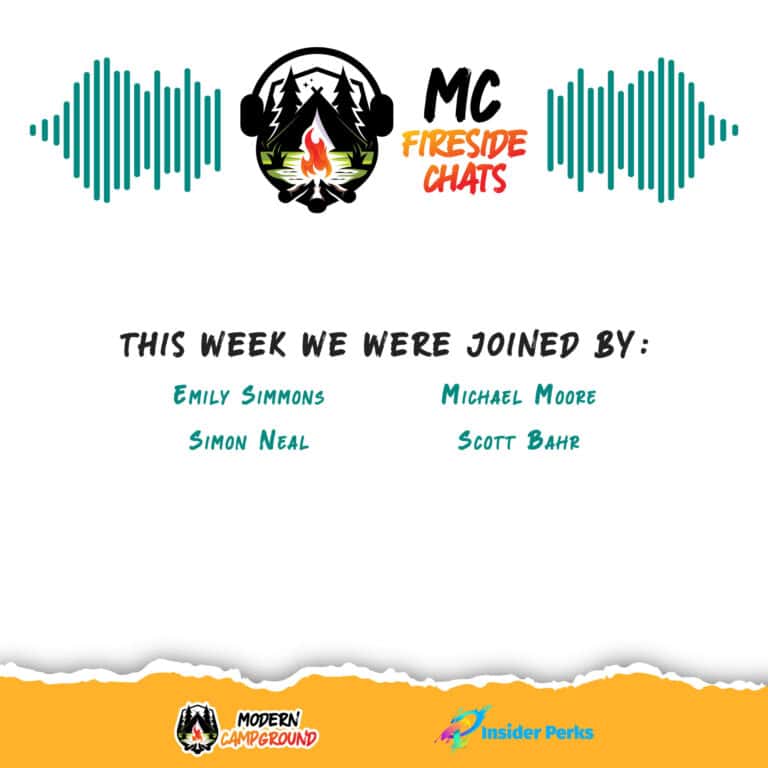
A screenshot of a white background with text and images related to the 2024 MC Fireside Chats.
January 31, 2024

MC Fireside Chats – January 31st, 2024

In a recent episode of MC Fireside Chats, hosted by Brian Searl, the conversation delved into the intricacies of the outdoor hospitality industry, featuring insights from Jenny McCullough, Director of Brand & Operations at Terramor Outdoor Resort/KOA; Jim Ritchie, CEO and Founder of AEONrv; and Dan and Angela Ugstad, Owners of Cuyuna Range Campground. The discussion spanned a range of topics, from the evolution of camping and glamping experiences to the integration of technology and sustainability in outdoor hospitality. Jenny McCullough shared the vision behind Terramor Outdoor Resort, a venture by KOA aimed at offering an elevated camping experience. She highlighted the importance of connecting people to the outdoors and each other, a mission central to KOA’s ethos. Terramor, embodying the concept of luxury camping, has been successful in attracting both seasoned campers and those new to the outdoor experience, demonstrating the growing appeal of glamping. McCullough emphasized the role of personalized guest experiences and the significance of staff interaction in enhancing the overall stay, underscoring the balance between technology and human touch in creating memorable visits. Jim Ritchie introduced AEONrv, a company focused on redefining the RV experience with high-tech, all-season vehicles designed for off-road and off-grid adventures. Ritchie’s background in Silicon Valley has informed the innovative approach of AEONrv, which aims to cater to a niche market seeking sustainable and durable RV options. He discussed the challenges and opportunities in expanding the RV market, particularly in relation to winter camping, and highlighted the importance of sustainability in the design and operation of RVs. Dan and Angela Ugstad shared their journey of establishing Cuyuna Range Campground, emphasizing their commitment to creating a private and nature-centric camping experience. They discussed the challenges of starting a campground from scratch, including navigating environmental regulations and designing a layout that prioritizes privacy and space. The Ugstads’ approach reflects a growing trend in the industry towards offering more secluded and environmentally integrated camping options, catering to campers seeking a retreat into nature. The conversation also touched on the broader trends in the outdoor hospitality industry, including the rise of winter camping and the increasing demand for sustainable practices. The speakers discussed the potential for campgrounds and RV manufacturers to adapt to these trends, offering insights into how businesses can evolve to meet the changing preferences of campers. The importance of listening to guest feedback and leveraging technology to enhance the camping experience was a recurring theme, highlighting the dynamic nature of the industry and the need for continuous innovation. Sustainability emerged as a key topic, with discussions on how campgrounds and RV companies are incorporating eco-friendly practices into their operations. From planting native trees and supporting local ecosystems to designing energy-efficient RVs, the speakers shared their efforts to minimize the environmental impact of camping and promote conservation. The introduction of honeybee hives at Terramor Outdoor Resort was highlighted as an innovative approach to combining education and conservation, illustrating the potential for campgrounds to contribute to environmental awareness and stewardship. The episode underscored the complexity of balancing technology, sustainability, and personalized guest experiences in the outdoor hospitality industry. The speakers shared their perspectives on the challenges and opportunities in catering to a diverse range of campers, from those seeking luxury and convenience to those desiring a more traditional connection with nature. The discussion reflected the evolving expectations of campers and the ongoing efforts by industry leaders to innovate and adapt to these changes. This episode provided a comprehensive overview of the current state and future directions of the outdoor hospitality industry. Through the experiences and insights of Jenny McCullough, Jim Ritchie, and Dan and Angela Ugstad, the conversation highlighted the importance of innovation, sustainability, and guest-centric approaches in shaping the future of camping and glamping. As the industry continues to evolve, the commitment to enhancing the outdoor experience while preserving the natural environment remains a central theme, driving the efforts of campgrounds and RV manufacturers alike.
This week's MC Fireside Chats were graced by the presence of Joan Martin.
August 30, 2023

MC Fireside Chats – August 30th, 2023

The recent episode of MC Fireside Chats featured a dynamic discussion with several prominent figures in the camping and RV industry for its multisector discussion. Brian Searl, the host, led the conversation with guests Jason Whiting, President of Pentor Recreation; Nicholas Denaro, Owner of The Ridge Campground; and Scott Hubble, CEO of nuCamp RV. The discussion began with Jason Whiting sharing his insights into the current trends and challenges faced by the camping and recreation industry. He highlighted the impact of the pandemic on outdoor recreation and discussed how Pentor Recreation is adapting to the new normal. Nicholas Denaro, who owns The Ridge Campground, shared his experiences in managing a campground during these challenging times. He discussed the importance of creating a safe and enjoyable environment for campers while also addressing the operational challenges posed by the pandemic. Scott Hubble, CEO of nuCamp RV, shared his perspective from the RV manufacturing side of the industry. He discussed the surge in demand for RVs during the pandemic and how nuCamp RV has adjusted its production and operations to meet this demand. He also touched on the challenges faced by RV manufacturers in sourcing materials and components due to supply chain disruptions. Throughout the podcast, the guests shared their thoughts on the future of camping and RV travel. There was a consensus that the popularity of outdoor recreation and RV travel is likely to continue in the post-pandemic world. However, there are challenges that need to be addressed, such as the need for more campgrounds and improved infrastructure to accommodate the increasing number of RV travelers. The discussion also touched on the importance of technology in the camping and RV industry. The guests agreed that technology plays a crucial role in improving the camping experience for travelers and in helping campground owners and RV manufacturers to operate more efficiently. Overall, the podcast provided valuable insights into the current state of the camping and RV industry, as well as a look ahead to its future. The guests shared their experiences and perspectives on the challenges and opportunities facing the industry, and offered their thoughts on how campground owners, RV manufacturers, and others in the industry can navigate these challenges and thrive in the post-pandemic world.
On March 29th, 2023, we were joined by MC Rescue Chats for our Fireside Chats.
March 29, 2023

MC Fireside Chats – March 29th, 2023

On March 29, the latest episode of MC Fireside Chats, hosted by Brian Searl, took a closer look at the outdoor recreation industry, such as the emerging trends in outdoor activities, innovations in the RV industry, and the growing popularity of glamping. This week’s show featured a panel of entrepreneurs from the outdoor recreation industry, including Kay Rodriguez from Outerly, Chandler Cooper from SkillAbove, and Mike and Melissa Crowe from Mitten Getaways Glamping. Kay Rodriguez, founder and CEO of Outerly, shared her company’s mission to help people connect with nature and each other, particularly in underutilized spaces within cities. “75% of people would go outside more frequently if they could easily find someone else to go with,” she said. She said that Outerly addresses this need by offering a platform for users to find outdoor activities and connect with like-minded individuals. Chandler, the founder of SkillAbove, discussed the various tools and consumer products his company has developed to improve the RV experience. Among their innovations is a device that overrides slide-out mechanisms when they get stuck, allowing RV owners to continue their journey. Chandler highlighted that some manufacturers have started to switch to better slide-out mechanisms due to the increase in problems related to them. He also revealed that RvTesters is working on a new slide mechanism to improve RV quality. Mike and Melissa Crowe, founders of Mitten Getaway’s Glamping Company, shared their vision for a year-round glamping resort in Michigan. The resort will feature diverse accommodations and on-site activities, with a focus on meeting specific property criteria such as having a water feature, being secluded, and offering space for on-site activities. The discussion also touched on the integration of technology in the outdoor recreation industry, such as artificial intelligence (AI) for diagnostics and maintenance in RVs. Chandler acknowledged the potential for this technology but emphasized that the RV industry would need to adopt a more unified approach to system communication and diagnostic access, similar to the automotive industry, for this to be feasible. The conversation also explored the possibility of collaboration between the RV rental marketplace Outdoorsy and SkillAbove to offer a “rescue package” for users who rent RVs and may need assistance with maintenance or repairs. This partnership could provide an added layer of support for those venturing into the great outdoors. As people increasingly seek connections with nature and others in the wake of the pandemic, businesses like Outerly, SkillAbove RvTesters, and Mitten Getaways Glamping are poised to lead the way in transforming the outdoor recreation experience. With new technologies and innovative approaches, the future of outdoor adventure promises to be more accessible, enjoyable, and connected than ever before.
This week we were joined by MC Fireside Chats.
November 30, 2022

MC Fireside Chats – November 30th, 2022

In this special episode of MC Fireside Chats, glamping and camping industry experts from all over the world joined us to talk about the challenges they faced in developing their businesses and how they overcame them. This week’s special guests are Olja Nicholl, owner of Serbia’s first-ever glamping resort, Stephanie Bias of Camp Aramoni in Illinois, Italian Architectural Design Manager Giacomo Sanna, and Valentina Kožarić from Croatia. Nicholl shared how they started Lala Vineyard Glamping Resort, Serbia’s first glamping resort. She said she was inspired by United Arab Emirates’ growing glamping industry and decided to bring glamping to Serbia. For Nicholl, bringing glamping to Serbia was not an easy feat. Nestled in a landlocked country, they had to be resourceful and utilize the little natural resources they had to offer unique experiences to guests. Lala Vineyard started small and is now a glamping resort based on sustainability, local experiences, and wine production. She highlighted that developing not just a glamping business but a community that continuously explores tries local, and collaborates with local suppliers is essential. Sanna, an architectural design manager and architecture and parametric design consultant, talked about the struggles of bureaucracy affecting the glamping industry in Italy and how they develop new solutions that can help glamping businesses in the country. Kožarić, a front office manager for a camping and glamping resort in Croatia offering pitches for campers and mobile homes, said the camping and glamping industry in Croatia is growing. Since the company’s inception, they had to offer something different each year. Bias of Camp Aramoni shared how they struggled to define their identity. From glamping to luxury camping and now boutique camping. When asked what the future holds for them, Bias said they aim to create better, unique experiences, add more accommodations, and open year-round.
MC Fireside Chats logo
June 29, 2022

MC Fireside Chats – June 29th, 2022

This week on MC Fireside Chats, presented by Modern Campground, we broadcast a special fifth episode for the month of June. Anything and everything were up for discussion. Plus, we were joined by special guests: Neil Demosthenous and Demos Demosthenous, the founders of SkyWeb gave us some guidance on wireless services and infrastructure at campgrounds. Plus, we welcomed Sandra Fraser, Parks Promotion & Development Officer, Province of Nova Scotia who discussed Camping Nova Scotia’s provincial parks. MC Fireside Chats is a weekly show focused on the latest news, trends, and commentary from the Outdoor Hospitality Industry with hosts Brian Searl and Cara Csizmadia.
MC Fireside Chats logo
September 29, 2021

MC Fireside Chats – September 29th, 2021

In this episode of MC Fireside Chats, presented by Modern Campground, we discussed the then-upcoming fall conferences in the United States and Canada. Lori Severson from the brand new Campground Owners Expo – COE joined us, along with Joss Penny from British Columbia to talk about their respective conferences. Plus, we heard from Joe Duemig, a supplier from App My Community, about vendor interest in these shows, as well as discussed ARVC, KOA, Jellystone, and state conferences like New York and Pennsylvania.