Episodes

Week 1 - Industry Trends & Insights

Each first Wednesday of the month, we dive into the latest trends, market analysis, and predictions in the outdoor hospitality industry. Join industry analysts, market researchers, and outdoor hospitality industry leaders as they unpack topics like market growth, demographic changes, and guest preferences.

October 7, 2026

MC Fireside Chats – October 7th, 2026

During the October 7, 2026, episode of MC Fireside Chats, industry leaders emphasized that to attract an evolving, experiential demographic, campground operators must hyper-focus on specific niches, adapt to the rise of smaller, rugged RVs, and forge strong cross-sector collaborations.
September 2, 2026

MC Fireside Chats – September 2nd, 2026

During the September 2, 2026, episode of MC Fireside Chats, outdoor hospitality experts explored the rapid evolution of AI-integrated property management systems and evolving consumer behaviors, emphasizing a market shift toward simpler recreational vehicles and the importance of targeting guests by specific life stages rather than broad generational labels.
August 5, 2026

MC Fireside Chats – August 5th, 2026

In the August 5th episode of MC Fireside Chats, a diverse panel of outdoor hospitality leaders discussed how current economic headwinds are driving a shift from transient RV travel to long-term stays and unique glamping experiences, emphasizing that operators must leverage creative marketing and exceptional, personalized hospitality to thrive in a rapidly changing market.
July 1, 2026

MC Fireside Chats – July 1st, 2026

In the July 1, 2026, episode of MC Fireside Chats, industry experts discussed how macroeconomic factors and shifting generational preferences are pushing the outdoor hospitality sector to prioritize transparent marketing, proactive AI reputation management, and the creation of highly customized, premium “boutique” RV sites.
June 3, 2026

MC Fireside Chats – June 3rd, 2026

In the June 3, 2026 episode of MC Fireside Chats, our panel of industry experts contrasted the current slowdown in traditional RV sales with the rapid, institutional growth of the glamping sector. The discussion also highlighted how American developers can learn from cost-effective European campsite models and stressed the urgent need to prepare campground electrical grids for the incoming wave of all-electric RVs.
May 6, 2026

MC Fireside Chats – May 6th, 2026

In this episode, guest host Scott Bahr and a panel of industry leaders discussed how rising fuel costs and economic pressures are causing campers to favor shorter, more localized trips and “onboarding” through more accessible accommodations. The group emphasized that the industry’s long-term success depends on a shared responsibility to simplify the guest experience and provide flexible, affordable vacation options for a new generation of casual participants.
April 1, 2026

MC Fireside Chats – April 1st, 2026

The April 1st, 2026, episode of MC Fireside Chats featured industry experts Phil Ingrassia, Scott Bahr, and Simon Neal discussing how steady consumer sentiment and the therapeutic nature of the outdoors are sustaining the industry despite rising gas prices and geopolitical tensions. The panel explored the resilience of RVers and the potential for American campgrounds to adopt European-style “all-inclusive” resort models to attract a more diverse range of guests.
March 4, 2026

MC Fireside Chats – March 4th, 2026

Industry experts on MC Fireside Chats analyzed 2026 data trends, highlighting a shift toward shorter booking windows and the untapped potential of dynamic pricing to stabilize revenue despite “mild” transient growth. The panel emphasized that maintaining operational excellence and clear digital communication is essential for navigating current economic fluctuations and ensuring long-term resilience in the outdoor hospitality sector
February 4, 2026

MC Fireside Chats – February 4th, 2026

In the recent episode of MC Fireside Chats aired on February 4th, 2026, host Brian Searl and a panel of experts analyzed the shifting landscape of outdoor hospitality, noting a positive uptick in early-season booking pace and a stronger consumer sentiment compared to previous years. The discussion centered on a comprehensive new report regarding Gen Z, identifying them as a risk-averse, “experience-chasing” demographic that requires highly authentic digital storytelling and multi-channel marketing to engage effectively.

Recurring Guests

Scott Bahr

Scott Bahr

Cairn Consulting Group
Simon Neal

Simon Neal

CampMap
Miguel Huerta

Miguel Huerta

Mexican Glamping Association
Rafael Correa

Rafael Correa

Blue Water Development
Eleonore Hamm

Eleonore Hamm

RVDA Canada
Phil Ingrassia

Phil Ingrassia

RVDA
Michael Moore

Michael Moore

Texas Association of Campground Owners (TACO)

Week 2 - Building Park Value

The second Wednesday of the month focuses on how to build and evaluate park equity physically, operationally, and financially. With insights from designers, operational experts, active park owners, and valuation specialists, this episode covers physical master planning, strategic amenity investments, revenue generation, market valuation, and how to maximize the price your property commands when it’s time to sell.

March 12, 2025

MC Fireside Chats – March 12th, 2025

On the March 12th, 2025 episode of MC Fireside Chats, host Brian Searl welcomed a panel of experts and industry leaders to discuss the evolving landscape of guest experiences in outdoor hospitality. The conversation featured recurring guests Zach Stoltenberg (LJA), Joe Duemig (App My Community), and Scott Foos (Horizon Outdoor Hospitality). Additionally, special guests included Quentin Incao (Q Hospitality Management) and Amber Tyrell (Valley Views Glamping, New Zealand), who shared valuable insights on enhancing guest experiences. The discussion kicked off with Zach Stoltenberg highlighting emerging trends in off-grid solutions, particularly in resort developments where traditional utility infrastructure is either cost-prohibitive or logistically unfeasible. He pointed out the increasing adoption of composting toilets, solar power, and wind energy, driven by the demand for remote, immersive experiences. Zach cited a luxury glamping example on an island off the coast of South Carolina, where guests pay a premium for exclusivity and nature-driven stays. Brian Searl expanded on the topic by noting the growing interest in alternative accommodations, from high-end luxury sites to budget-friendly off-grid tenting options. He emphasized that not all campers seek five-star glamping resorts or luxury RV parks, and there remains a strong demand for simpler, yet well-marketed, nature-based experiences. Joe Duemig raised an important question regarding market demand, asking whether off-grid luxury glamping is being developed due to genuine demand or simply because of affordable land opportunities. Zach responded that while the market is not as large as traditional hospitality, there is a niche audience willing to pay a premium for unique and exclusive experiences. He stressed the importance of curating an immersive stay that offers scarcity and a high-value proposition. Scott Foos emphasized the importance of storytelling in hospitality, stating that properties should not merely sell lodging but rather a compelling narrative that connects emotionally with guests. He advised against competing purely on price and instead recommended focusing on unique experiences that drive customer engagement and loyalty. Quentin Incao introduced his new glamping property, Two Capes Lookout on the Oregon Coast, which features geodesic domes and mirror cabins designed to offer breathtaking views and a tranquil, car-free environment. He explained that the property prioritizes peace, natural beauty, and an intimate connection with the environment, enhancing the guest experience through thoughtful design and minimal environmental impact. Later in the show, Amber Tyrell shared insights from Valley Views Glamping in New Zealand, an off-grid retreat she operates with her husband. She highlighted their focus on exceptional hosting and sustainability, stating that personal interaction and human connection are fundamental to their success. Amber noted that their guests often leave feeling emotionally enriched by the experience, reinforcing the idea that hospitality is more than just providing a place to stay. The conversation then shifted to the role of partnerships in enhancing guest experiences. Zach suggested that operators look for local businesses, artisans, and outdoor activity providers to create unique on-site or off-site experiences. Joe added that leveraging affiliate marketing and strategic collaborations can generate additional revenue while also elevating the overall guest experience. Scott addressed the challenge of integrating local experiences seamlessly into the booking process, noting that industry tools are evolving to help operators better connect guests with nearby activities. He mentioned Flip.to as a potential solution that overlays onto booking platforms, providing guests with insights into area attractions and experiences. The panel also discussed foundational aspects of guest experience, such as high-quality mattresses, well-maintained landscaping, and friendly staff. Joe emphasized the importance of front-desk hospitality, sharing his observations from visiting numerous RV resorts where guest engagement was often lacking. Scott reinforced that the guest experience starts with employee satisfaction, as engaged and happy staff are more likely to provide exceptional service. As the discussion wrapped up, Quentin stressed the importance of differentiation in the market, advising operators to carve out a unique identity rather than merely following trends. Brian concluded by reminding operators that storytelling, branding, and thoughtful guest experiences are essential to long-term success in outdoor hospitality. The episode provided a comprehensive look at the strategies and trends shaping guest experiences in the glamping and outdoor hospitality industry, offering valuable insights for property owners, managers, and industry professionals.
February 12, 2025

MC Fireside Chats – February 12th, 2025

The latest episode of MC Fireside Chats, hosted by Brian Searl, brought together industry experts Kevin Thueson, Zach Stoltenberg, and Garrett Brown for a deep dive into campground development, investment strategies, and guest experience personalization. Garrett Brown, owner of Cameron Ranch Glamping near Houston, Texas, introduced his property, which consists of four high-end glamping structures. Brown emphasized the importance of working with reputable architects to streamline permitting processes and plan for future expansions effectively. He highlighted the necessity of having a clear guest avatar in mind to tailor experiences that drive repeat bookings and word-of-mouth marketing. Kevin Thueson, representing KCN Campgrounds, shared his experience in campground investment, managing KOA franchises, and scaling operations across multiple states. He stressed the value of detailed site evaluations before acquisitions and the importance of structured growth plans. Thueson emphasized that purchasing existing campgrounds offers insights into historical performance, ensuring a predictable investment return compared to ground-up developments. Zach Stoltenberg announced the launch of his new independent outdoor hospitality studio in partnership with LJA, an established engineering firm. This new venture aims to integrate architecture, landscape architecture, and civil engineering to offer comprehensive design solutions for resort and hospitality development. Stoltenberg outlined the significance of a well-planned design process, ensuring long-term feasibility and compliance with zoning and permitting requirements. The discussion touched on the importance of architects in campground planning, even for seemingly simple projects. Stoltenberg elaborated on the necessity of a phased site plan, future-proofing expansions, and ensuring compliance with regulatory requirements. He emphasized that a structured design approach can prevent costly mistakes and expedite the approval process. Thueson elaborated on KCN’s process of evaluating campgrounds before acquisition, analyzing guest demographics, and determining necessary infrastructure upgrades. He shared that market research, guest feedback, and competitive analysis play crucial roles in decision-making. Thueson also highlighted the importance of delivering high-quality experiences rather than merely competing on price. Garrett Brown detailed his approach to guest experience personalization, explaining how Cameron Ranch Glamping incorporates private amenities like hot tubs and saunas to differentiate itself. He shared an innovative method of using AI-generated personalized songs for guests, which has significantly boosted engagement and word-of-mouth marketing. Brown emphasized that minor personal touches create lasting impressions, driving customer loyalty and increasing organic referrals. A significant portion of the discussion focused on the need for operators to understand and adapt to evolving guest expectations. Stoltenberg explained that consistency in branding, messaging, and guest experience builds trust, which is vital for long-term success. He stressed that effective campground development goes beyond physical design—it requires a seamless and engaging customer journey from booking to departure. The conversation also highlighted the challenges of working with different planning and zoning authorities. Thueson shared his experiences navigating varying regulatory landscapes, emphasizing the importance of hiring professionals who understand local requirements. He reiterated that investing in expert consultation early on can save time and money in the long run. As the episode wrapped up, the panelists agreed that the outdoor hospitality industry is continuously evolving, requiring operators to stay ahead of market trends and guest expectations. Brian Searl suggested a follow-up discussion on personalized guest experiences in a future episode, inviting Garrett Brown to share more insights on innovative engagement strategies. This episode underscored the intricate balance between strategic planning, guest experience, and regulatory navigation in the outdoor hospitality industry. By leveraging professional expertise and innovative guest engagement techniques, campground operators can create sustainable and profitable businesses while enhancing the overall camping experience for guests.
January 8, 2025

MC Fireside Chats – January 8th, 2025

The January 8, 2025, episode of MC Fireside Chats, hosted by Brian Searl, kicked off the year with an engaging discussion on enhancing guest experiences in outdoor hospitality. The panel, featuring Kevin Thueson, Joe Duemig, Casey Cochran, Scott Foos, Brittany Mathis, and Lelah Campo, explored themes of personalization, technology, and operational excellence, offering diverse strategies for meeting evolving camper expectations. Kevin Thueson opened by sharing his journey from owning a single KOA franchise to managing nine properties under KCN Campground. He highlighted the importance of continuously revisiting guest touchpoints, adapting to changing expectations, and empowering his team to deliver memorable experiences. Kevin emphasized that scalability doesn’t mean sacrificing personalization; instead, it requires a disciplined focus on guest feedback and operational refinement. Joe Duemig, CEO of App My Community, underscored the value of technology in enhancing guest engagement. He encouraged campground owners to regularly test their booking systems to identify and eliminate friction points. Joe shared how individualized mobile apps can simplify communication and streamline operations, making it easier for campgrounds to deliver tailored experiences while maintaining efficiency. Casey Cochran from Campspot brought a data-driven perspective to the discussion. He explained how tracking booking trends and guest feedback can inform operational decisions, from optimizing site descriptions to improving conversion rates. Casey stressed the need to balance automation with personal touches, noting that technology should serve as a tool to enhance—not replace—the human element of hospitality. Personalization was a key theme explored by Scott Foos, CEO of Horizon Outdoor Hospitality. He described how small gestures, such as staff helping with a campfire or offering personalized greetings, can create meaningful connections with guests. Scott emphasized that these interactions are often what set exceptional campgrounds apart, fostering loyalty in an industry increasingly driven by guest expectations. Lelah Campo, owner of two campgrounds in Connecticut, shared her approach to blending automation with human touch. She described the use of tools like pre-arrival texts to proactively address guest concerns and policies like travel credits to manage cancellations. Lelah stressed that technology must enhance both the guest and staff experience, noting the importance of regularly evaluating systems to maintain relevance. Brittany Mathis echoed the importance of thoughtfulness in building guest loyalty, sharing how small, creative gestures like personalized stickers for returning guests can have a significant impact. She also highlighted the importance of empowering her team to handle difficult interactions while ensuring they feel supported. Brittany’s focus on creating a welcoming atmosphere has helped her campground stand out as a community-oriented destination. The panel collectively addressed the growing challenges of cancellations and demanding guests, emphasizing the importance of clear communication and setting realistic policies. Kevin and Scott pointed out that empowering staff to handle conflicts creatively not only strengthens guest relationships but also boosts team morale, fostering a positive and resilient work culture. Data and feedback emerged as essential tools for continuous improvement. The panelists advocated for tracking booking and cancellation trends while leveraging post-stay surveys to refine operations. Scott highlighted the importance of combining data-driven insights with real-world interactions to ensure that feedback translates into actionable enhancements. The discussion concluded with a vision for the future of outdoor hospitality, where personalization becomes the cornerstone of guest experiences. The panel envisioned a world where AI-driven insights and tailored communication redefine service standards, allowing campgrounds to anticipate guest needs while maintaining a human touch. This integration of innovation and empathy was seen as the key to creating memorable stays. Ultimately, the episode emphasized that enhancing guest experiences requires a holistic approach. From leveraging technology and data to creating genuine connections, the panel offered actionable strategies for operators of all sizes. The key takeaway was clear: blending innovation with thoughtful, guest-centered care is the path to long-term success in outdoor hospitality.
December 11, 2024

MC Fireside Chats – December 11th, 2024

In this episode of MC Fireside Chats, host Brian Searl, welcomed special guests, Laura Mooney, co-owner of Mohican Treehouse Resort in Ohio, and Bret Bullock, owner of Pine Harbor Campground in Wisconsin to discuss the evolving dynamics of outdoor hospitality, marketing innovations, and adapting to industry changes. Laura Mooney opened by describing her journey from purchasing rural property to establishing Mohican Treehouse Resort. Initially intended for family recreation, the property evolved into a premier treehouse getaway featuring custom-built accommodations. She highlighted the importance of creative marketing and leveraging media exposure, including being featured on the TV show Treehouse Masters. Bret Bullock shared his experience running Pine Harbor Campground, a seasonal operation with a focus on traditional camping. He discussed the initial challenges of entering the campground business, noting how the COVID-19 pandemic spurred unexpected growth as people sought outdoor escapes. Despite the plateau in recent years, he emphasized the significance of consistent upgrades and targeted advertising. The conversation shifted toward marketing strategies. Mooney emphasized the value of branding and search engine optimization (SEO), sharing how her team maintains an aggressive digital marketing strategy despite seasonal slowdowns. Bullock expressed interest in enhancing visibility through advertising and collaborating with local organizations to drive traffic. Both guests reflected on the financial challenges of operating in a weather-dependent industry. Bullock recounted how severe flooding in neighboring Minnesota disrupted his campground’s summer season. Mooney described how shifting economic conditions required constant monitoring of bookings and pricing adjustments. A key highlight was the discussion on ancillary revenue streams. Mooney detailed creative add-ons at her resort, such as private chef services, romance packages, and pet-friendly accommodations. Bullock acknowledged the potential in diversifying revenue but expressed a desire to maintain the campground’s traditional, rustic atmosphere. The impact of artificial intelligence (AI) emerged as a central theme. Host Brian Searl demonstrated how AI tools like ChatGPT can assist campground owners in marketing, business planning, and operational efficiency. Mooney shared how AI had already influenced her business, including naming new accommodations, while Bullock expressed enthusiasm about exploring AI-driven marketing solutions. The group explored the future of SEO and online visibility, emphasizing the growing role of voice search and AI-powered platforms. Mooney voiced concerns about adapting to emerging digital search trends, noting that staying competitive now requires more proactive digital engagement than ever before. The episode concluded with actionable advice for outdoor hospitality entrepreneurs: invest in marketing, embrace technological advancements, and continuously adapt to changing customer expectations. Both Mooney and Bullock underscored the importance of building a strong brand and creating memorable guest experiences. Overall, the December 11, 2024 episode of MC Fireside Chats provided valuable insights into the challenges and opportunities facing outdoor hospitality operators today, with practical lessons on resilience, innovation, and future-focused business strategies.
November 13, 2024

MC Fireside Chats – November 13th, 2024

The November 13th, 2024 episode of MC Fireside Chats, hosted by Brian Searl, brought together a group of outdoor hospitality leaders to discuss the evolution of glamping, the importance of storytelling, and the transformative potential of immersive guest experiences. Joining Brian were Angele Miller of Creekside R&R Glamping, Zach Stoltenberg of Clockwork, Chris Jeub of Monument Glamping, Matt Small of RVI, and Chris Hudak of Escapod Trailers. The discussion covered emerging trends, innovative strategies, and the power of authentic connections in the glamping industry. Brian opened the episode by reflecting on changes planned for the podcast in 2025, including longer, more topical formats and the addition of a co-host. He also touched on the broader changes within the glamping industry, where operators are moving beyond conventional offerings to provide unique, personalized experiences. The panelists explored how these shifts align with the increasing demand for more immersive and transformative travel. Chris Hudak, founder of Escapod Trailers, shared his company’s journey of creating premium off-road trailers that cater to adventure-seekers looking for mobility and self-sufficiency. Chris emphasized the importance of separating Escapod from traditional RV brands, focusing instead on providing unique and durable products that facilitate authentic outdoor experiences. He noted that partnerships with local operators, such as breweries and orchards, have enhanced the appeal of his trailers, allowing guests to immerse themselves in natural settings. Matt Small, representing RVI, highlighted the importance of landscape architecture in designing successful glamping destinations. He explained how his firm works with landowners to craft site-specific designs that tell a story and align with guest expectations. Matt emphasized that authentic storytelling is the cornerstone of memorable glamping experiences. He also pointed to the role of community partnerships and eco-conscious practices in making these destinations sustainable and engaging. Angele Miller illustrated how her resort, Creekside R&R Glamping, integrates local culture into the guest experience. From oyster-shucking demonstrations to llama treks, Angele explained how these curated activities not only enrich the guest stay but also promote local businesses and traditions. She stressed the importance of providing guests with opportunities to actively participate in their experiences, turning visits into transformative journeys. Chris Jeub, “The Glamping Guy,” spoke about the joy and responsibility of hosting. He shared a personal story of guests who braved a snowstorm to stay at his Monument Glamping site, highlighting how thoughtful interactions and shared stories can deepen the connection between hosts and visitors. Chris also underscored the value of embedding storytelling into every aspect of the glamping experience, from marketing to on-site interactions. Zach Stoltenberg of Clockwork delved into the importance of branding and design in glamping operations. He emphasized the need for operators to craft consistent and authentic identities that resonate with their target audiences. Zach also advocated for partnerships with local businesses, such as breweries and adventure outfitters, to create unique and memorable experiences for guests. He highlighted examples of innovative design, such as cantilevered units over streams, which elevate the guest experience by immersing them in the natural environment. The panelists agreed that the glamping industry is shifting toward “transformative hospitality,” a concept that encourages operators to provide experiences that leave lasting impressions on guests. Whether it’s through mushroom foraging, farm-to-table cooking, or wellness retreats, the panelists stressed that glamping should aim to educate, inspire, and connect guests with nature and local culture. A recurring theme was the importance of passion and authenticity. Matt noted that guests can sense when operators are genuinely invested in their offerings. Chris Hudak added that successful experiences often stem from the operator’s own interests, whether it’s equestrian activities or sustainable living. The panelists emphasized that authenticity and personal passion are critical for creating memorable guest experiences. Brian concluded the episode by expressing his desire to showcase more of what’s possible in glamping through future on-location episodes of MC Fireside Chats. He highlighted the value of visually demonstrating innovative glamping properties to inspire operators and landowners. The panelists supported the idea, noting that sharing best practices and creative ideas is essential for the growth of the industry. The episode underscored the vibrancy and potential of glamping as a transformative segment of outdoor hospitality. From fostering community partnerships to creating immersive experiences, the panelists demonstrated how innovation and storytelling can elevate the industry and inspire the next generation of glamping operators.
October 9, 2024

MC Fireside Chats – October 9th, 2024

The October 9, 2024, episode of MC Fireside Chats, hosted by Brian Searl, featured guests Chris Jeub and Miguel Huerta, diving into a deep discussion about the Glamping Show and the broader outdoor hospitality industry. The conversation began with a light introduction, as Brian humorously shared his struggle with his camera setup before diving into the key topic: a recap of the recent Glamping Show in Aurora, Colorado. Both Chris and Miguel had attended, and they shared insights from their experiences at the show. The Glamping Show was described as an increasingly international event, with a notable rise in attendees from Latin America, which Miguel emphasized. He pointed out that many attendees were new to the industry, eager to learn the ropes of glamping operations. Miguel noted how the show’s exhibition space had grown, with more exhibitors and better facilities, despite the cold weather, which the event organizers had cleverly mitigated with enclosed walls for the tents. A key part of the conversation revolved around the attendees and their needs. Miguel highlighted how many people attending the show were industry rookies, looking to break into the glamping space. He also touched on the demand for more tailored education for those already running operations. Chris agreed, suggesting that the show could focus more on experienced operators and provide advanced content beyond the basics. He also noted the challenge of attendees who may feel the need to attend once but not return unless there’s fresh, advanced material. Marketing became a central theme, with Brian, Chris, and Miguel discussing its critical role in running a successful glamping business. Brian emphasized the importance of understanding the target audience, even before acquiring land or building accommodations. Marketing, in his view, is essential from the very start, shaping the success of a glamping operation. He pointed out that simply building accommodations is no longer enough in a post-COVID market where consumers have more choices. The panel agreed that marketing needs to be an ongoing, adaptable process. Miguel expanded on this by stressing that marketing is not just about spending money but about making smart, strategic investments. He shared data from Scott Bahr’s research, noting that while revenue in the glamping industry grew by 23% year-over-year, expenses rose by 39%, largely driven by marketing costs. He advised that operators must be prepared to allocate a significant portion of their revenue—up to 10%—for marketing efforts, including digital channels, which he noted had seen a decline in investment as operators sought alternative approaches like public relations and sponsorships. Chris contributed his perspective as a hands-on operator, explaining that his marketing strategy has shifted as his operation has evolved. He talked about the need to balance expectations with offerings, ensuring that guests receive what they anticipate based on the marketing they see. He emphasized that marketing should align with the reality of the experience offered, whether it’s luxury or a more rustic glamping experience. Chris also highlighted how direct bookings have become increasingly important, as they offer a better connection with guests and help reduce reliance on platforms like Airbnb. The conversation then turned toward the future of the Glamping Show itself. Both Chris and Miguel expressed excitement about its continued growth but emphasized the need for the event to evolve. They discussed the potential for the show to offer more niche content for seasoned operators, including those looking to expand or refine their operations. Miguel suggested that regional meetups and more targeted educational sessions could be beneficial for the industry, particularly as glamping becomes more sophisticated and segmented. As the discussion wrapped up, Miguel shared insights into the Latin American market, noting that WhatsApp plays a crucial role in managing bookings and communication with guests. He also touched on the unique challenges of running glamping sites in more remote locations, where maintenance costs and logistical issues can be higher. Brian closed the conversation by returning to the theme of creativity in marketing and operations. He reiterated that operators must continue to think strategically, not just in terms of immediate returns but long-term sustainability. He encouraged the use of new technologies, like AI, to optimize marketing efforts and reach the right audience. Miguel agreed, noting how tools like TikTok have dramatically shifted the landscape of digital marketing, with viral videos helping to drive significant traffic to glamping sites. In summary, the episode offered a thorough exploration of the Glamping Show and the evolving needs of the outdoor hospitality industry, with a particular focus on marketing strategies, the importance of understanding guest demographics, and the growing sophistication of glamping operations.
September 11, 2024

MC Fireside Chats – September 11th, 2024 

This is MC Fireside Chats, a weekly show featuring conversations with thought leaders, entrepreneurs, and outdoor hospitality experts who share their insights to help your business succeed. Hosted by Brian Searle, the founder and CEO of Insider Perks. Empowered by insights from Modern Campground, the most innovative news source in the industry. Greg Emert: All right, and after three unsuccessful attempts to start that and a little bit of teasing with the intro video, here we are live. Thanks, everybody, for joining us for this week’s MC Fireside Chats. I am your guest host, Greg Emert. I’m the co-founder of Camp Strategy. We are an end-to-end solution, and we do consulting for campgrounds and landfronts across the United States. We’re based in Ohio. I’m happy to be here as your guest host today. And joining me, I have an esteemed panel of guests, both recurring and special for this week. So why don’t we take a trip around the board, and let’s just go around Brady Bunch style. We’ll start with Susan, make our way to Gordon, and then keep going around the board. So Susan, give us an introduction. Tell us a little bit about who you are and where you’re from. Susan Smith: Well, I’m Susan Smith. I’m in Wimberley, Texas, which is about 30 minutes east of Austin. And I am the owner and operator of Senya on Lone Man Creek, which is a glamping site. And it’s one unit and it’s kind of a little Africa in the Texas Greg Emert: And that sounds lovely. And by little African, you mean that the safari tents are very African in nature, correct? You don’t mean that you have, there are no rhinos, lions, elephants? All right. As little as that would be. I would, I would sign up for that if there was like a no trampling clause in there somewhere, but I. Yeah. Susan Smith: No, just Texas animals. All right. Fair enough. Greg Emert: Well, those are beautiful as well. And so moving on now to Gordon, who I believe is also Gordon Cook: How y’all doing? Gordon Cook. I have Al’s Hideaway Cabin and RV Park, named after my wife’s grandfather that was from the area. We built it. We run it. It’s all family owned, operated. We have 12, 13 cabins now, 13 long cabins, two belt tents, 10 RV spaces and an old school bus. here on the property that we’re in now. And I’m sitting right now in our big 60 by 40 outdoor pavilion with a fireplace, big outdoor kitchen over there, swimming pool, pool table, all that. And I’m located in Pike Creek, Texas, which is between San Antonio and Bandera on Highway 16, not far from Wimberley. Greg Emert: Lovely. So, y’all are neighbors at this point, Susan and Gordon. All right. Well, maybe next time we can get a tour of that. Gordon, that sounds beautiful. We’ll have to get you next time. We’ll get that camera mobile and we’ll take a look at all that stuff, because it sounds like you’ve got quite the eclectic mix of accommodations, which I’m looking forward to talking to you about. That school bus sounds interesting. Yeah. So moving on, Angele, thank you for joining us today. Tell us a little bit about you and where you’re from. Angele Miller: Hi, everyone. I’m happy to be here today. And I am in Atlantic Canada. and I’m a co-founder of a resort called Creekside R&R Glamping. We’re an award-winning resort and we offer nature experiences where we have geodesic domes in nature, we have 10 accommodation on site, up to a lobster fishing boat accommodation as well, which is kind of new for us and very beautiful and fun. And we also have a Nordic spa, a meditation yoga center, and many activities as well on site from canoeing, paddle boarding, kayaking, fat bikes, you know, all that fun stuff. So really happy to be here joining everyone today. Greg Emert: Lovely. That sounds like an amazing place. Like I was saying, before we got in the room, I’m interested to talk to you a little bit about the conservation side of what you do, because I think that’s something that maybe gets overlooked sometimes. It’s more so accepted in Glamping, I think, than it is RV parks, which is sort of my strong suit. You know, you see a lot of RV parks, they look like a city built under trees, and they sort of lean away from the reason that I think a lot of people get into it, to enjoy nature, but sort of safely on their own terms, right? Like some people are still petrified when they see a spider, but they want to go camping in places where there are spiders because that means they have trees and blue skies, right? And so I applaud you for doing that. I think that’s something that people need more in the industry and out of it. Moving on, Chris, is these Chris Jeub: Well, thank you for having me on the show. Greg Emert: Yeah, I don’t know why I’m the host if we literally have a guest. Chris Jeub: So tell us about the domain was available and I picked it up. That’s a good name. Good. I run Monument Lamping out of Monument, Colorado. We have two properties. I’ve taken a step back this last year and really solidified the permitting that was required on both the properties. So I have only eight units open right now, but that was a step back from 13 we had at the most in the past couple of years. But we’re permitted for 36. So I’m locked and loaded to really develop. So we’re eyeballs up in in permitting and are not permitting but land development site development is what they call it in the the government bureau, the bubbleheads like to call it that. But I also run GlampingGuy, GlampingGuy.com, and that’s my educational arm. I’ve been doing it for about a year. I just launched a podcast myself. You can see it at GlampingGuy.com. I just finished my third interview of a glamper out in Shenandoah Valley. Honestly, all of you could be guests on the Glamping Guy podcast. Because the series that I’m going through is called the Glamping Masters. They’re people who are really walking the walk and doing really, that’s honestly what I wanted to have when I was starting off and clunking along and not knowing what I was doing. Just feeling like, man, if I could just be a fly on a wall of somebody who’s doing what I think I’m doing right. And that’s what I’m hoping to have Glamping Guide be, is that, hey, here’s your opportunity to peer inside the lives of glampers and see how they’re building safe, legal, and profitable glamping operations on their private property. Greg Emert: Well, what a wonderful and Chris, I’m going to guess I know you’ve got a an education background, so that kind of slides perfectly into what you’re trying to do there, right? To educate folks about glamping and your experience. Chris Jeub: I left English teaching to do glamping. Greg Emert: All right, well, but you’re still in the educational realm, right? Because you can’t get rid of that, but it sounds. Can’t help myself. It’s a bug I just can’t get rid of. you have also always had a bit of a serial entrepreneurship because you even took your educational side and turned it into entrepreneurship, right? So wonderful. You saw a need and filled it. Chris Jeub: That’s great. The market calls. You just can’t ignore it. Greg Emert: That’s right. And I’m sure as everyone here is an entrepreneur, you know that once you get into it, it’s really hard to go back to anything else, regardless of what you may have done in your former life. It’s a bug that bites you and you’re kind of stuck with it. and a Good for you, man. That’s awesome. So I think we’ll circle back at some point here, because I have a feeling everybody’s going to have those development growing pains type stories. And maybe you can speak to what you’ve been going through recently. And last, but of course, very, very much not least, we have Tess from Ranchlands. And Tess, thank you for joining us. Tell us a little bit about where you’re from and what you’re doing. Tess Leach: Yeah, thanks for having me, Greg. I just relocated to north central Wyoming. We moved from Colorado, actually right down the road from you in Monument. And we are large-scale ranch managers. We run ranches across the West. And on many of those ranches, we also run hospitality operations. We have just opened our newest location here on the Paint Rock Canyon Ranch. in Hyattville, Wyoming, a town of about 79 people is what’s on the population side. But we have about 80,000 acres on the ranch, and then it backs up to BLM Forest Service, and we guide trips up into the mountains from working on the ranch, workshops with writers, artists, sportsmanship instructors, just masters at their craft based out of safari style tents that we have set up alongside the paint rot creek. We are doubling our number of tents next year to 14 and really putting all of our emphasis on this new property that we have up here in Wyoming as we transition out of Colorado. So yeah, I mean it’s different in that we don’t offer one-night stays. Guests come for five nights or more, and it’s an all-inclusive sort of thing. But we’ve been operating for 25 years with guests and really feel so grateful to be able to do it into the future. Greg Emert: Yeah, and I looked and I think we’re just going to jump right in and test. I’m going to stick with you because I think your property is really unique. Before we do, though, of course, I want to thank our sponsors this week, which is Horizon Outdoor Hospitality. Scott and his team of outdoor hospitality experts over there really lead an excellent organization. So if anyone is watching and interested in third party management for your camping or glamping property, highly recommend checking out Horizon Outdoor Hospitality. There we go. Now, this is the part where I wait for, I think they’re going to send me like $20 for something so nice. I’ll probably be waiting on that. I don’t think I’m going to get that today. But I would like to go back to Tess. Tess, I was looking at your properties earlier. And I think, you know, we spoke a little bit earlier to, I was speaking backstage, and just some of the uniqueness that glamping really taps into, you know, it is Campgrounds are learning the experiential side of hospitality, but glampgrounds, I think, are sort of forced to do it, right? Because you can get a pretty piece of property and put tents on it, but what do I want to go there for, right? Are you near something? What are you offering that brings someone in? Or you want to talk about unique experiences. You have found a way to sort of tie in the conservation of ranching, which is, as you point out well on your website, and most people probably know, it’s sort of a… It’s a dying industry, right? There are fewer and fewer young people staying in it, and it’s not something that people look at as a business or lifestyle that much anymore. Things have sort of shifted digital, but you have found a way to promote it via your stays. Can you tell us a little bit about how you came to the realization that by bringing people out, putting them on your land, you could not just drive revenue, but also drive awareness for your industry? Tess Leach: Yeah. Yeah, well, that I mean, that is exactly where it came from. My dad grew up ranching in Mexico and moved to the US during college, and worked for an old school ranching family in eastern Colorado, managing properties And one day he was meeting with, the guy’s name was Dale, Dale. And Dale said, well, I think, Duke, that we need to look at hospitality. And his response was, you know, over my dead body. I’m a rancher. I don’t want to be dealing with city slickers coming out and, you know, getting in the way of everything. And then fast forward many years later, he leased a large ranch outside of Colorado Springs. the first thing you look to to pay the lease was hospitality, in addition to revenue from livestock. So for us, it’s ranchland stay is what we call our hospitality arm, has really been a solution to being able to stay on the land and stay competitive with the lease rates. And so it’s one of the number one things that we do on the property that we manage if the owners are interested. And then on the other side, Greg, to your point, it’s an amazing way to communicate the realities of ranching and the importance of ranching to conservation to the general public that lives, I think 98% of the population lives in urban centers. So getting people out to come to a poetry workshop or an art workshop, but they’re painting cattle and horses and interacting land, creating that relationship has really gone a long way in creating a community that looks at our industry differently and, you know, gives us hope that it might last into the future. Greg Emert: Yeah, what a wonderful approach. It’s and I applaud you for finding that because I think sometimes, you know, we and I know I did this. My parents bought a campground when I was 20 and they were like, you want to be a part of it? And I said, sure. And I thought, Well, I’ll get to camp. Yeah, I was just an idiot, right? So then within a year, I realized, no, what I was actually going to do was work harder than I ever thought possible. We did that for 26 years. But for the last 10 or so, I got to steer the ship. And I thought, jeez, if I’m going to do this, I want to go to work someplace that I really enjoy being and someplace that I want to be. So I selfishly started turning it into more of a conservation-based theme, right? And we led hikes. And because I’m just a nerd, and I want to share everything beautiful in nature with the world you have found a way to do that very much with you know with your industry and there’s nothing selfish about it at all do what you love right and and you never work a day in your life okay we all know that’s garbage you’re gonna work really hard still however you’re gonna enjoy it more right and so that um that kind of leads me back over through to Angele’s property where she is leaning really hard into the nature side of it. And since we’re talking experiential, why don’t we go there for a minute. Angele, why don’t you tell us how you How do you lean into that and how do you sort of attract that demographic? Is it through your marketing? Do you make sure to tell these folks, hey, this is what you’re getting into? Or do you find that people come there and then sort of fall into it once they arrive? Angele Miller: Yeah, for sure. I mean, that’s a really good question, you know, and I think for us, it really has to do a lot with the marketing as well, more than, you know, people coming. I mean, there are some people for sure that will book, maybe because they are in their region, and they’re looking for accommodation. And then, they kind of get that experience. But for us, it’s really the core of what we created. So we really do show that through our marketing and, you know, how we’ve been introducing our resort. We’ve really been targeting a lot of people that, you know, they they’re maybe in the city and, you know, we have busy lives and we want them to be able to go and in nature and have that experience and really relax but also with the amenities they would be used to in their home resort style amenities uh in nature so that’s uh what we’re really focusing on here uh and we’re really highlighting uh the beauty of the the nature in the region like we’ve really work hard to keep all the trees, you know, everywhere. You know, we have a lot of apple trees, cherry bushes, you know, blackberries, everything. And we’ve really made sure to keep that through the property so that the wildlife comes in. So we have a lot of deer and little foxes and like you know uh raccoons and other cute animals but they uh you know and the guests you know it’s become a thing too that when they come they love that experience and they get so excited if they see a deer or something they’ll send us a message and say oh look what I saw and they’ll send a picture uh but it was a really big part of us when we built the resort is to preserve that and really show that uh that we are that type we’ve been attracting so the city and some people to get out of the city or to go in nature and work uh in a dome so we say why work from home when you can work in a dome so we do that you know great tag yeah great tagline so they come and they enjoy um the experience and you know we’ve really made sure we preserve all the bird habitats so we have so many different bird habitats there like you know we have a lot of eagles but we have a lot of blue herons that nest right in our creek where we are, and so many different birds, it’s unbelievable. So it’s really fun, you know, so people when they come, they really get that nature experience, but we’re still not far from a city, you know, we’re just 30 minutes, but we’ve really worked hard to bring that experience and really keep nature alive, you know, through the resort for sure. Greg Emert: Yeah, that’s wonderful. I think I just, I love hearing stories about owners incorporating what they’re passionate into, into that experiential side, because, you know, all the market data shows us that the things that glampers expect Sadly, the top one is Wi-Fi, but whatever. I want it too when I’m out. I hate to say it. There are certain trips that I grab my backpack and I head down a trail, and when I see there’s no more signal, I go, OK, I’ve arrived where I want to stay. There’s an awful lot of trips where I still need that connectivity. So they need their Wi-Fi and their resort level accommodations, which you touched on is very important. But also, it’s that experience. What can you give them when they get out there? You and Tess definitely have a unique approach to that. And Susan, you’ve got a bit of a unique approach to it too, because, you know, bringing a bit of Africa to Texas is quite a unique approach, whether or not you have the elephants. Why don’t you tell us a little bit about your operation and what you do there to sort of define the guest experience and maybe some of the unique things that you do there to build on that, that builds that connection for the guests where they want to come back and repeat. Susan Smith: Sure. A lot of our guests are return guests. Anniversaries, engagements, people come to work. We do have Wi-Fi. We don’t have TV. This is the TV out here. I’m actually on the porch of the tent. But Senya is a custom-made African authentic tent. And it has a big king-size bed with down cushions, Nespresso coffee maker, clawfoot bathtub, outside shower, which is wonderful, and a hot tub. We’re right on the creek and there’s a seasonal waterfall. So similar to what you are talking about, people come here because it’s beautiful. We’re kind of on top of the hill and the trees. You can hear the birds and see the sunset and the sunrise, um, hear the roosters and the coyotes. Um, but people just come here to be quiet and get out of the hectic rat race, um, just to come and reconnect with each other. So we also have massage therapists that come in that do coupled massage or spa treatments. Um, so it’s just kind of lovely, quiet. know, recharge plates that we offer. And I love it. I love sharing it with people. Greg Emert: And that’s really key, right? If you if you are an owner that enjoys sharing that opportunity with somebody else, it’s sort of the difference between you know, maybe a fisherman and a fishing guide, right? That fishing guide, he might like to go fishing, but my goodness, the joy that you get out of standing there and watching somebody else hook up when they’ve been trying all day, because you get to share the experience. It’s very much what you’re describing, and it is, it’s, I know for me, it’s also very, very rewarding, even though I’m not in that business anymore. Susan Smith: It is. Yeah. Go right ahead, please. I think it’s one of the best places about having Senya for me. I also have a vegetable garden. People can get veggies and herbs and cook. And most of the return guests we know and sometimes we text back and forth. So it’s just it’s great for everybody. It’s just a great spirit, calm place for people to come and take a little bit back to real life, hopefully. Greg Emert: Absolutely. And speaking of unique, we’re going to move down now to Gordon, because Gordon, I said before we started, Gordon wins. best hat, best beard, best background for the year, as far as I’m concerned. I don’t know what Brian’s going to say when he gets back, but Gordon, you got it all going on there, man. Tell us a little bit about, you mentioned some really unique accommodations, I believe you said a schoolie, their converted school bus as well. Tell us a little bit about your unique accommodations and sort of how you arrived at adding them. Maybe before we start, how much of your property is RV versus how much is glamping and accommodations? Gordon Cook: Not a lot of it’s RVs. Like I said, I only have 10 RV space. We kept it real small, and we’ve done that for a reason, you know. Smaller, less crowd, less rules, more relaxation you have. But we have 10 RV spaces, 12 log cabins that look down into the meadow, and I’ve got one log cabin up here that kind of overlooks the hills and everything. then the old schoolies back there in the woods and then we got two bell tents back over here and then back back by the creek back here we got a teepee actual real teepee back there that you can camp in or camp around and hang out in or whatever but when we bought the we bought raw property and we come out here and we spent five, six months just camping, actually camping on the property, clearing, cleaning, trying to figure an idea of what we had, the layout we wanted to do, and we saved every tree that we could, and it’s worked out great. We have a lot of guests that come from the San Antonio area, Austin, Houston, Dallas, And they come to get away from the city, the noise. And it’s really, we got really lucky. I don’t know if y’all are familiar. I know Susan is. There’s a lot of exotic ranches in the Texas Hill Country. That’s where we’re at in the Texas Hill Country. There’s a lot of exotic ranches. Well, just like any other ranch with animals, they get loose. So if you’re sitting down there in one of your cabins and drinking your coffee in the morning and you look up and a bighorn sheep comes walking through the meadow, don’t call to wake me up. You’re going to see zebras, you’ll see camels, bighorn sheep, axis deer are everywhere. I’m sure y’all got plenty of axis deer just In fact, the hunting season on access here, there is no season there. It’s open hunt on them. Monkeys, we got the lemurs, the little monkey from Madagascar. They’re running loose out here. The ring-tailed cats are running loose out here. And because of that, when I cleared my property and built the campground, I put in two large aerobic septic systems. If you’re not familiar with aerobic, what an aerobic septic system is, it’s basically a water treatment plant underground. And it’s got water sprinklers. So we go through a drought. We’re in drought just about year round out here. Every five, six years we get a little bit of rain. But with my aerobic system, that waters, I got a seven acre meadow down there that’s opened up and all the cabins are lined along the outside of it and the RVs are up here looking down at it, but I got 20 water sprinklers heads out there that water my meadow. So I pretty much get to mow year round. I’m probably the only person in Texas Hill Country that gets to mow year round. Greg Emert: My goodness. Yeah, that’s a unique attraction right there. Green grass. I think you could market that probably. Gordon Cook: We just mowed this morning. After I cleared, I went back and I planted the native ryegrass for the deer, for all the animals and stuff that come through here. Turkeys, we got a flock of turkeys. There’s about 60 turkeys in a flock. I mean, when they come parading through, the show is on. And people just love sitting up on their porches and watching. And I got Armadillo, I got one Armadillo out here, the state record. Biggest Armadillo you ever seen in your life. He is huge. You better not leave the keys in your car, he’ll take it to town. Greg Emert: Now if you could send a few of those, you said zebras and camels, you send a couple Susans, Wayne, she really does have an African plains experience. Yeah, they’re in Texas. I mean she’s right up the road. She don’t have them because there’s a lot of exotic Yeah, the the the Texotics is uh is definitely a thing down there, isn’t it? Gordon Cook: And they get loose. I mean they get out. Greg Emert: They sure do. They sure do. Gordon Cook: So, they trap them, catch them, put them back up. They get right, they get out. Greg Emert: They get right back out again. And so, Chris, tell us a little bit about your place. I want to start on your offerings and sort of the same thing, like how you differentiate yourself, what’s your unique experience or your value prop there. And then I do want to talk a little bit about your expansion, your permitting, because I think that’s going to be pretty valuable to a lot of the folks watching today. I am sure that anyone out there who’s built something or is expanding something either has a migraine or has had a migraine from the the permitting and the entitlement process. Chris Jeub: Yeah, I started. I had no idea about permitting. I fell into glamping by accident. Greg Emert: Your mic might be off, Chris. Are you still… I don’t have you muted. Chris Jeub: I thought I did. Can you hear me now? Greg Emert: Yeah. I don’t hear you. Chris Jeub: Nope. Can everyone else hear me? Greg Emert: and Chris Jeub: I didn’t have this figured all out. And so, however, I got into trouble, but I got out of trouble. And I really started just working it and making sure. Oh, someone else. Wait a minute, Greg. Can everyone hear me? Angele Miller: Yeah. Chris Jeub: Yeah. Okay. Okay. I think it is on your end, Greg. So someone text Greg. Because I see it coming up in the text. I’m just rolling with it. Okay, we’re gonna keep going. Anyway. So, however, that journey has been very educational, and really enlightening, and profitable. I think the money is what’s drawn me into it, you might say. However, I really resonated with what some of you are saying. I think it was Was it you Tess or Susan? I can’t remember who said it, but you, you said something like you really enjoy. It’s almost like an adrenaline rush, isn’t it? When, when people come to your property and then you give them a good time and they, they just had, they’re blown away and they just, I could go on and on with stories about how the, the young couple, the, the mom, dad, couple kids, the, the, the people who come to the property and just are, have a wonderful time. It’s something that just blooms in me and my wife. We really have discovered a love for hospitality we didn’t know we had before we got into it. And then we start legitimizing our business and start building and creating more venues and more experiences for people. I’m at the point right now where I am becoming more and more unique. Some of you are really unique and you found your groove. I feel like I’m still finding my groove because I’ve modeled some of the big guys, the big dogs, and I don’t know if that was such a good idea. Like the whole idea of glamorous camping, the pampered camping, the food and beverage, the spas and the saunas, I just kind of envied all of them. And I don’t know if that’s really who I am. My wife and I are kind of rebranding Monument Glamping and being hassle-free camping, meaning it’s still a luxurious stay. You still get the queen size bed and you get the propane stove, but everything’s done for you. Just show up with your food and beverage and have a nice outdoor experience. And that has been how we’re kind of transitioning and that’s 2025’s Monument Glamping brand is hassle-free camping. You’re outdoors. You’re close enough to civilization. You’re not out in the boonies. And where, you know, where people might be afraid to be outdoors and be afraid to come camping. But they’re really just local. I mean, we’re really a stone’s throw away from town. And people like that. The avatar that I’m trying to attract, they really do enjoy that. It’s more of the staycationer. than the rugged outdoorsman who was kind of like me. I kind of built the campground for me rather than for the market. The market really is for people who are busting out of Dodge, busting out of Colorado Springs, busting out of Denver, and they just want to have a nice experience outdoors with their loved one, and then I’m there ready to accommodate for them. That’s who Brendi and I really like. We really don’t like the howdy-towdy types that want everything done for them. We don’t really like those kinds of guests. We like the kind of guests who are some of our favorite guests, like a single dad who has custody of his kids for the weekend. Boom. We’re all over that. We love it. Hey, stay in the tent, ride the zipline, play in the creek. That’s what we would like versus the honeymooner who really does expect more than we’re willing to give. And that to me is really where I’m at personally in trying to address a market need, the glamping groove that I’m trying to get into. Greg Emert: That’s really excellent that you point that out because I think it’s very important to build. You want to build the property that you want to be at because you’re going to be there working it. Even if you’ve got somebody like Horizon, today’s sponsor of the show, if I can throw that in. Even if you’ve got somebody like them and they’re running the third party for you, you’re going to have to work this thing at some point. It’s not going to be totally hands-off, right? You want to have someplace that you enjoy going, that the experience that you provide, you enjoy providing. Otherwise, those 10-hour days feel like 30-hour days. You feel like there’s no respite if you’re constantly providing something to a guest that you just don’t enjoy. So really, congratulations on discovering that, because I think that takes a long time for some people. They end up feeling like, Well, that guy is really successful. I just want to be like that guy. And they don’t take away what’s really important from that guy, which is how they found their way to being successful. They think you just you take that person’s recipe, you add other ingredients, and then it’s going to work for me. And it doesn’t always work that way, as you just so well put it. Chris Jeub: Yeah, and let me piggyback on that, because it kind of took me five years to figure this out. I feel like almost an idiot. Why didn’t I come up with this five years ago? Because it would have been awesome. But I already mentioned the single dad. That was a real situation. He didn’t know what to do with his kids the weekend, and he rented my place, and it turned out to be the time of their lives. And that just almost moves me to tears, because it’s like, man, I’ve really filled a need. On the other adverse fact, I got a couple from Chicago and they just raked me personally, like to my face. They called me in and they said how bad the place was and we expected this and we expected that. It was such a bad experience as a host. But then we were, Wendy and I kind of talked about it and said, do we really want people like this here? Maybe not. And so why are we branding ourselves as this beautiful, glamorous camping, glamorous glamping site? Um, love much like, um, like I’m trying to think of, uh, um, open sky, you know, open sky will blow all of our minds. I bet, man, it’s just a beautiful place and five star hotel type of place. Um, that ain’t me. It’s just a doc. And I don’t really want to be that. And so that it’s a bit of kind of like addressing the market with a little bit of humility. You know, like I’m not going to be like these people. But honestly, that’s actually a sweet spot to find when you can figure out that you are your unique self. And people here are coming here for an experience, a Monument Glamping experience. and um and they get did they do get a big piece of chris and wendy jupe you know we we make we make homemade wine we make homemade kombucha we we put together these little these camping packs we call color cookouts and things like that so you do get a little bit of our personality when you come even though we don’t You know, we’re not camping down there with you. But it is a little bit of, they want to experience who their hosts are to an extent. And I believe we’re getting better and better at providing that. And our reviews are getting better from that. When we finally made that decision, it was a few months ago, we were assimilating to this decision. Some of our messaging and our emails and how we respond to people and how we greet people has been adjusting to, instead of blowing your mind with this five-star hotel type of thing, we are, hey, don’t You don’t have to bring your camping supplies. We’ve got those for you. That’s been kind of our language, our discussion, our rapport. It’s gotten better. Our Google reviews have gone up and our Airbnb and all of our reviews have been better because of that. Greg Emert: Yeah, you offer an authentic experience. That’s what it is. It’s authentically you because you’re not, you’re not selling camping. You’re not selling, you’re really selling yourself. And that’s, that’s something that takes folks a while to figure out. Gordon, I think you were trying to, uh, to share something with us. Gordon Cook: Add to that, you know, uh, look, look, pull us up on Google anywhere you want to. I run a 4.9 on Google. You can’t please everybody. Greg Emert: That’s right. Gordon Cook: But, and what Chris was saying, I am a five-star place. Okay. You look at booking.com, you look at Expedia, you look at all of them. I’m at the top of the charts. We just won a commendation of the year in the state of Texas from Texas Campground Association, campground owners, from Taco. And we’re simple. We are simple. We keep it simple. When you come here, I treat you just like I would if you was anybody else. You know, it don’t matter. Me and my family, we’re just, we’re here. And you’re welcome to come, relax, have a good time, enjoy yourself. And people love that. Greg Emert: Indeed they do. Yep. Gordon Cook: And and I think that’s that seems that that’s a very common thread between all of our guests today and in fact And we did too we also did because I was just like Chris, you know, we gotta be this No, you don’t No, you don’t you just Be you and create a place that you want to go. If you create a place and you look at your own website and you’re like, damn, boy, I’d like to go stay there. Greg Emert: Then you’ve got it. Gordon Cook: Then you’re going to attract like-minded people. And you’re not going to have, you know, when we started this, I heard all kinds of horror stories about people. They do this, they do that, they’ll trash this, they tear that, blah, blah, blah, blah, blah. I was scared to death. I was, man, how are we going to do security? But we built the place that we, what we want, the place we had come to. We attract like-minded people like us. It’s simple. You know, our grass ain’t manicured. You can walk across our grass. It don’t matter. And you’re comfortable doing it. You know? Yeah. And just like Chris said, the big payment is when you have a family that comes out here and they throw their kid their fourth birthday party. Seven years down the road, that kid’s coming back to have its 10th, 11th, 12th birthday. Greg Emert: Because absolutely. Yeah. Because you were intentional about your authenticity, which it really comes through to the guests. And again, that’s kind of a missing puzzle piece that takes people a while to figure out. And Susan, I think you. You kind of leaned into that a little bit in the beginning when you talked about just how passionate you were. It’s very easy to see on your face and listen to your voice and hear how connected you are to that place. Did you have an aha moment like this early on where you thought, you know what, we need to build this, like the other two gentlemen here were just saying, we need to build something that we’re really going to love to come to and that way when we’re selling it it’s not so much like we’re selling we’re just telling people how we authentically feel and then they get an idea for what they’re going to get when they come here because it’s just it’s just that natural well i was lucky enough to buy this three years ago Susan Smith: And then I’ve done upgrades and kept it up. But I I love to stay here when there’s not guests here. So so you’re right. It’s like if if it’s something you like, you’re going to attract like minded people. And it’s very luxurious inside for a free bottle of champagne and this and that candles battery, of course. But then outside, it’s you know, it’s rugged. And so you have kind of both. And I think also the thing that I like is it’s only one unit. There’s no one around you. That’s what kind of makes Senya a little different is no one’s right by you. You can’t see anybody and it’s just quiet. It’s you by yourself. Before my guests come, I send them an app, some information with everything about the property, how all the appliances work, how to get here. restaurants to go to, just about everything you can imagine. So they know what to expect and then when they get here, they know how everything works. They, you know, they can call me and text me anytime, but at least they have an idea so they’re better prepared on the kind of stay they’re going to have and if they want to, you know, bring something or add something. But, um, I’ve had engagements and then couples back for their comeback for their first anniversary. And, um, I’ll never forget a couple came and they had just lost their baby. And we sat out in the garden for hours and talked and cried. yeah there’s just a spirit of connection here and it’s kind of really what it’s all about and to offer people you know a luxury glamping it’s air conditioning heated completely shut off to the outside it’s like a little house but then you can come outside and you know it’s complete nature so it’s been a blessing for me and I think everyone that comes here Greg Emert: It sounds like it. And you can, again, it’s very easy to see on your face and hear in your voice just how much you are intentional about your authenticity there, just like Chris and Gordon were talking about. And you mentioned a little bit of pre-arrival communication. And that leads me to a question that I have for Tess, because Tess, you’ve got maybe the most unique setup that I’ve ever seen or heard of. I think it’s really cool what you’re doing with the Ranchlands model. But I’ve got to imagine that you’ve got a lot of really unique things that you need to communicate to your guests before they get there, right? Yours is very unlike anything else they’re going to find. So maybe can you take us through a little bit about what you do to manage those expectations so that when they show up there, they understand what they’re getting themselves into? Tess Leach: Yeah. Yeah, for sure. Well, it’s been a long learning curve, and just taking feedback and incorporating it, as we all do. But we do have online booking, but no booking is confirmed until we have a phone call with the guest to talk through the stay and be sure it is actually what they think it is and what they’re wanting. And that really generally sets us up for the right type of client post-relationship. And then we have a pre-arrival profile, we call it, that we send to every guest that just collects information about who they are in life, who they are physically, what they’re expecting, what they’re hoping for from the vacation. And that information is you know, as relevant and distributed with staff. And so everybody is very prepared for all 14 guests that are coming for that week. They’re given a packing list. And then we have, you know, any last minute needs, of course, on site. We’re about 45 minutes from a grocery store or gas station here. So it’s relatively isolated. So guests do need to come with what they need. And, you know, our stay is very much a nature immersion. There is not Wi-Fi. There is not even a cell signal for most of the stay. So I think the type of client that is looking for that experience, you know, is a little less fussy in terms of what they need creature comfort wise. But the tents that we have are, you know, fully outfitted with you know, curated antique bedding, furniture, down comforters. And we partnered with Filson out of Seattle to outfit all of the tents, hot showers. You know, you have all of those creature comforts in your tent, and then you just go out and have a big adventure during the day. And then the last thing is just a high percentage of our clients are returning guests. So they mostly know what to bring or tell their friends what to bring. So that really works for our benefit. Greg Emert: That’s awesome. And you’re actually a very high-touch, hands-on approach. So you’re doing some things that a lot of folks are trying to get away from right now. You’re having phone calls with your guests before you’ll even complete the booking. You don’t have the Wi-Fi. still being very successful with it. So I applaud you for that, because that is, you know, if you’re out there and you’re just reading market reports and contacting other glamping properties, they might tell you, oh, you can’t do without the Wi-Fi, you have to have it for extended stays. Well, all of your stays are extended. So you’ve done it by creating the experience that they want, right? And That phone call, tell us a little bit about that. It almost sounds like it might be sort of an interview for your customers pre-booking to make sure that they’re on board. Does that sound like a decent description? Tess Leach: It is similar to that, yeah. Some of our stays are very high up in the mountains and in the back country where if a guest gets hurt, they have to be medevaced via helicopter. reassurance from them that they are, you know, in physical condition to do this trip. And they acknowledge that that is the reality of, you know, getting hurt could happen on a horse based vacation. You know, it’s for us, we have a person dedicated to taking bookings over the phone and following up with online bookings. ensuring that that pre-arrival document comes in as it needs to, and then doing the follow-up contact as well. So, yeah, I mean it is a whole person dedicated to that, but for us it’s been really important to have that human element with our guests. Greg Emert: Absolutely. Nothing more important than managing those expectations. And that starts with your your marketing and advertising goes all the way through to when your guests depart. Right. And Angel, I would imagine that you also have some of these similar not struggles, but challenges, right? Because you, even though you’re close to town, you’re really embracing nature. And as I said, I did that with my campground and I certainly had lots of guests who were really into it. And then I’d have other ones that would, you know, see a mosquito or something and jump on their picnic table and freak out and, or a raccoon goes through their site and they think it’s gonna, you know, eat their children or something. And it’s like, well, you try to explain, but this is part of the experience that you came out here for, right? So, Do you ever have any issues with that? And if so, how do you manage those expectations to sort of inform people that, well, we’re going to embrace this stuff, folks. We’re not going to make this a sterile environment for you. We want you to see these animals and be one with nature for a little while while you stay with us. Angele Miller: Yes, you know, that’s a really good point. And for us, luckily, like from all the years we’ve been in operation and we’ve opened, we’ve only had one person that’s ever had an issue with bugs, you know, kind of being around. But obviously, that, you know, that’s part of nature. And like, we’ve heard on this, on this, this call is that you can’t really make everybody happy. You know, there’s always that one person that may come that have a situation or may not kind of be surprised by that. But overall for us, we’ve never really had an issue with that. People know when they book, they’re booking to go glamping. So they know it’s a form of elevated camping that they can, you know, be prepared that they are going in nature and You know, and a lot of people that come, they love camping. We’re really like where I am in Atlantic Canada, there’s a lot of rural communities. So people are used to being in the country and kind of have a bit of those experience. So I think that’s kind of been a big thing. But for us, what I found really challenging, and maybe that’s a Canada thing because we have colder weather right out here. But the hot tubs for us, that was a must. You know, we had to have private hot tubs at every accommodation. 90% of people that called here were asking if we had a hot tub. That was really a big deciding factor. So when people went glamping, the expectations out here have really high expectat want to if you’re enjoyi your nature, they’re asso the hot, the high end barb So we had to put all those things there. And, you know, and there’s also like, you know, as the hospitality, the outdoor hospitality has really grown and evolved. And I found so much for us here in the Eastern part of Canada since COVID, you know, when COVID happened and people start traveling and traveling overseas or an all-inclusive resort, the parks, Like even a national parks in Canada has seen such an increase in numbers of people going outdoor that want to go camping and have those outdoor experience. So it’s really grown really big in my region. you know it went from no glamping resort to over 50 resort now in a small province that has under 1 million in population so it just shows but as people as the industry grows and evolves everybody’s trying to elevate those experiences in nature. So the expectations of customers get higher and higher all the time. So, you know, and so for us, it’s been a big thing and a challenge to really keep up with those expectations and always keep elevating that experience, you know, so. But the hot tub was a must, you know, and we, you know, so we’ve included hot tubs at every accommodation, the green egg barbecue, but also the expectation of the local food, like we really focus on local. For us, we’re really big on local and the local farms and local artisans. So we do a lot of co-partnership and we do a lot of food deliveries package. We do private oyster chucking because we have a lot of oyster farm here as well. So we bring someone to do private oyster chucking right at your dome and our accommodation. But it’s really been something that we’ve really had to work hard as a team to keep that and really listen to the customers, listen to what they’re looking for, what they want, and really try to keep innovating and really keep making sure that everybody has, you know, a wonderful experience. Greg Emert: Yeah, that’s excellent. And I think what’s really unique about outdoor hospitality, and I’m sure other industries too, but this is the one I know, so we’re going to talk about this one, right, is that There are, so we’ve got a panel of what we have five of you here today. You’re all five in the same industry. The five of you have five different approaches. Uh, Angel is chasing a very high end user experience. Gordon has said, Hey, my place is simple and that’s how I like it. Chris has his way of doing it. Everybody has their own way of doing it. You’re all successful at what you do. So for folks out there watching really important thing to take away from this is there is no one way to do it right there’s no but but watch shows like this contact these folks after the show is over everybody’s so happy to share what they’ve learned it’s such an open industry and you can find a hundred different ways to do it the most important part is just finding the way that resonates for you and with your guests and then making that work and that’s that’s where the joy comes from Um, and the success. So I think we’re down to, we’re down to about four minutes left. So I want to go through, we’re going to go rapid fire. We got a minute, less than a minute for each of you. We’re going to go through the list and just find out what you got coming up and whether or not Gordon, we’re going to start with you, Gordon, are you going to be going to the glamping show here at the, uh, in the beginning of September? And if, uh, beginning of October, sorry, beginning of September would require a time machine. And if so, uh, is there anything in particular you want to see? Gordon Cook: No, I’m not gonna be able to make the show this year. Unfortunately, our calendar is just so booked. We got a big motorcycle rally, Rumble on the River, here the last weekend of September, and we gotta start getting ready for Halloween. I’ve come out with my own beard products. All right. Some beard shows. We got a full schedule. Greg Emert: That’s awesome, Gordon. Gordon Cook: We really wanted to come to the Glamping Show this year, but we’re gonna have to pass it. But I would like to say this, real quick, what you said a while ago about building your campground, what we’ve done, me and my wife, we travel a lot. We picked out five things that we like about campgrounds, and that’s what we based our building our campground on, those five things. Greg Emert: And that really fast, what were they? One, two, three, four, five. Gordon Cook: The bed, clean place to stay, a big, nice, hot shower, a big pavilion, swimming pool to hang out and enjoy each other’s company and barbecue, cook and eat, and nature. Greg Emert: Now, you know that’s more than five, but I’m gonna let you have it. That’s all right. Thank you, Gordon. I appreciate you sharing that and test. How about you? Are you gonna be headed to the are you gonna be heading to the glamping show? Tess Leach: And if so, you got anything in particular you’re looking forward to seeing Not no, we’re not heading to the show Unfortunately, but In terms of what’s upcoming for us We have a book that we just published with Rizzoli It’s called ranch lands. That’ll be launching October 16th We’re gonna do a big tour Around the coast and in parts of Europe with that and a launch big launch party here at the ranch and we are one of the it didn’t really talk about at a time, but we do a lot of content around ranching and You know that is a marketing piece in many ways, but also an education initiative And that is all going to be moved under a nonprofit for us called the ranch lands collective Um, that is going to be rolled out here, right when the book launches. So those are two things upcoming for us. Greg Emert: And that is wonderful. Obviously very near and dear to your heart and really fast. Where can folks find your book? Tess Leach: ranchlands.com will be available on our website or in any, any bookstore anywhere. Greg Emert: Awesome. Awesome. Thank you for sharing on gel really fast. Are you going to be heading to the glamping show? Somebody please say yes Okay, even if you’re not going to be going with somebody just please humor me and say yes. Chris Jeub: Yes, I’ll be there, but I’m neck Angele Miller: I’m not going to be, unfortunately. I would love to be though, definitely something for me to look forward to in the near future, definitely like a place I’d like to be. But yeah, so no, for me, what I’ll say is, you know, there’s so many, you know, the outdoor hospitality industry is growing and it’s so nice to see so many great experiences, you know, featuring from Ranchland, you know, into just nature experiences, you know, all across North America and all over the world. And for me here at Creekside, one of the things we’ve been doing quickly is we’re franchising. We’re franchising our model of glamping resort as well. So if anybody ever wants to learn about what we’re doing, you can look at rnrglamping.com as well. Greg Emert: Awesome. Thank you, Angel. Thank you so much for being here. And we’re a little over. So Susan, I apologize, but you’ve got to go. I can’t even work the screen anymore. Susan, are you going to be at the glamping show? Oh, I think I lost sound. I don’t know if you guys can hear Susan, but I cannot. Susan Smith: Can’t hear you, Susan. I took it off because the wind is so- There you are. No, I can’t. I wish I could. I’ve got some personal stuff coming up. But next year, I’ll be there next year. All right. And we’re just getting ready for the cool weather in Texas. Greg Emert: Awesome. Well, thank you for being on the show today. Thanks for having me. And maybe we’ll catch you next time. And now, rounding it out with someone- I will be at the glamping show. Yes, I will be there alone. Chris Jeub: I will be there as well, Chris. In fact, I’m one of the speakers. I’m speaking for the glamping show, American Glamping Association, but also for the White Duck Tent. They have a little display that they are going to have me there, so I’ll be talking the thing. I live only an hour away, so I don’t know why all you ain’t going, but I actually commute. It’s very, very simple for me to get up there, and it’s quite the show. I’ll be doing a little recap on Glamping Guy of the show. I’ve got some big plans for connecting with the American Glamping Association, talking them up and helping spread the word about how awesome glamping is. Greg Emert: Indeed it is. And thank you for being here today, Chris. And I look forward to seeing you. I’ll get to meet you face to face at the show in a couple of weeks. And we are a little over, so we’re going to call it for today, folks. But thank you for being here for this, for today’s MC Fireside Chats. Again, brought to you by Horizon Outdoor Hospitality. And I had, I’m, I am. Completely I’m sweating and because I get nervous doing this does my first time hosting Hopefully Brian doesn’t wield his axe and chop me and I get to do this again because I really enjoyed the conversation We promoted the sponsor a heck of a lot more than Brian ever has so that’s awesome horizon way to go horizon I’m watching my I’m watching my app and I’m not seeing any dollars come through yet But I’m hoping that maybe there that you know, there’s a kickback involved so anyway, thank you everyone for tuning in today and thank you all for joining us and Have a great day and yeah, go glamping industry, right? It’s just, it’s great. Tess Leach: Thanks guys for being here. SPEAKER_00: Thanks for joining us for this episode of MC Fireside Chats. With your host, Brian Searle. Have a suggestion for a show idea? Want your campground or company in a future episode? Email us at hello at moderncampground.com. Get your daily dose of news from moderncampground.com. And be sure to join us next week for more insights into the fascinating world of outdoor hospitality.
August 14, 2024

MC Fireside Chats – August 14th, 2024

In the August 14th, 2024 episode of MC Fireside Chats, hosted by Brian Searl, a dynamic discussion unfolded around the outdoor hospitality industry, focusing on the glamping sector. The episode featured a panel of industry experts including Chris Jeub, Angele Miller, Derry Green, Miguel Huerta, and Zach Stoltenberg, each bringing unique perspectives and insights on how to succeed in this rapidly growing market. Angele Miller, co-founder of Creekside RNR Glamping, spoke about her award-winning resort in Atlantic Canada and its expansion across Canada and the United States. She highlighted the importance of branding and creating distinctive guest experiences that set her glamping sites apart from others. Angele discussed the strategies her company employs to attract a diverse clientele and how they plan to scale their brand while maintaining the quality and uniqueness of each location. Zach Stoltenberg, Director of Outdoor Hospitality at Clockwork, an architecture firm, provided insights into the architectural side of glamping. He discussed the importance of design in creating memorable experiences for guests, emphasizing that the physical environment plays a crucial role in guest satisfaction. Zach also shared how his firm has adapted to the unique demands of glamping projects, which often require innovative and sustainable design solutions to meet the expectations of discerning travelers. Chris Jeub, who operates Monument Glamping in Colorado, talked about his journey into the glamping industry and how he has built his brand by connecting with other operators. Chris emphasized the importance of being adaptable and open to learning from others in the industry. He shared how his brand evolved over time, from a simple backyard setup to a recognized glamping destination, highlighting the value of hands-on experience and continuous improvement. Miguel Huerta, President of the Mexican Glamping Association, offered a perspective from Latin America, discussing the growth of the glamping industry in Mexico. He spoke about how the region’s natural beauty and diverse landscapes provide a unique opportunity for glamping operators. Miguel emphasized the role of social media in marketing these experiences, noting that effective use of platforms like Instagram and TikTok can significantly boost visibility and bookings for glamping sites. Derry Green, owner of The Secret Garden Glamping in the UK, shared his inspiring story of how he turned a simple lockdown project into one of the most successful glamping businesses in the country. Derry highlighted the importance of authenticity in social media marketing, explaining that content reflecting the genuine guest experience resonates more with audiences than polished promotional materials. He also discussed his innovative approach to using TikTok as a testing ground for content, which he then amplifies on other platforms like Facebook and Instagram to reach a broader audience. The conversation delved into the challenges of attracting guests during off-peak times, with Derry explaining how he targets specific demographics, such as women between the ages of 35 and 45, to fill midweek bookings. He discussed the importance of designing glamping units that can accommodate groups, as this flexibility helps to attract a wider range of guests, including families and multigenerational groups. Miguel added to the discussion by talking about the importance of setting and meeting guest expectations. He explained that in the glamping industry, providing an exceptional experience is key to success, as guests are looking for more than just accommodation—they are seeking unique and memorable experiences. Miguel also shared his vision for the future of glamping in Latin America, where he sees significant potential for growth as more travelers seek out alternative forms of accommodation. Throughout the discussion, the panelists agreed on the necessity of continuous innovation in the glamping industry. They emphasized that staying ahead of trends and being responsive to guest feedback are essential for long-term success. The importance of social media as a tool for building brand awareness and driving bookings was a recurring theme, with all the speakers acknowledging that platforms like TikTok, Instagram, and Facebook are indispensable in today’s marketing landscape. In his closing remarks, Brian Searl reiterated the value of collaboration within the industry, encouraging glamping operators to share knowledge and support each other. He highlighted that by working together, the industry can continue to grow and provide exceptional experiences for guests. Each speaker echoed this sentiment, expressing their willingness to help others in the industry and to continue learning from their peers. The episode concluded with a strong sense of optimism about the future of glamping. The panelists expressed their excitement about the possibilities ahead and their commitment to pushing the boundaries of what outdoor hospitality can offer. They all agreed that the industry’s focus on unique, personalized experiences will continue to attract a growing number of travelers seeking something different from traditional accommodation options.
July 10, 2024

MC Fireside Chats – July 10th, 2024

On the latest episode of MC Fireside Chats, host Brian Searl was joined by industry experts Todd Wynne-Parry, Zach Stoltenberg, Suzanne (Soo) Hammond, Chris Jeub, and Angele Miller. Brian kicked off the conversation by introducing the guests, highlighting their specialties, and inviting them to discuss recent developments and challenges in the glamping industry. Todd Wynne-Parry, and Zach Stoltenberg, from Clockwork, shared their expertise in outdoor hospitality design. Zach emphasized the importance of being proactive with local authorities to ensure project approvals, sharing success stories of gaining unanimous approvals through early and continuous engagement with planning and zoning departments. Chris Jeub, known as the Glamping Guy, narrated his recent experience of securing a special use permit in Monument, Colorado, despite neighborhood opposition. He underscored the significance of building relationships with both neighbors and bureaucrats, stressing that persistence and clear communication can turn opposition into support. The discussion then shifted to the legal and regulatory challenges faced by glamping operators. Zach and Chris both highlighted the necessity of educating local authorities and communities about the benefits and low-impact nature of glamping compared to other developments. Todd added to this by mentioning a recent Supreme Court ruling that could influence how agencies regulate the industry. Angele Miller, from Creekside RnR Glamping, discussed the evolving regulatory landscape in the glamping sector and emphasized the importance of educating local commissions about the positive impact of glamping on the environment and local economy. Special guest Suzanne Hammond from Top of the Woods provided a detailed account of how her glamping site integrates sustainability into every aspect of its operations. Suzanne shared how their business model dedicates a significant portion of their land to wildlife preservation and how they engage guests in sustainable practices, from tree planting to using compost toilets and maintaining tents instead of frequently replacing them. Suzanne also highlighted how sustainability and local craftsmanship enhance the guest experience, creating a unique and memorable stay that aligns with guests’ growing interest in eco-friendly travel. She illustrated this with examples of using local materials for furnishings and creating products like wash bags from decommissioned tents, which not only reduce waste but also support local artisans. The conversation concluded with each guest sharing their contact information and expressing their commitment to continuing the dialogue on enhancing the glamping experience through sustainability and community engagement. The episode showcased a rich exchange of ideas and strategies, providing valuable insights for anyone involved in or considering entering the glamping industry.

Recurring Guests

Tom Mason, IVEE Group

Tom Mason

IVEE Group
Zach Stoltenberg, Clockwork

Zach Stoltenberg

Clockwork

Landan Dory

North Star Brokerage & Advisory

Jayne Cohen, Campground Consulting Group

Jayne Cohen

Campground Consulting Group

Scott Foos, Horizon Outdoor Hospitality

Scott Foos

Horizon Outdoor Hospitality
Jeremy Johnson, Kona Hills Campground

Jeremy Johnson

Kona Hills Campground
Kaleigh Day, Surf Junction Campground

Kaleigh Day

Surf Junction Campground

Week 3 - Business Operations and Management

On the third Wednesday, we tackle the operational side of running a successful campground. This episode features operations consultants and experts discussing strategies for staff management, technology integration, and maintaining profitability while navigating challenges.

September 16, 2026

MC Fireside Chats – September 16th, 2026

During the September 19, 2026, episode of MC Fireside Chats, insurance and outdoor hospitality experts emphasized that combating rising premiums and frivolous lawsuits requires operators to strictly enforce liability waivers, maintain pristine safety records, and secure specialized policies to protect their long-term profitability.
August 19, 2026

MC Fireside Chats – August 19th, 2026

During this episode of MC Fireside Chats, industry experts emphasized that to survive rising interest rates and a post-COVID refinancing squeeze, campground owners must move away from generic operations and rigorously target a specific ideal customer profile to maintain profitability and secure strong property valuations.
July 15, 2026

MC Fireside Chats – July 15th, 2026

During the July 15, 2026, episode of MC Fireside Chats, industry experts emphasized the critical need for versatility in outdoor hospitality by exploring long-term tax strategies, the debate between market oversupply and camper affordability, and the strategic value of incorporating tent sites and glamping to drive future growth.
June 17, 2026

MC Fireside Chats – June 17th, 2026

In the June 17, 2026, episode of MC Fireside Chats, industry experts discussed the launch of a new outdoor hospitality data dashboard, the operational benefits of solid-wall yurt cabins, and the need for campgrounds to prepare for upcoming electrical code changes affecting RV pedestals.
May 20, 2026

MC Fireside Chats – May 20th, 2026

In this episode of MC Fireside Chats, host Brian Searl interviews newcomer campground owner Jon Thatcher, exploring how modern operators can revitalize the outdoor hospitality industry by lowering barriers for younger generations, embracing premium glamping experiences, and utilizing innovative technology.
April 15, 2026

MC Fireside Chats – April 15th, 2026

In this episode of MC Fireside Chats, host Brian Searl, Robert Preston, Angele Miller, and Cody Fall discuss the rapid professionalization of the campground industry, ranging from the operational hurdles of managing dozens of properties to the successful integration of high-end wellness amenities. The group emphasizes that while scaling and technology are essential for growth, the core of their success lies in understanding shifting traveler demographics and revitalizing aging infrastructure to preserve the outdoor experience for future generations.
March 18, 2026

MC Fireside Chats – March 18th, 2026

In this MC Fireside Chats episode, industry experts discuss how campground operators can navigate economic shifts by focusing on data-driven management and resolving operational bottlenecks like poor customer service. They also debate the delicate balance between adopting new technologies, such as digital check-ins, and maintaining the essential human element of outdoor hospitality.
February 18, 2026

MC Fireside Chats – February 18th, 2026

Host Brian Searl and industry experts Mike Harrison, Robert Preston, Sandy Ellingson, and Jeff Hoffman discussed the current economic cycle of the outdoor hospitality industry, focusing on market corrections and the importance of professional property management. The episode featured special guest Saurav Ghosal of Sojourn Lodging, who received strategic mentorship on rebranding, navigating seasonal occupancy shifts, and transitioning from an “outdoor hotel” identity to a defined glamping experience.
January 21, 2026

MC Fireside Chats – January 21st, 2026

Host Brian Searl leads a panel of industry experts and special guests from Daiva RV Resorts and Let’s Camp to discuss the 2026 outlook, debating the contrast between optimistic RV show attendance and the reality of normalizing booking windows and occupancy. The conversation further explores strategies for aligning state and national associations for better advocacy, balancing corporate efficiency with family-centric hospitality, and the increasing necessity of leveraging AI and data analytics in outdoor recreation.

Recurring Guests

Jeff Hoffman, Camp Strategy

Jeff Hoffman

Camp Strategy
Sandy Ellingson, RV Industry Advisor

Sandy Ellingson

RV Industry Advisor
Mike Harrison, CRR Hospitality

Mike Harrison

CRR Hospitality
Angele Miller, Creekside RnR Glamping

Angele Miller

Creekside RnR Glamping
Robert Preston, Unhitched Management

Robert Preston

Unhitched Management
Casey Cochran, Campspot

Casey Cochran

Campspot
John McMahon, Camp Door County RV Resort & Campground

John McMahon

Camp Door County RV Resort & Campground

Week 4 - Marketing, AI, and Technology

The fourth Wednesday of the month covers the latest tools and marketing strategies driving innovation in outdoor hospitality. Guests include marketing pros, AI experts, and tech providers exploring personalized marketing, smart technologies, digital engagement, and data-driven operations.

October 22, 2025

MC Fireside Chats – October 22nd, 2025

The latest episode of MC Fireside Chats, hosted by Brian Searl, delved into Marketing, AI, and Technology in outdoor hospitality with guests Greg Emmert, Matt Whitermore, and Brent Parker. They concluded that AI’s most effective role is to be “invisible” to the guest, acting as a force multiplier to streamline operations and enable hyper-personalized service, ultimately enhancing the human experience and allowing guests to disconnect faster once they arrive.
September 24, 2025

MC Fireside Chats – September 24th, 2025

The September 24th episode of MC Fireside Chats covered the rapid acceleration of AI and robotics, emphasizing that outdoor hospitality operators must adopt seamless access control and localized data management to meet rising guest expectations and remain competitive in a rapidly changing industry.
August 27, 2025

MC Fireside Chats – August 27th, 2025

In an episode of MC Fireside Chats focused on marketing, AI, and technology, panelists Brian Searl, Cara Csizmadia, Ravi Parish, Nate Taylor, and Greg Emmert discussed how to balance the integration of new technologies with the crucial need for authenticity and human connection to build trust and ensure the long-term success of businesses in the outdoor hospitality industry.
July 23, 2025

MC Fireside Chats – July 23rd, 2025

In the latest episode of MC Fireside Chats, host Brian Searl of Insider Perks explores the intersection of marketing, AI, and the campground industry. He’s joined by recurring guests Mychele Bisson of Bison Peak Ventures and Kurtis Wilkins of Rjourney, along with special guests Jeremy Johnson, owner of Kona Hills Campground, and Kieron Wilde of First Nature and Fur Haven. Brian opens the show by welcoming Mychele, who was initially delayed in joining. He then sets the stage by highlighting the show’s focus on marketing and AI, noting the absence of regular guest Greg Emmert due to client commitments. Brian proceeds to introduce Kurtis and Mychele, jokingly stumbling over Mychele’s last name, “Bisson,” which leads to a lighthearted discussion about the pronunciation of French words and Brian’s preference for German. Mychele echoes his sentiment, finding French pronunciation “snotty.” Despite the playful jabs, all agree that French people are “beautiful.” Kurtis Wilkins of Rjourney, who manages and owns 43 campgrounds, speaks first, noting his company’s presence in the industry since 2017. Mychele Bisson then introduces herself as a relative newcomer, having owned six campgrounds from Alaska to Florida for almost two years, and actively growing her portfolio. Brian teases Mychele about potentially owning 800 parks in 16 years, attributing future growth to AI’s impact on systems. Jeremy Johnson, the owner of Kona Hills Campground in the Upper Peninsula of Michigan, shares his five-year journey of permitting and entitlements to open his first 80-acre campground with 40 rustic tent camping sites on Lake Superior. He explains that his background in residential real estate investing, coupled with rising housing prices in Marquette, led him to pivot to campgrounds. Jeremy initially envisioned higher-end glamping with cabins but shifted to rustic tent and car camping due to Michigan’s state-level campground licensing requirements for more than two units for short-term stays. He emphasizes the desire to maintain immersion in nature while mindfully adding accommodations. He also shares his positive experiences with car campers, dispelling stereotypes about them being irresponsible, and notes the initial resistance from the local community who feared “homeless people.” Jeremy highlights the inherent demand for his campground due to its proximity to Pictured Rocks National Lakeshore and the city of Marquette, both tourism hubs. He exclusively uses direct bookings through Park for reservations, having delisted from Hipcamp due to backend difficulties and communication challenges with self-service operations. Kieron Wilde, owner of First Nature, a destination management company and tour operator for the West Coast of North America, and Fur Haven, a glamping setup, discusses his 18 years in the industry. He explains that First Nature packages experiences with accommodations and attractions, often selling to tour operators. Kieron also shares his personal journey of relocating to the Columbia River Gorge and the permitting challenges he faced with his Fur Haven project, eventually finding a previously permitted Thousand Trails property. His vision for Fur Haven focuses on the mobility of its A-frame units, allowing them to be relocated seasonally to meet demand for events like concerts or large gatherings. Kieron elaborates on the diverse experiences First Nature offers in the Pacific Northwest, ranging from hiking and whitewater rafting to wine country tours and world-class skiing, emphasizing unique, high-level, and custom private experiences. He also highlights his company’s commitment to sustainability and regenerative tourism. The conversation then shifts to the future of the campground industry, particularly the overlooked opportunity for enhancing guest experiences. Mychele expresses her appreciation for the diversity within the industry, noting how different approaches, like Jeremy’s rustic camping or Kieron’s curated experiences, all thrive. She shares an example of her Alaska park, which, despite appearing like a “parking lot,” serves as a base for guests to explore the surrounding natural beauty of Valdez, leading to community-building events like fish fries. Jeremy elaborates on his future plans for Kona Hills, including developing an old rock quarry for ice climbing and leveraging its proximity to extensive mountain biking trails, drawing inspiration from Bentonville’s success. Kurtis chimes in, reinforcing the idea of unique experiences for each Rjourney campground and jokingly blames his unusual quietness on allergies and nearby wildfires in Washington. The discussion then pivots to the impact of AI on marketing and the industry. Brian introduces the new ChatGPT agent, which can perform actions like booking itineraries and checking calendars by connecting to personal data, calling it just the “beginning.” He then mentions Perplexity’s new browser, which runs locally on a computer, emphasizing that the future will involve AI making decisions based on website content without human interaction. Kurtis envisions a future where websites communicate via robust APIs with AI agents, facilitating bookings and reservations. Mychele shares her experience with a prop-AI business that uses AI for cold calling and lead generation, and an AI system called Manus that can book entire trips based on detailed user preferences. She stresses the importance of adapting to AI, noting that “mom and pop” campground owners who resist will be left behind. The panelists discuss the rapid pace of AI development, with Kurtis noting how quickly new technologies become “obsolete.” Mychele highlights the challenge of balancing traditional customer service with AI-driven efficiencies, believing that AI can free up staff to focus on human-centric customer service. Brian plays devil’s advocate, suggesting that even a robot could provide a “human experience” by fulfilling guest needs. The conversation touches on the broader societal implications of AI, including job displacement and the growing wealth gap. They express concern about the lack of public discourse on these issues and the rapid approach of “super-intelligence.” Mychele emphasizes the need for businesses to adapt to AI-driven search and booking methods to remain competitive. The episode concludes with Brian, Mychele, and Kurtis discussing the accelerating pace of AI development and its profound impact on all aspects of life. They muse about a future where humanoid robots could be commonplace and even become integrated into personal relationships. Mychele stresses that businesses must embrace AI to stay relevant, and Kurtis and Brian acknowledge the difficulty of keeping up with the rapid changes. Brian, acknowledging the extended discussion, wraps up the show by thanking his guests and promoting his other podcast, “Outwired,” which will continue the conversation on the future of campgrounds.
June 25, 2025

MC Fireside Chats – June 25th, 2025

In the recent episode of MC Fireside Chats, a new focus for the Week 4 show was introduced, shifting away from the RV industry to concentrate on marketing, AI, and technology. Host Brian Searl, CEO of Insider Perks and Modern Campground, opened the show by explaining this new direction and the reshuffling of some recurring guests. He noted that Phil from RVDA of America and Eleonore from RVDA of Canada would now appear on the Week 1 show, which covers data, trends, and analytics. Greg Emmert, the founder of Verio Outdoor Hospitality Consulting, was introduced by Brian, who joked that he was kept on the panel out of pity. Greg then introduced himself and his consulting firm, which helps clients build their operations “strategically and with soul.” He and Brian also made light of the new website Brian’s team is building for his company. Kurtis Wilkins, a new recurring guest from Rjourney RV Resorts and Advanced Outdoor Management, was welcomed to the show. He clarified that he goes by “Kurtis” professionally to distinguish himself from another “Kurtis” in his office. He explained that his company has 41 branded locations and over 12,000 RV pads, with a focus on front-end sales and the monetization of camping. Sam Dagenhard, the founder and CEO of Campfire Ranch, was introduced as a special guest. He described his company as an outdoor hospitality brand based in Gunnison, Colorado, which is building a collection of properties with a focus on “subscale” locations of 30 rooms or less. He said this allows for a high-touch, intimate experience where they can know guests by name. He also stated that his company offers a range of experiences from camping to backcountry trips, always located near prime outdoor recreation spots. Sam later revealed that he grew up RVing and camping and began putting his ideas on paper after moving to Los Angeles, where he found himself limited by state park and national forest campgrounds. He started organizing large, informal group camping trips to places like Joshua Tree, which inspired him to design an ideal campground for his generation. He took a leap in 2019, leaving his job in sports marketing at Red Bull to find his first location, intending to build a brand that would eventually span coast to coast and offer a unique, one-of-a-kind experience. The discussion began with a topic brought up by Kurtis Wilkins, who spoke about the transition from traditional SEO to what his team is calling “AEO,” or AI Engine Optimization. He noted that 13% of search traffic had recently been diverted away from Google, which is a significant change being discussed in many marketing departments. Brian Searl responded by sharing his belief that traditional SEO is “dead” because as AI gets smarter, it will be impossible to “trick” Google. He argued that the new focus should be on providing valuable content that AI systems can easily understand. He then asked Sam Dagenhard about his recent experience with a website redesign and SEO report. Sam said that in the beginning, SEO was all about inserting keywords into copy, which felt “wonky.” He has now learned that other factors like speed and security also play a role. He explained that his company is still young, and their initial website on Squarespace was a prototype for a 17-site campground where SEO happened “by accident.” As his company has grown, they are now transitioning to a more robust website and are in the copywriting phase. He found it interesting to see how much AI was already picking up about his business during a brand discovery audit. He believes it is crucial for his internal team to write the website copy to maintain the authentic, high-touch relationship they have with guests. Kurtis Wilkins agreed with Sam’s starting point, acknowledging that his experience with SEO 10 years ago was the same. He said that good SEO has always been about providing what Google wants and doing it in a structured way. He emphasized the importance of localized content and using backlinks from community groups like the Boy Scouts to build relevance. He noted that his current focus is on creating structured, targeted information, localized to the community and the user searching for it, regardless of their location. He expressed a desire to hear more from Brian on this. Greg Emmert offered a historical perspective on SEO, recalling his first website when people used Yahoo and a “web crawler” for search results. He admitted that he learned little about SEO and was more focused on daily operations like plunging toilets. He stated that his new website, built by Brian’s team, is being tailored for “LLM” (Large Language Model) searches, which he called “AEO,” a term he admitted to stealing from Kurtis. He explained that he is now focused on conversational, narrative-style writing that sounds like he is speaking, which he sees as the future of search. He also mentioned his recent experience with a different consulting company, noting how quickly the SEO landscape has changed in just two years. Brian Searl added to the discussion, emphasizing that everyday people don’t need to be SEO experts but should know enough to ask the right questions of their marketing partners. He suggested using tools like ChatGPT to learn the basics. He reinforced the idea that Google has always wanted websites to write for the user, and providing valuable, easy-to-understand content is key. He cited an example of a client’s property in Arizona, Verde Ranch RV Resort, where a page about bicycle rentals could help them win search queries from users and AI systems looking for that specific amenity in the area. He stressed that a page dedicated to a specific offering is far more powerful than a simple bullet point on an amenities list. Kurtis Wilkins agreed with Brian’s point about providing value, stating that Google’s core function is to be a good recommender for its users. He also mentioned that RV parks are “many businesses in one business,” and each component, from waterparks to gift shops, needs to be optimized for search. He added that “social proof” from reviews and listings also plays an increasingly important role. Brian agreed, highlighting that brand building, press releases, and social media conversations are crucial signals that AI uses to understand a business. Brian then invited Sam to elaborate on how Campfire Ranch got started. Sam explained his lifelong love for the outdoors, starting with RVing with his family. After moving to LA for a career in sports marketing with Red Bull, he felt a gap in the market for a campground designed for his generation. He started organizing group camping trips where he would rent and set up all the gear for friends, realizing the barrier to entry for camping was the equipment itself. This led to his business model, which focuses on providing gear and equipment. He also emphasized the importance of building community, noting he loves when guests line up for the bathroom because it encourages them to talk and make friends. He said that this high-touch approach has also led to partnerships with manufacturers like North Face who provide gear for rentals. He stated that Campfire Ranch is an “RV-free” campground, focusing on tent, car, and van camping. Greg Emmert praised Sam’s business model, calling it “underserved” and noting that car camping is on the rise. He commended Sam’s courage in creating a business that is different from the typical RV park model. Kurtis Wilkins added that while he loves tent campers, many local governments and municipalities prevent RV parks from offering tent camping or “van camping.” Sam replied that Campfire Ranch’s walk-in tent sites are priced at a premium because they offer the best views, proving that if you cater to tent campers and make them feel important, they will come. He said that this intentional design choice comes from understanding what customers want and that it is a great reality check against assumptions. Brian Searl concluded the main discussion by highlighting the difference between a business owner and an entrepreneur, noting the courage it takes to pursue a niche like Sam has. With the hour approaching, the panelists prepared to wrap up. Brian extended an invitation to Sam to become a recurring guest on the show, which Sam accepted. The show ended with Brian encouraging the audience to connect with Sam at Campfire Ranch, Kurtis at Rjourney, and Greg at his new consulting company, Verio. The group signed off, mentioning the upcoming Outwired podcast to discuss credit card fraud and heat safety.
May 28, 2025

MC Fireside Chats – May 28th, 2025

On May 28th, 2025, another insightful episode of MC Fireside Chats unfolded, hosted by Brian Searl of Insider Perks and Modern Campground. This particular session was dedicated to the RV industry and outdoor recreation, bringing together a panel of recurring experts and special guests to dissect current trends, share operational experiences, and forecast future developments. Brian warmly welcomed the audience and introduced the day’s lineup, setting the stage for a comprehensive discussion that spanned from high-level industry statistics to on-the-ground business strategies. The episode featured its regular contributors from the RV Dealers Association (RVDA): Eleonore Hamm, President of RVDA of Canada, and Phil Ingrassia, President of RVDA of the US. Eleonore outlined her association’s focus on education, advocacy, and ensuring the profitability and sustainability of Canadian RV dealers. Phil echoed these sentiments, highlighting the US RVDA’s mission to support dealers and collaborate with manufacturers and suppliers on initiatives like the Go RVing program, which promotes the RV lifestyle in their respective countries. Their presence provided a crucial overview of the North American RV market landscape. Joining the seasoned regulars were two special guests making significant waves in their local outdoor hospitality sectors. Ilia Smirnov, owner of Cape Fear River Adventures and the Cozy Heron Glamping Resort, was introduced first. Located near Raleigh, North Carolina, Ilia’s businesses offer a unique blend of river-based activities and distinctive glamping accommodations. Following Ilia, Lisa Green, the General Manager of the Decatur Wheeler Lake KOA Campground in Alabama, shared her experiences. Lisa described her campground as an activity-driven destination, emphasizing her journey into the industry and the strategies she has employed. The discussion kicked off with an industry update from Phil Ingrassia and Eleonore Hamm. Phil shared that April’s wholesale RV shipments in the US saw a pleasant 4% increase compared to the previous year, though he noted that retail sales for April were not yet available and had been lagging slightly, with March retail sales down about 14% year-over-year, indicating an inventory build-up as dealers prepared for the season. He acknowledged that consumer sentiment, influenced by job prospects, the stock market, savings, and gas prices, plays a significant role in RV sales, predicting that the year would likely end up similar to the last. Eleonore Hamm provided the Canadian perspective, noting a similar trend where wholesale shipments outpaced retail sales. She explained that Canadian dealers had been rapidly building inventory due to concerns about tariffs and counter-tariffs, particularly the 25% counter-tariff on US-manufactured motorhomes that came into effect on April 9th, though towables were fortunately excluded. This uncertainty led to a cautious approach from dealers, with new unit sales down about 10% year-over-year by the end of March. Eleonore elaborated on the complexities of these tariffs, linked to HS codes where motorhomes are classified under automotive, and mentioned ongoing advocacy efforts to government to remove motorhomes from this tariff. Both Phil and Eleonore agreed that the late spring and early summer period is crucial for sales volume. Shifting to consumer behavior, Brian Searl inquired about RV ownership and usage. Phil Ingrassia revealed that data on RVs in operation, a proprietary number, has been growing consistently, even through the pandemic and beyond. He estimated that the number of RVs in operation has increased from around 3.5 million in 2010 to over 6.5 million currently. This indicates that people are holding onto their RVs and renewing registrations. He also mentioned that Go RVing research shows many pandemic buyers have developed a fondness for RV travel and intend to continue, debunking some fears of a mass exodus from the lifestyle. Approximately 1.5 million RVs were sold in North America during the pandemic peak, a significant boost to the installed base. The conversation then turned to Ilia Smirnov, who detailed his entrepreneurial journey. Cape Fear River Adventures, his flagship company, has been operating for 14 years, primarily offering self-guided canoe, kayak, paddleboard rentals, and lazy river tubing on the flat portions of the Cape Fear River. He humorously recounted finding the initial business for sale on Craigslist in 2012. The success of the river adventures paved the way for the Cozy Heron Glamping Resort, now in its third year. Ilia explained that his interest in creating a multi-day destination and the challenge of building on a floodplain led him to discover Conestoga wagons at a trade show, which became the unique lodging solution for his resort, offering a “bridge experience” for those new to the outdoors with comforts like AC and king-size beds. Lisa Green then shared her experiences since becoming the General Manager of the Decatur Wheeler Lake KOA in July of the previous year, a challenging start given her background was in food and beverage, not campground management. She identified that a primary hurdle was rebuilding relationships with staff and the community due to a lack of consistent, customer-service-oriented leadership prior to her arrival. Lisa emphasized the importance of community support and generating auxiliary income. She significantly increased local engagement, noting that previously only 2% of visitors were local, a number she has drastically improved. A key initiative was planning a large music festival featuring only local bands and vendors, which successfully sold out the entire campground well in advance and provided crucial off-season income. The discussion broadened to the importance of marketing and activities in attracting and retaining guests. Eleonore Hamm admitted that it wouldn’t typically occur to her to visit a campground for activities if she wasn’t camping there, highlighting a potential marketing gap. Lisa Green stressed that campgrounds need to offer more activities to engage the 12 to 18-year-old demographic, ensuring they develop positive camping memories that could lead them to become future RV buyers and enthusiasts. Phil Ingrassia concurred, noting that industry research consistently shows individuals who camped as children are significantly more predisposed to engage in RVing later in life, underscoring the value of investing in youth-focused programs and creating “sticky” outdoor experiences. As the episode drew to a close, the guests offered their final thoughts. Lisa Green encouraged everyone to “enjoy a day outdoors, you’ll remember it.” Ilia Smirnov expressed his continued commitment to finding new ways to get people outside and shared that his businesses can be found online at capefearadventures.com. Eleonore Hamm and Phil Ingrassia thanked Brian for the opportunity to hear from campground operators, finding the insights complementary to their perspectives from the RV dealer side. Brian Searl concluded the show, thanking all his guests for the rich conversation and promoting an upcoming podcast, “Outwired,” where he would delve deeper into data trends and consumer niches in the outdoor hospitality sector with Scott Bahr.
April 23, 2025

MC Fireside Chats – April 23rd, 2025

In a recent episode of MC Fireside Chats, Brian Searl convened a panel of industry leaders and experts to explore the multifaceted dynamics of the RV and outdoor recreation sectors. The discussion featured recurring guests Eleonore Hamm from RVDA of Canada, Phil Ingrassia representing RVDA, and Greg Emmert, alongside special guest Eva Mitic, providing a range of perspectives on the current state and future direction of the industry. The episode addressed key issues such as the potential impact of tariffs, the shifting landscape of consumer behavior, and the role of innovation in driving the industry forward. The conversation began with a focus on the looming threat of tariffs and their potential repercussions for the RV industry. Eleonore Hamm provided insights into the Canadian perspective, explaining RVDA of Canada’s efforts to inform its members about the potential impact of counter tariff measures. She highlighted the challenges posed by the lack of a sufficient Canadian supply chain to meet the demand, with a significant portion of RVs sold in Canada being imported from the US. The tariffs, if implemented, would affect RVs crossing the border, potentially increasing costs for dealers and consumers. Phil Ingrassia, speaking from the United States, acknowledged the industry’s shared concerns regarding tariffs and underscored the importance of maintaining free and fair trade between the two countries. He noted the interconnectedness of the US and Canadian RV industries. Brian Searl raised the concern about the potential impact on private campgrounds if tariffs do go into effect. Eleonore Hamm responded that there could be a positive side for Canadian campgrounds as people might choose to camp locally. However, she expressed concern about the long-term impact on dealers and potentially on consumers. Eva Mitic contributed to the conversation by focusing on the role of technology and sustainability in shaping the future of the RV industry. She discussed trends like the increasing importance of user-friendly RV systems and the growing emphasis on sustainable practices. The episode explored how innovations such as lithium technology and artificial intelligence are transforming RV design and functionality, catering to evolving consumer expectations. The discussion also delved into the evolving landscape of consumer behavior in the RV and outdoor recreation sectors. Participants noted a trend toward ease of use and connectivity, as well as the impact of the COVID boom on consumer education and expectations. This has implications for both RV manufacturers and dealers, requiring them to adapt their offerings and strategies to meet changing consumer preferences. Brian Searl prompted the panel to consider various factors influencing the industry, from consumer behavior to technological advancements. Panelists discussed the importance of convenience and intuitive design, as well as the ongoing need to educate consumers about RV operation and maintenance. The episode further explored the challenges and opportunities associated with technological innovation in the RV industry, including the development and adoption of new power systems and the potential influence of electric vehicle technology. The complexities of research and development costs and the balance between innovation and affordability were also considered. The impact of economic uncertainties, including concerns about consumer sentiment and market fluctuations, was a recurring theme. Panelists analyzed the ways in which these factors influence consumer confidence and purchasing decisions, as well as business planning and investment in the RV sector. The discussion also underscored the increasing importance of advancements in RV components and systems, reflecting a broader trend toward enhanced functionality and user experience. The ongoing advancements in power systems and the potential to integrate “smart home” technology into RVs were highlighted as key areas of development. Ultimately, the MC Fireside Chats episode provided a valuable platform for exploring the multifaceted dynamics of the RV industry, bringing together diverse perspectives to analyze current challenges and anticipate future trends. The insights shared by industry experts contributed to a richer understanding of the forces shaping the sector and offered guidance for navigating its ongoing evolution.
March 26, 2025

MC Fireside Chats – March 26th, 2025

In a recent episode of MC Fireside Chats, Brian Searl convened a panel of industry leaders to delve into the pressing issues and evolving trends impacting the RV and outdoor recreation sectors. The discussion featured Eleonore Hamm from RVDA of Canada, Shane Devenish of the Canadian RV Association (CRVA), Greg Emmert, Phil Ingrassia representing RVDA, and Aaron Bannon from the American Outdoors Association. The episode tackled the complex landscape of potential tariffs, shifting consumer behaviors, and the innovative strides being made within the industry, providing valuable insights for campground owners, RV dealers, and outdoor enthusiasts alike. The discussion began with the potential impact of tariffs on the RV industry. Eleonore Hamm explained that RVDA of Canada is providing information and resources to its members regarding potential counter tariff measures. She highlighted the lack of a sufficient Canadian supply chain to meet the demand, with a significant portion of RVs sold in Canada being imported from the US. The tariffs, if implemented, would affect RVs crossing the border, potentially increasing costs for dealers and consumers. Shane Devenish emphasized the difficulty in keeping everyone informed due to the rapidly changing situation. He also clarified that the Canadian countermeasures would only take effect if the US imposes tariffs on Canadian goods. Phil Ingrassia, speaking from Washington D.C., acknowledged the industry’s concern and stressed the importance of free and fair trade. He noted the interconnectedness of the US and Canadian RV industries. Brian Searl raised the concern about the potential impact on private campgrounds if tariffs do go into effect. Eleonore Hamm responded that there could be a positive side for Canadian campgrounds as people might choose to camp locally. However, she expressed concern about the long-term impact on dealers and potentially on consumers. Aaron Bannon provided an overview of the American Outdoors Association, which comprises organizations providing facilitated recreation experiences on public lands. He discussed the crossover between his members and the RV industry, noting that many guides live in RVs and that a robust tourism industry benefits outfitters. Bannon also mentioned trends like the increasing popularity of glamping and a shift towards shorter, less risky trips. Greg Emmert and Shane Devenish weighed in on the trend of shorter trips, linking it to economic uncertainty and fuel costs. Shane Devenish shared anecdotal evidence of some people planning longer trips within Canada. Brian Searl then posed a question about how businesses in different sectors could pivot in a moderately challenging economic scenario. Aaron Bannon suggested that outfitters might focus on attracting customers from nearby metropolitan areas and diversify their offerings. Greg Emmert emphasized the importance of partnerships and experiential offerings for campgrounds, particularly those near population centers. Eleonore Hamm said that Canadian RV dealers might focus more on pre-owned sales and service. Shane Devenish highlighted the challenges faced by parts suppliers and manufacturers on both sides of the border. Phil Ingrassia discussed the complexities of the situation for US manufacturers due to the sourcing of components and the impact of consumer sentiment on RV sales. Phil Ingrassia then discussed the RVIA’s emerging leaders program, which aims to connect and develop industry professionals. Aaron Bannon spoke about similar programs within the Outdoors Association, emphasizing the value of fresh perspectives. Phil Ingrassia also discussed Go RVing’s experiential events, which are designed to introduce RVing to people who may have little exposure to it. Eleonore Hamm added that Go RVing Canada also participates in similar events. Brian Searl then brought up Pebble, an all-electric RV with advanced technology. Greg Emmert provided details about Pebble’s features, including its self-hitching, remote control maneuverability, and extended vehicle range capabilities. Phil Ingrassia noted that the company was founded by former Tesla executives and that these types of innovations may appeal to a new demographic of RVers. In their final thoughts, Eleonore Hamm thanked everyone for the opportunity to speak. Greg Emmert stressed the importance of developing the next generation of leaders in the outdoor hospitality industry. Aaron Bannon highlighted the passage of the Explore Act and its potential to facilitate new outfitter businesses. Shane Devenish mentioned the CRVA’s 50th anniversary and upcoming special events. Phil Ingrassia expressed optimism about the upcoming season. Eleonore Hamm provided information on how to access the petition regarding tariffs on the RVDA website.
February 26, 2025

MC Fireside Chats – February 26th, 2025

The latest episode of MC Fireside Chats, hosted by Brian Searl, kicked off with the usual banter between recurring guests Greg Emmert and Angele Miller, setting a lighthearted tone before diving into deeper discussions about the RV industry, outdoor recreation, and emerging trends in travel and accommodations. With key players from the RV industry unavailable due to board meetings, the conversation took a broader focus on innovative housing solutions and the evolving landscape of outdoor hospitality. Angele Miller highlighted the growing demand for wellness tourism, emphasizing how nature-based experiences like meditation, yoga, and Nordic-style wellness treatments are attracting more visitors. She pointed out that people are increasingly looking for ways to integrate nature into their well-being, whether through forest bathing, herbal tea rituals, or simply unplugging in scenic environments. This shift aligns with broader travel trends where guests seek holistic experiences rather than just a place to stay. The discussion expanded into economic factors affecting the industry, particularly cross-border travel. Brian and Angele touched on the decline in Canadian travelers heading to the U.S. due to the weak Canadian dollar and political factors, with more locals opting for domestic vacations instead. This has resulted in an uptick in Canadian campground reservations, highlighting the economic shifts that are reshaping travel habits. Brent Fullerton, general manager of Carefree RV, provided insights into customer service strategies that are refining RV sales and rentals. He discussed the industry’s need to improve the service experience, especially given labor shortages and the challenge of keeping up with seasonal demand. Brent emphasized that while the RV industry has traditionally been laid-back, the current economic climate requires a more proactive approach to customer service, faster response times, and greater efficiency in handling repairs and parts shortages. He also noted the importance of adapting to changing consumer expectations, particularly in an era where customers demand high-quality service and instant solutions. Arthur Jason, CEO of AC Future, introduced his company’s AI-powered transformer homes, which were recently showcased at CES 2025. These modular, off-grid living spaces use artificial intelligence to optimize energy use, harvest water from the air, and create a self-sustaining environment. Arthur explained how these units offer a high-end, flexible alternative to traditional housing and could redefine the concept of mobile living. He also touched on their potential application for glamping, RV parks, and sustainable outdoor accommodations, making them an attractive option for operators looking to enhance guest experiences with cutting-edge technology. Greg Emmert and Brian explored the broader implications of AI-driven housing and its role in shaping the future of outdoor travel. They discussed the potential for these homes to be integrated into themed glamping resorts, offering curated experiences that cater to specific demographics. From a Mars-themed desert retreat to a high-tech forest getaway, these modular homes could provide a unique alternative to traditional cabins and yurts, pushing the boundaries of outdoor hospitality. The conversation also touched on the larger societal shifts toward automation and AI, with Brian speculating on the impact of robotic assistants in everyday life. He noted that fully functional humanoid robots could be available within the next few years for as little as $20,000 to $30,000, potentially transforming domestic life and further influencing travel habits. The panel debated whether these advancements would lead to greater mobility, with people embracing flexible, technology-driven living spaces instead of traditional homes. As the episode wrapped up, each guest reflected on the opportunities and challenges ahead. Arthur reiterated his commitment to bringing AC Future’s homes to Canada, while Brent acknowledged the need for continued innovation in the RV industry to meet evolving customer demands. Angele emphasized that regardless of technological advancements, the fundamental appeal of outdoor recreation remains the same: people seek connection with nature and meaningful experiences. The episode served as a deep dive into the intersection of outdoor hospitality, technology, and shifting consumer behaviors. With innovative solutions like AI-powered homes and evolving approaches to RV sales and rentals, the industry is adapting to a changing landscape where customer expectations, economic pressures, and sustainability concerns are reshaping the future of travel and outdoor living.
Recurring Guests

Mychele Bisson, Bison Peak Ventures

Mychele Bisson

Bison Peak Ventures
Cara Csizmadia, Canadian Camping & RV Association

Cara Csizmadia

Canadian Camping & RV Association
Matt Whittemore, Climb Capital

Matt Whittemore

Climb Capital
Ravi Parikh, RoverPass

Ravi Parikh

RoverPass
Sarah Stahl, Market Movers

Sarah Stahl

Market Movers

Week 5 - Multi-Sector Show

On the rare occasions when a month has a fifth Wednesday, we present a special multi-sector episode. This collaborative platform brings together a diverse panel of guests from the glamping, campground, RV, outdoor recreation, and activities industries. The rich discussion fosters a multifaceted understanding, offering varied perspectives and insights from across these sectors.

May 29, 2024

MC Fireside Chats – May 29th, 2024

In this episode of MC Fireside Chats, host Brian Searl is joined by Don Bennett, Jr., owner of Conesus Lake Campground; Melissa Baker, Director of Virginia State Parks; and Louis Thompson, Founder and CEO of Nomadic Resorts. Brian opens by explaining that this episode is unique, allowing for deeper conversations with the guests due to the extra week in the month, which provides an opportunity for a more intimate discussion with fewer guests. Don Bennett discusses his semi-retirement and the operations of his family’s two campgrounds in the Finger Lakes, along with their company, Murch Tourism. They distribute campground brochures and travel guides at consumer shows, with several upcoming events in Allentown, New York, Cleveland, and Hershey. Don also talks about his new role as the Executive Director of the Illinois Campground Association and their legislative goals, emphasizing the importance of adapting to changing trends in the RV industry, such as the shift towards smaller units that are easier to manage and place less demand on campground infrastructure. Louis Thompson delves into the potential of 3D printing in building construction, mentioning a project in Texas where the first 3D-printed hotel is being built. He highlights the benefits of 3D printing for creating innovative designs but also expresses concerns about the impact on traditional building trades. Louis describes the trend of van life, where young people retrofit traditional vans into camper vans, and how Nomadic Resorts focuses on creating modular, luxury tented camps that combine comfort with sustainability and mobility. He showcases their innovative designs, including the Looper, a modular, luxury tent that can withstand severe weather conditions. Melissa Baker explains her role as Director of Virginia State Parks, overseeing 42 state parks with various camping accommodations. She discusses the planning process for state parks, which involves public input every ten years to guide the development of camping facilities. Melissa highlights the differences between state and private campgrounds, emphasizing that state parks offer more primitive camping experiences but do have some amenities. She notes the challenges of accommodating larger RVs and the trend towards smaller, more customized units. The conversation shifts to the increasing popularity of smaller RVs and custom-built units. Don confirms this trend, mentioning the customization of Sprinter vans and the conversion of old school buses into mobile tiny homes, known as “schoolies.” He notes that smaller units are easier to manage and place less demand on electricity, which is beneficial for campgrounds and state parks alike. Don also highlights the importance of providing a variety of experiences for campers, emphasizing the need to offer activities and amenities that enhance the outdoor experience. Louis showcases Nomadic Resorts’ innovative designs, including the Looper and the Seed Pod. The Looper is a modular, luxury tent that combines comfort with sustainability and mobility, designed to withstand 140 km/h winds and featuring high-quality materials for longevity. The Seed Pod is a tent suspended from trees, designed for nature reserves and environmentally sensitive areas, offering an immersive nature experience with minimal environmental impact. Louis explains that these designs aim to provide the luxury and comfort of a hotel room while maintaining a strong connection to nature. The discussion touches on the balance between providing unique, high-end accommodations and maintaining a natural camping experience. Don mentions the challenges of zoning and capital investment, especially for campgrounds open only part of the year. He highlights the need for campground owners to be creative and innovative in offering new experiences to attract and retain guests. Louis and Brian agree on the growing demand for unique accommodations and the potential for innovation in the RV and camping industry. Melissa concludes by emphasizing the spectrum of outdoor experiences available to campers and the importance of catering to different preferences. She mentions the role of public input in guiding the development of state parks and the need to adapt to changing trends in the camping industry. Melissa also highlights the importance of collaboration between public and private campgrounds to provide a diverse range of experiences for campers. The episode wraps up with Don and Louis sharing resources and contact information for their respective businesses. Don mentions Murch Tourism and Illinois Go Camping as valuable resources for finding great campgrounds. Louis highlights Nomadic Resorts’ architectural and design services, expressing his interest in continuing the conversation in future episodes. The guests thank Brian for the opportunity to share their insights and look forward to future discussions on the evolving trends in outdoor hospitality and camping.
A screenshot of a white background with text and images related to the 2024 MC Fireside Chats.
January 31, 2024

MC Fireside Chats – January 31st, 2024

In a recent episode of MC Fireside Chats, hosted by Brian Searl, the conversation delved into the intricacies of the outdoor hospitality industry, featuring insights from Jenny McCullough, Director of Brand & Operations at Terramor Outdoor Resort/KOA; Jim Ritchie, CEO and Founder of AEONrv; and Dan and Angela Ugstad, Owners of Cuyuna Range Campground. The discussion spanned a range of topics, from the evolution of camping and glamping experiences to the integration of technology and sustainability in outdoor hospitality. Jenny McCullough shared the vision behind Terramor Outdoor Resort, a venture by KOA aimed at offering an elevated camping experience. She highlighted the importance of connecting people to the outdoors and each other, a mission central to KOA’s ethos. Terramor, embodying the concept of luxury camping, has been successful in attracting both seasoned campers and those new to the outdoor experience, demonstrating the growing appeal of glamping. McCullough emphasized the role of personalized guest experiences and the significance of staff interaction in enhancing the overall stay, underscoring the balance between technology and human touch in creating memorable visits. Jim Ritchie introduced AEONrv, a company focused on redefining the RV experience with high-tech, all-season vehicles designed for off-road and off-grid adventures. Ritchie’s background in Silicon Valley has informed the innovative approach of AEONrv, which aims to cater to a niche market seeking sustainable and durable RV options. He discussed the challenges and opportunities in expanding the RV market, particularly in relation to winter camping, and highlighted the importance of sustainability in the design and operation of RVs. Dan and Angela Ugstad shared their journey of establishing Cuyuna Range Campground, emphasizing their commitment to creating a private and nature-centric camping experience. They discussed the challenges of starting a campground from scratch, including navigating environmental regulations and designing a layout that prioritizes privacy and space. The Ugstads’ approach reflects a growing trend in the industry towards offering more secluded and environmentally integrated camping options, catering to campers seeking a retreat into nature. The conversation also touched on the broader trends in the outdoor hospitality industry, including the rise of winter camping and the increasing demand for sustainable practices. The speakers discussed the potential for campgrounds and RV manufacturers to adapt to these trends, offering insights into how businesses can evolve to meet the changing preferences of campers. The importance of listening to guest feedback and leveraging technology to enhance the camping experience was a recurring theme, highlighting the dynamic nature of the industry and the need for continuous innovation. Sustainability emerged as a key topic, with discussions on how campgrounds and RV companies are incorporating eco-friendly practices into their operations. From planting native trees and supporting local ecosystems to designing energy-efficient RVs, the speakers shared their efforts to minimize the environmental impact of camping and promote conservation. The introduction of honeybee hives at Terramor Outdoor Resort was highlighted as an innovative approach to combining education and conservation, illustrating the potential for campgrounds to contribute to environmental awareness and stewardship. The episode underscored the complexity of balancing technology, sustainability, and personalized guest experiences in the outdoor hospitality industry. The speakers shared their perspectives on the challenges and opportunities in catering to a diverse range of campers, from those seeking luxury and convenience to those desiring a more traditional connection with nature. The discussion reflected the evolving expectations of campers and the ongoing efforts by industry leaders to innovate and adapt to these changes. This episode provided a comprehensive overview of the current state and future directions of the outdoor hospitality industry. Through the experiences and insights of Jenny McCullough, Jim Ritchie, and Dan and Angela Ugstad, the conversation highlighted the importance of innovation, sustainability, and guest-centric approaches in shaping the future of camping and glamping. As the industry continues to evolve, the commitment to enhancing the outdoor experience while preserving the natural environment remains a central theme, driving the efforts of campgrounds and RV manufacturers alike.

This week's MC Fireside Chats were graced by the presence of Joan Martin.
August 30, 2023

MC Fireside Chats – August 30th, 2023

The recent episode of MC Fireside Chats featured a dynamic discussion with several prominent figures in the camping and RV industry for its multisector discussion. Brian Searl, the host, led the conversation with guests Jason Whiting, President of Pentor Recreation; Nicholas Denaro, Owner of The Ridge Campground; and Scott Hubble, CEO of nuCamp RV. The discussion began with Jason Whiting sharing his insights into the current trends and challenges faced by the camping and recreation industry. He highlighted the impact of the pandemic on outdoor recreation and discussed how Pentor Recreation is adapting to the new normal. Nicholas Denaro, who owns The Ridge Campground, shared his experiences in managing a campground during these challenging times. He discussed the importance of creating a safe and enjoyable environment for campers while also addressing the operational challenges posed by the pandemic. Scott Hubble, CEO of nuCamp RV, shared his perspective from the RV manufacturing side of the industry. He discussed the surge in demand for RVs during the pandemic and how nuCamp RV has adjusted its production and operations to meet this demand. He also touched on the challenges faced by RV manufacturers in sourcing materials and components due to supply chain disruptions. Throughout the podcast, the guests shared their thoughts on the future of camping and RV travel. There was a consensus that the popularity of outdoor recreation and RV travel is likely to continue in the post-pandemic world. However, there are challenges that need to be addressed, such as the need for more campgrounds and improved infrastructure to accommodate the increasing number of RV travelers. The discussion also touched on the importance of technology in the camping and RV industry. The guests agreed that technology plays a crucial role in improving the camping experience for travelers and in helping campground owners and RV manufacturers to operate more efficiently. Overall, the podcast provided valuable insights into the current state of the camping and RV industry, as well as a look ahead to its future. The guests shared their experiences and perspectives on the challenges and opportunities facing the industry, and offered their thoughts on how campground owners, RV manufacturers, and others in the industry can navigate these challenges and thrive in the post-pandemic world.
On March 29th, 2023, we were joined by MC Rescue Chats for our Fireside Chats.
March 29, 2023

MC Fireside Chats – March 29th, 2023

On March 29, the latest episode of MC Fireside Chats, hosted by Brian Searl, took a closer look at the outdoor recreation industry, such as the emerging trends in outdoor activities, innovations in the RV industry, and the growing popularity of glamping. This week’s show featured a panel of entrepreneurs from the outdoor recreation industry, including Kay Rodriguez from Outerly, Chandler Cooper from SkillAbove, and Mike and Melissa Crowe from Mitten Getaways Glamping. Kay Rodriguez, founder and CEO of Outerly, shared her company’s mission to help people connect with nature and each other, particularly in underutilized spaces within cities. “75% of people would go outside more frequently if they could easily find someone else to go with,” she said. She said that Outerly addresses this need by offering a platform for users to find outdoor activities and connect with like-minded individuals. Chandler, the founder of SkillAbove, discussed the various tools and consumer products his company has developed to improve the RV experience. Among their innovations is a device that overrides slide-out mechanisms when they get stuck, allowing RV owners to continue their journey. Chandler highlighted that some manufacturers have started to switch to better slide-out mechanisms due to the increase in problems related to them. He also revealed that RvTesters is working on a new slide mechanism to improve RV quality. Mike and Melissa Crowe, founders of Mitten Getaway’s Glamping Company, shared their vision for a year-round glamping resort in Michigan. The resort will feature diverse accommodations and on-site activities, with a focus on meeting specific property criteria such as having a water feature, being secluded, and offering space for on-site activities. The discussion also touched on the integration of technology in the outdoor recreation industry, such as artificial intelligence (AI) for diagnostics and maintenance in RVs. Chandler acknowledged the potential for this technology but emphasized that the RV industry would need to adopt a more unified approach to system communication and diagnostic access, similar to the automotive industry, for this to be feasible. The conversation also explored the possibility of collaboration between the RV rental marketplace Outdoorsy and SkillAbove to offer a “rescue package” for users who rent RVs and may need assistance with maintenance or repairs. This partnership could provide an added layer of support for those venturing into the great outdoors. As people increasingly seek connections with nature and others in the wake of the pandemic, businesses like Outerly, SkillAbove RvTesters, and Mitten Getaways Glamping are poised to lead the way in transforming the outdoor recreation experience. With new technologies and innovative approaches, the future of outdoor adventure promises to be more accessible, enjoyable, and connected than ever before.
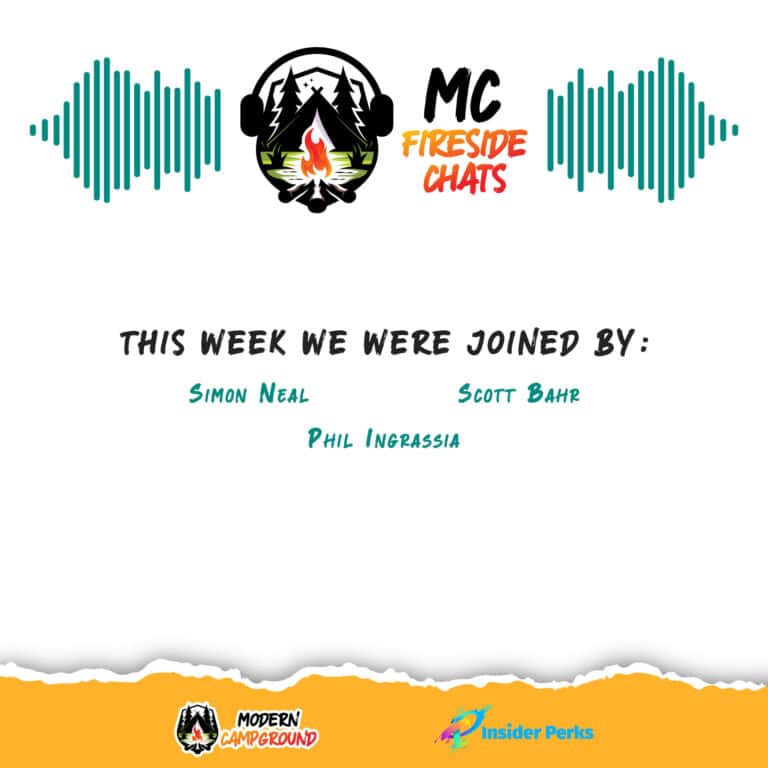
This week we were joined by MC Fireside Chats.
November 30, 2022

MC Fireside Chats – November 30th, 2022

In this special episode of MC Fireside Chats, glamping and camping industry experts from all over the world joined us to talk about the challenges they faced in developing their businesses and how they overcame them. This week’s special guests are Olja Nicholl, owner of Serbia’s first-ever glamping resort, Stephanie Bias of Camp Aramoni in Illinois, Italian Architectural Design Manager Giacomo Sanna, and Valentina Kožarić from Croatia. Nicholl shared how they started Lala Vineyard Glamping Resort, Serbia’s first glamping resort. She said she was inspired by United Arab Emirates’ growing glamping industry and decided to bring glamping to Serbia. For Nicholl, bringing glamping to Serbia was not an easy feat. Nestled in a landlocked country, they had to be resourceful and utilize the little natural resources they had to offer unique experiences to guests. Lala Vineyard started small and is now a glamping resort based on sustainability, local experiences, and wine production. She highlighted that developing not just a glamping business but a community that continuously explores tries local, and collaborates with local suppliers is essential. Sanna, an architectural design manager and architecture and parametric design consultant, talked about the struggles of bureaucracy affecting the glamping industry in Italy and how they develop new solutions that can help glamping businesses in the country. Kožarić, a front office manager for a camping and glamping resort in Croatia offering pitches for campers and mobile homes, said the camping and glamping industry in Croatia is growing. Since the company’s inception, they had to offer something different each year. Bias of Camp Aramoni shared how they struggled to define their identity. From glamping to luxury camping and now boutique camping. When asked what the future holds for them, Bias said they aim to create better, unique experiences, add more accommodations, and open year-round.
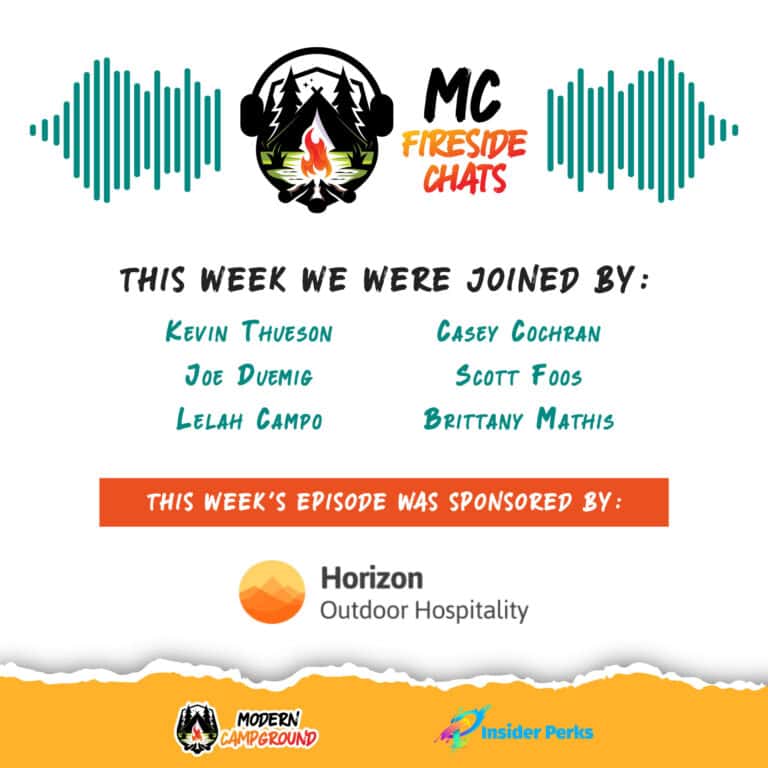
MC Fireside Chats logo
June 29, 2022

MC Fireside Chats – June 29th, 2022

This week on MC Fireside Chats, presented by Modern Campground, we broadcast a special fifth episode for the month of June. Anything and everything were up for discussion. Plus, we were joined by special guests: Neil Demosthenous and Demos Demosthenous, the founders of SkyWeb gave us some guidance on wireless services and infrastructure at campgrounds. Plus, we welcomed Sandra Fraser, Parks Promotion & Development Officer, Province of Nova Scotia who discussed Camping Nova Scotia’s provincial parks. MC Fireside Chats is a weekly show focused on the latest news, trends, and commentary from the Outdoor Hospitality Industry with hosts Brian Searl and Cara Csizmadia.
MC Fireside Chats logo
September 29, 2021

MC Fireside Chats – September 29th, 2021

In this episode of MC Fireside Chats, presented by Modern Campground, we discussed the then-upcoming fall conferences in the United States and Canada. Lori Severson from the brand new Campground Owners Expo – COE joined us, along with Joss Penny from British Columbia to talk about their respective conferences. Plus, we heard from Joe Duemig, a supplier from App My Community, about vendor interest in these shows, as well as discussed ARVC, KOA, Jellystone, and state conferences like New York and Pennsylvania.